
FREE ART CONSULTATION

x
Buy print Buy printBuy Painting Buy Painting SendSend
DetailsDetails Add to favorites Add to favorites DownloadDownload SimilarsSimilars X-RayX-Ray DiaporamaDiaporama

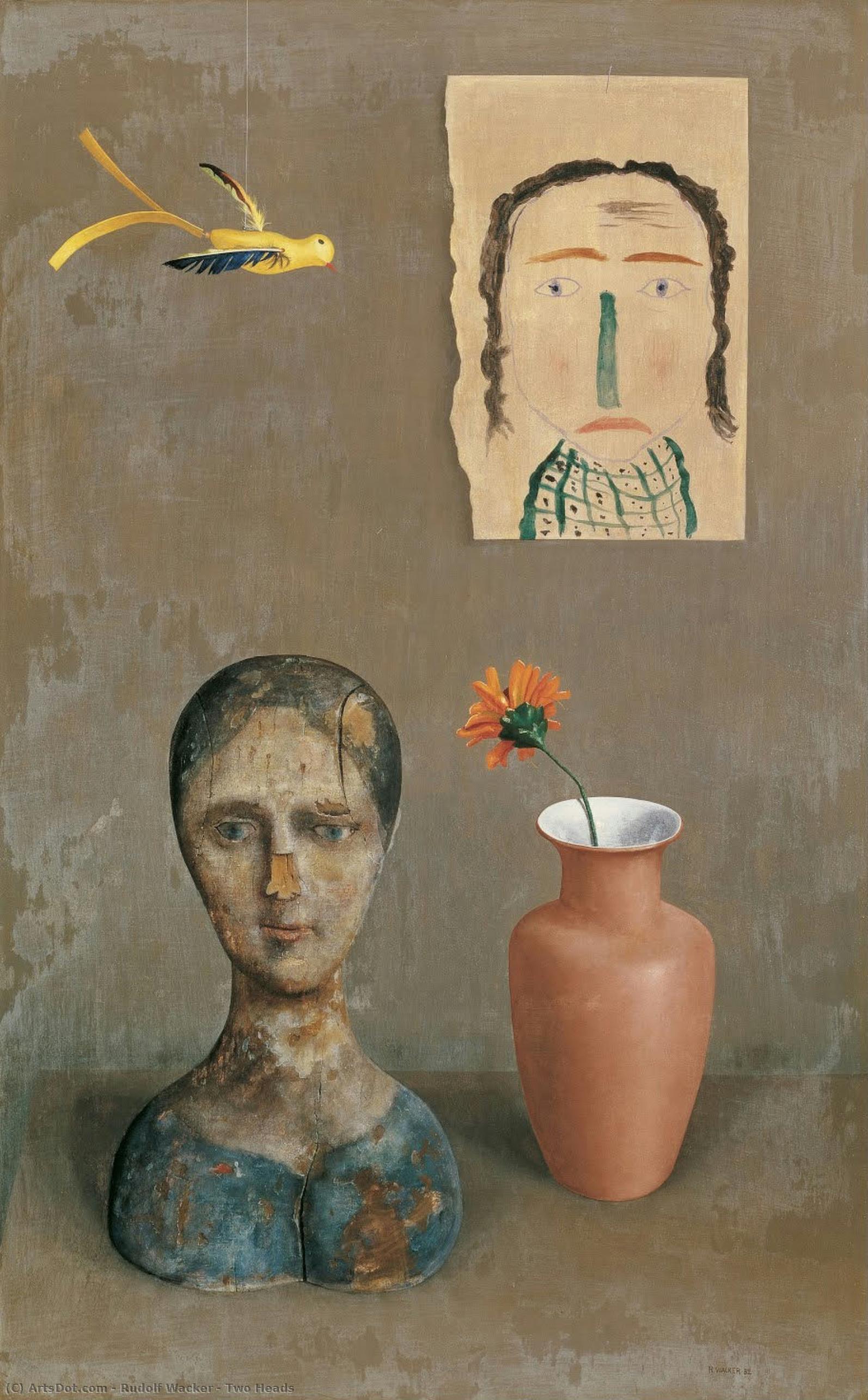
Two Heads

Discover "Two Heads" by Rudolf Wacker (1932). A hauntingly beautiful painting of two heads in a room. Explore this unique artwork & its historical context.

Discover Rudolf Wacker (1893-1939), an Austrian Expressionist painter known for intense color & emotional figures. Explore his 'Two Heads' & influence of Van Gogh & Munch.

Purchase a high-resolution, enhanced digital image, far superior to the online preview.

Each file is meticulously prepared by our in-house specialists using advanced tools and expert manual retouching. We ensure every image has exceptional clarity, precise color accuracy, and fine detail.

The final file is delivered via email within 72 hours, optimized for immediate use in professional, editorial, and print environments. This is the same quality trusted by top-tier design studios, publishers, and galleries.

Digital Image

Download a high-resolution file for personal display, printing, and creative projects.

Total Price

$9.99

Included in Every Digital Image Order

Expert Digital Delivery, Guaranteed

When you choose WahooArt.com, you're not just getting an image - you're receiving a professionally enhanced digital artwork, crafted with precision and backed by a satisfaction guarantee. Here's everything that comes with your order, automatically:

shipping_icon
Fast Email Delivery

Your high-resolution digital image file will be emailed to you within 72 hours of ordering - ready for immediate use.

canvas_icon
AI-Enhanced Digital File

Your artwork is professionally optimized using advanced AI tools and manual editing, ensuring maximum detail, clarity, and color accuracy.

insurance_icon
Free Lifetime Re-Delivery

Accidentally deleted or lost your file? No worries - we'll resend it to you anytime, free of charge.

tax_icon
No Import Fees - Ever

Enjoy your artwork instantly with zero customs, duties, or delivery fees - digital downloads are always tax-free.

color_icon
Color Accuracy Guarantee

We ensure your digital image reflects the original colors as closely as possible using professional tools and color management.

return_icon
60-Day Satisfaction Guarantee

If you're not satisfied with your digital image, we'll revise it or refund 100% within 60 days - no questions asked.

guarantee_icon
100% Money-Back Guarantee

Not satisfied? Get a full refund within 60 days of receiving your digital file - no questions asked.

discount_icon
Bulk Order Discounts

Buy 3 images, save 10% - Buy 5, save 15% - Buy 10+, save 20%. Great for creative projects, galleries, and agencies.


Artist Biography

A Life Immersed in Color and Tension: The World of Rudolf Wacker

Rudolf Wacker, born in Bregenz, Austria in 1893, was an artist whose relatively short life was deeply etched by the tumultuous currents of the early 20th century. Though he died prematurely in 1939, his legacy as a pivotal figure within Austrian Expressionism and a precursor to Magical Realism endures. Wacker’s artistic journey wasn't one of immediate acclaim but rather a gradual unfolding shaped by personal hardship, political awareness, and an unwavering commitment to capturing the emotional weight of his time. His early life was supported by parents who recognized and nurtured his talent, allowing him to pursue studies at the College of Industrial Drawing in Bregenz before venturing towards Vienna and later Weimar—centers of artistic ferment. However, initial rejection from the Academy of Fine Art didn’t deter him; instead, it propelled him toward alternative avenues of learning and self-discovery.

From Expressionist Roots to a Unique Vision

The years surrounding World War I proved formative for Wacker. His experiences as a soldier, including nearly five years spent in Siberian prison camps, left an indelible mark on his psyche and subsequently, his art. These harrowing events fueled a deeply personal artistic language that initially drew from the intensity of Expressionism but soon began to diverge toward something uniquely his own. After the war, Wacker gravitated towards Berlin’s vibrant avant-garde scene, dividing his time between the city's creative energy and the quieter landscapes of Vorarlberg. It was during this period he married Ilse Moebius, who became a frequent subject in his paintings. While initially exploring Expressionist themes, Wacker gradually developed a style characterized by precise draftsmanship, bold color palettes, and an unsettling emotional depth—qualities that would later be associated with the *Neue Sachlichkeit* (New Objectivity) movement. However, to categorize him solely within this framework feels limiting; his work transcends simple labels, hinting at a burgeoning “Magischer Realismus” – a magical or phantastic realism that sought to reveal hidden psychological truths beneath the surface of everyday life.

Navigating Artistic and Political Landscapes

The 1920s saw Wacker actively engage with the artistic community, co-founding “Der Kreis” (The Circle) in an attempt to foster collaboration among artists in the Lake Constance region. Despite securing his first museum sale in 1928, financial struggles remained a constant companion. He was a voracious reader of contemporary art and deeply critical of Austrian painting, preferring instead to focus on German artistic developments. His fascination with Old Masters, particularly those from the 17th century, also informed his meticulous technique and symbolic use of imagery. As the political climate darkened in the 1930s, Wacker’s work took on a more overtly critical tone. Unlike many of his contemporaries, he openly challenged the rising tide of Nazism through his art and writings, participating in peace rallies and advocating for resistance—actions that brought him under scrutiny from authorities. This period was marked by increasing financial hardship and limited recognition despite several exhibitions in Vienna.

Legacy and Enduring Influence

Rudolf Wacker’s most celebrated works include ‘Two Heads’ (1932) and ‘Self-Portrait with a Palette’ (1935), paintings that exemplify his distinctive style—a potent blend of psychological insight, technical mastery, and emotional intensity. His influence can be seen in the work of later artists who explored similar themes of alienation, anxiety, and the fragility of human existence. Though he didn't achieve widespread fame during his lifetime, Wacker’s art has gained increasing recognition in recent decades, with exhibitions at prestigious institutions such as the Kunsthaus Zürich, the Neue Galerie in New York, and the Belvedere in Vienna. His paintings are now held in prominent collections including those of the Museum of Modern Art in New York and the Tate Gallery in London—testaments to his enduring artistic significance. Wacker’s ability to capture the anxieties and complexities of a rapidly changing world continues to resonate with audiences today, solidifying his place as a vital voice within 20th-century art history. His work serves as a poignant reminder of the power of art to confront difficult truths and bear witness to the human condition.
rudolf wacker

rudolf wacker

1893 - 1939 , Austria

Quick Facts

  • Artistic Movement Or Style: Expressionism
  • Artists Or Movements Influenced By This Artist: ['Vienna Secession']
  • Artists Who Influenced This Artist:
    • Van Gogh
    • Edvard Munch
  • Date Of Birth: 1893
  • Date Of Death: 1939
  • Full Name: Rudolf Wacker
  • Nationality: Austrian
  • Notable Artworks:
    • Two Heads
    • Self-Portrait with Palette
  • Place Of Birth: Bregenz, Austria

