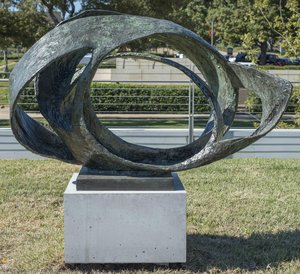
2001
2001 104.0 x 167.0 cm
 New Orleans Museum of Art
Purchase a high-resolution, enhanced digital image, far superior to the online preview.
Each file is meticulously prepared by our in-house specialists using advanced tools and expert manual retouching. We ensure every image has exceptional clarity, precise color accuracy, and fine detail.
The final file is delivered via email within 72 hours, optimized for immediate use in professional, editorial, and print environments. This is the same quality trusted by top-tier design studios, publishers, and galleries.
Download a high-resolution file for personal display, printing, and creative projects. ( Switch to Print Buy Hand Made Painting)
When you choose WahooArt.com, you're not just getting an image - you're receiving a professionally enhanced digital artwork, crafted with precision and backed by a satisfaction guarantee. Here's everything that comes with your order, automatically:

Your high-resolution digital image file will be emailed to you within 72 hours of ordering - ready for immediate use.

Your artwork is professionally optimized using advanced AI tools and manual editing, ensuring maximum detail, clarity, and color accuracy.

Accidentally deleted or lost your file? No worries - we'll resend it to you anytime, free of charge.

Enjoy your artwork instantly with zero customs, duties, or delivery fees - digital downloads are always tax-free.

We ensure your digital image reflects the original colors as closely as possible using professional tools and color management.

If you're not satisfied with your digital image, we'll revise it or refund 100% within 100 days - no questions asked.

Not satisfied? Get a full refund within 100 days of receiving your digital file - no questions asked.

Buy 3 images, save 10% - Buy 5, save 15% - Buy 10+, save 20%. Great for creative projects, galleries, and agencies.

In the vibrant, often turbulent landscape of contemporary American sculpture, few artists command the intersection of psychological depth and physical form as powerfully as Rona Pondick. Born in Brooklyn, New York, in 1952, Pondick has spent decades navigating the delicate boundary between the tangible and the metaphorical. Her work does not merely occupy space; it interrogates it, using the very language of the human body to articulate the complexities of identity, metamorphosis, and the fragmented nature of memory. To encounter a Pondick sculpture is to witness a profound dialogue between the organic and the artificial, where the familiar contours of flesh are reimagined through a lens of surrealist transformation.
Pondick’s artistic lineage is deeply rooted in the rigorous academic traditions of New York, having refined her technical mastery at Queens College before moving to the prestigious Yale University School of Art. It was during her time at Yale, earning her MFA in 1977, that her sculptural voice began to coalesce under the influence of monumental figures such as Richard Serra and David Von Schlegell. From Serra, she inherited a profound respect for materiality and the way scale can confront and unsettle a viewer, forcing an awareness of one's own physical presence within a space. This early exposure to the avant-garde movement instilled in her a lifelong commitment to challenging conventional boundaries, leading her to move beyond mere representation toward a more symbolic, visceral form of storytelling.
The evolution of Pondick’s oeuvre can be viewed as a journey from the fragmented to the hybrid. Her early career was characterized by works that utilized anatomical fragments—limbs, tors, or torso-like shapes—to evoke the vulnerability of the human condition. These pieces often functioned as unsettling anatomical representations, repurposing domestic or industrial objects to mirror the fragility of life. As her practice matured, this focus shifted toward a more expansive exploration of metamorphosis. In her later works, the human form is no longer just a subject but a site of radical change, merging seamlessly with elements of flora and fauna to create breathtakingly strange hybrid creatures.
This transition into hybridity allowed Pondick to explore even deeper psychological territories. By blending the human silhouette with the textures of nature, she creates a sense of transience—a feeling that her sculptures are caught in a moment of becoming or dissolving. Her use of materials is central to this effect; she employs a sophisticated palette of resin, acrylic, and epoxy modeling compounds that possess a translucent, almost evanescent quality. These materials allow light to penetrate the surface of the sculpture, causing the work to shift and change as the viewer moves around it, mirroring the fluid nature of identity itself.
In recent years, Pondick has embraced a more vibrant chromatic language that adds a layer of approachability and emotional resonance to her often unsettling subject matter. Moving away from purely monochromatic or industrial tones, she began integrating the primary hues used in photographic printing—magenta, cyan, and yellow—alongside secondary colors like green and blue. This infusion of color does not soften the provocative nature of her work but rather enhances its vitality, making the biological transformations feel even more vivid and immediate. The interplay between these bright pigments and the semi-translucent surfaces creates a luminous effect that captures the viewer's gaze and holds it in a state of wonder.
The historical significance of Rona Pondick lies in her ability to bridge the gap between the monumental traditions of mid-century sculpture and the introspective, identity-driven concerns of contemporary art. Her achievements are marked by a career-long dedication to exploring the "language of the body" in both its literal and metaphorical senses. Through her meticulous craftsmanship and her fearless pursuit of the unknown, Pondick has established herself as a vital voice in the sculptural canon, reminding us that the most profound truths about our existence are often found in the beautiful, strange, and ever-changing forms we inhabit.

1952 - , United States of America

 Preview
 Send
Send Share
Share
 Details
 Guide
Guide

 Download
 Similars
 X-Ray
X-Ray Diaporama
 Stats
Stats Read More