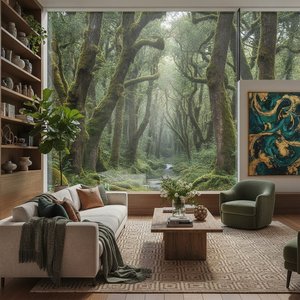
Robert Zund: A Swiss Master of Idyllic Landscapes
Born in Lucerne, Switzerland, in 1827, Robert Zund emerged as a pivotal figure in 19th-century Swiss landscape painting. His life’s work was deeply rooted in the serene beauty of his native region – particularly the landscapes surrounding Lucerne and the majestic peaks of the Alps – capturing an idealized vision of rural Switzerland that resonated profoundly with audiences. Initially apprenticed to Jakob Schwegler, a respected local artist, Zund's artistic journey took him from his hometown to Geneva, where he honed his skills under the tutelage of François Diday and Alexandre Calame, absorbing influences from both French Romanticism and Swiss Realism.
Zund’s early career was marked by collaboration with Rudolf Koller. Together they initially sought to establish a local artists' association but ultimately decided to pursue their individual paths. This partnership, however, proved formative, fostering a deep friendship and mutual respect that undoubtedly shaped Zund’s artistic development. His relocation to Lucerne in 1863 marked a significant turning point, establishing him as a dedicated observer and interpreter of the landscapes he loved. He deliberately avoided depicting modern elements – railways, buildings—preferring instead to focus on the timeless beauty of nature, creating scenes that felt both familiar and profoundly evocative.
The Development of an Idyllic Style
Zund’s artistic style is immediately recognizable for its meticulous detail, naturalistic approach, and a profound sensitivity to light. He wasn't merely depicting landscapes; he was striving to capture the *feeling* of being within them. Influenced by artists like Claude Lorrain, Ruisdael, and Paulus Potter, whom he studied in Paris, Zund developed a technique characterized by precise observation and a masterful command of color. His compositions often adhered to classical principles of landscape design, creating balanced and harmonious scenes.
A key element of his work is the way he rendered light – particularly in paintings like *Der Eichenwald* (The Oak Forest). Shadows cast by trees create a remarkable sense of depth, while sun-drenched meadows and cornfields shimmer with an almost palpable warmth. This ability to evoke atmosphere through subtle shifts in tone and color elevated his work beyond simple representation, imbuing it with a powerful emotional resonance. His meticulous attention to detail—the texture of bark, the sway of grasses, the play of light on water—created images that felt remarkably real, inviting viewers to step into the scene and experience its tranquility firsthand.
Key Works and Themes
Several paintings stand out as particularly significant examples of Zund’s oeuvre. *Der Eichenwald* (1882), a monumental depiction of an oak forest, is arguably his most celebrated work, showcasing his mastery of light, composition, and detail. The painting's scale and richness of texture are breathtaking, transporting the viewer to the heart of the Swiss wilderness. Other notable works include *The Harvest* (1860), *The Road to Emmaus* (1877) which reflects a period of religious contemplation in his art, and numerous depictions of rural life – farmers tending their fields, horses grazing in meadows, and figures engaged in everyday activities.
Throughout his career, Zund consistently explored themes of nature’s beauty, the rhythms of rural life, and the connection between humanity and the natural world. His paintings are not simply landscapes; they are meditations on the sublime—moments of profound awe and wonder inspired by the grandeur and serenity of Switzerland's alpine scenery.
Historical Significance and Legacy
Robert Zund’s work holds a significant place in Swiss art history. He represents a crucial bridge between Romanticism and Realism, capturing the spirit of his time while forging a distinctly personal style. His meticulous observation and evocative depictions of the Swiss landscape profoundly influenced subsequent generations of artists. His paintings continue to be admired for their beauty, technical skill, and ability to transport viewers to the heart of Switzerland’s idyllic wilderness.
Zund's legacy extends beyond his artistic achievements. He was recognized by the University of Zurich in 1906 with an honorary doctorate, a testament to his contribution to Swiss culture. His name is also associated with a street in Lucerne, ensuring that his memory and work will continue to be celebrated for generations to come. His paintings are now housed in prominent museums such as the Kunsthaus Zürich and the Kunstmuseum Basel, solidifying his position as one of Switzerland’s most beloved landscape painters.



 Preview
 Buy Print
 Send
Send Share
Share
 Details

 Download
 Similars
 X-Ray
X-Ray Diaporama
 Read More






































 Glass option is only available in size under 110 CM