

 OilWallArtRealism
 184819th Century
 44.0 x 54.0 cm
Hand-painted oil on canvas in your size and frame, made to order by our artists. ( Switch to Print Switch to Digital Image)
Pick from our preset sizes that match the artwork's original proportions.

You may enter your own dimensions to fit a specific frame or space. If your selected size does not match the original image's proportions, we will either crop the artwork or extend the painting with additional hand-painted elements. A digital mockup will be sent for your approval before production begins.
Please note that the on-screen preview does not reflect the actual cropping or extension. Only the mockup will accurately show the final composition.
While custom sizes are available, we recommend selecting a dimension from the predefined list to preserve the original proportions.
Worldwide Delivery () in 3/4 weeks instead of standard 5 weeks. (25 September). No compromise on quality.


Still Life with Fruit and Nuts
Reproduction Size
In the quiet intimacy of Still Life with Fruit and Nuts, painted in 1848, we are invited into a world of tactile richness and sensory delight. Robert Seldon Duncanson, an artist often celebrated for his sweeping, romanticized landscapes, demonstrates here a masterful command over the miniature stage of the tabletop. The composition is a lush, horizontal arrangement where nature’s bounty is presented with both precision and poetic grace. A golden yellow pear sits as a central anchor, flanked by the deep, rubicund glow of red apples and the delicate, pale hues of quinces. As the eye wanders across the putty-brown ledge, it encounters the intricate textures of a bountiful harvest: the translucent skin of green grapes that drape elegantly over the fruit, the wrinkled sweetness of raisins, and a scattered mosaic of walnuts, peanuts, almonds, and hazelnuts. It is a painting that does not merely depict food, but celebrates the very essence of ripeness and the fleeting beauty of the natural world.
The technique employed in this work speaks to a profound understanding of light and shadow, a hallmark of mid-19th-century academic excellence. Duncanson utilizes a dramatic chiaroscuro effect, where the foreground elements are bathed in a bright, frontal light that makes the textures pop with lifelike vitality. The sheen on an apple’s skin or the rugged, earthy shell of a walnut is rendered with such care that one can almost feel the weight and grit of the objects. This luminosity stands in stark contrast to the background, which dissolves into a deep, mysterious darkness. As the tabletop recedes, it is swallowed by soft shadows, creating an atmospheric depth that pushes the brightly lit fruit toward the viewer. This interplay of light creates a sense of three-dimensional presence, making the still life feel less like a flat image and more like a physical arrangement resting just within reach.
Beyond its aesthetic splendor, the painting carries a quiet emotional resonance that makes it an enduring piece for any collection. In the mid-1800s, still life paintings often served as meditations on memento mori—reminders of the passage of time and the ephemeral nature of life. The perfection of the ripe fruit represents the peak of vitality, yet the presence of dried raisins and hard-shelled nuts hints at the inevitable cycles of decay and preservation. For the modern collector or interior designer, this work offers a sophisticated balance of warmth and drama. Its earthy palette of browns, golds, and deep reds provides a grounding element to a room, while its classical composition brings an air of timeless elegance. Whether placed in a sunlit breakfast nook or a moody, library-style study, Duncanson’s masterpiece serves as a window into a moment of quiet, bountiful reflection.

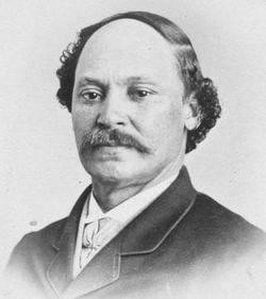
1821 - 1872 , United States of America

Explore the profound beauty of fruit arrangement masterpieces. From Dutch Golden Age opulence to Baroque chiaroscuro, discover the art history, symbolism, and timeless elegance of classical still life paintings for the discerning collector.
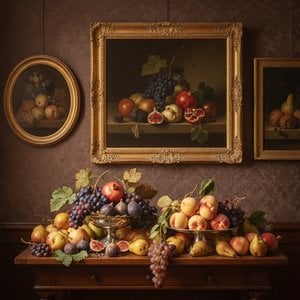
Discover the profound beauty of fruit still life paintings. Explore the rich symbolism, Baroque mastery, and timeless allure of nature's bounty through an art-historical lens, perfect for collectors and enthusiasts of classical fine art.

Embark on a sophisticated journey through the Dutch Golden Age. Unveil the dramatic brilliance of Rembrandt’s chiaroscuro and the expressive landscapes of 17th-century masters in this authoritative exploration of light, shadow, and enduring artistic legacy.

 Preview
 Send
Send Share
Share
 Details
 Guide
Guide

 Download
 Similars
 X-Ray
X-Ray Diaporama
 Stats
Stats Read More




































 Glass option is only available in size under 110 CM


