Digital PhotographyPhotoFine Art Photography
 1985
1985 40.0 x 50.0 cm
 Dulwich Picture Gallery
The artwork displayed on this page is protected by copyright law, which means we cannot legally create or sell an identical reproduction. This protection is enforced under international agreements such as the Berne Convention and by national laws, including those outlined by the U.S. Copyright Law - Title 17.
This method fully complies with copyright regulations because it does not involve copying or duplicating the protected artwork. Instead, it is a creative reinterpretation - a new painting that is influenced by the original but not identical to it.
Museum-quality giclée or canvas print with fast production and flexible finish options. ( Buy Hand Made Painting Switch to Digital Image)
Pick from our preset sizes that match the artwork's original proportions.

You may enter your own dimensions to fit a specific frame or space. If your selected size does not match the original image's proportions, we will either crop the artwork or extend the image with a mirrored or solid-fill edge. A digital mockup will be sent for your approval before production begins.
Please note that the on-screen preview does not reflect the actual cropping or extension. Only the mockup will accurately show the final composition.
While custom sizes are available, we recommend selecting a dimension from the predefined list to preserve the original proportions.
Worldwide Delivery () in 2 weeks instead of standard 4/5 weeks. (10 October)
Orchids
Reproduction Size
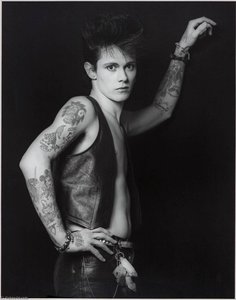
Robert Mapplethorpe's "Orchids" is not merely a photograph; it’s an arresting distillation of form, light, and a quietly profound sense of stillness. Executed in 1985, this black-and-white image transcends the commonplace, transforming three orchids into subjects of almost sculptural intensity. It speaks to a world where beauty is rigorously defined, where precision reigns supreme, and where even the most delicate floral arrangement can evoke a powerful emotional response.
The photograph’s genesis lies within Mapplethorpe's broader exploration of formal aesthetics – a lineage traceable back to the meticulous compositions of artists like Joseph Cornell and Marcel Duchamp. He wasn’t interested in capturing fleeting moments or spontaneous beauty; instead, he sought to impose order upon nature, to elevate the ordinary into something extraordinary through careful arrangement and unwavering control. The orchids themselves, symbols often associated with luxury, femininity, and rebirth, are presented with a deliberate austerity that challenges conventional notions of floral representation.
The composition is strikingly centered, creating a visual equilibrium that mirrors Mapplethorpe’s broader stylistic approach. The three orchids, aligned horizontally across the frame, establish a clear line of symmetry – a deliberate choice that emphasizes their shared presence and contributes to the image's overall sense of formality. The dark background serves not as an absence, but as a powerful amplifier, isolating the flowers and directing all attention towards their intricate details.
Mapplethorpe’s masterful use of light is crucial to the photograph’s impact. A single, directional light source casts dramatic shadows that define the contours of each petal, revealing the delicate textures and subtle folds within the orchids' structure. This chiaroscuro effect – the interplay of light and dark – imbues the image with a sense of three-dimensionality, making it feel as though we are observing these flowers in a carefully lit studio space. The tonal range is meticulously controlled, ranging from deep blacks to bright whites, creating a visual richness that belies the monochrome palette.
Mapplethorpe’s work frequently grappled with themes of sexuality, beauty, and desire. While “Orchids” doesn't explicitly depict overt sensuality, it operates within this broader context. The orchids themselves can be interpreted as symbols of fertility, abundance, and the ephemeral nature of beauty – qualities often associated with the female form. Furthermore, Mapplethorpe’s exploration of the BDSM subculture in his earlier work informed a deeper understanding of power dynamics and vulnerability, themes that subtly resonate within this seemingly serene image.
Considering the historical context—Mapplethorpe's career unfolded during a period of intense social and artistic debate—the photograph gains further significance. His willingness to confront taboo subjects with unflinching honesty challenged conventional notions of taste and morality, sparking controversy and cementing his place as one of the most influential photographers of the late 20th century.
The photograph was created using a Hasselblad medium-format camera and gelatin silver print techniques. Mapplethorpe’s meticulous attention to detail—from the precise lighting setup to the careful manipulation of the darkroom – ensured an exceptional level of clarity and tonal control. The resulting image is remarkably sharp, with every vein and petal rendered in exquisite detail.
Reproductions of “Orchids” are available as high-quality prints on archival paper, ensuring that the photograph’s rich colors and nuanced textures are faithfully preserved for generations to come. Whether adorning a gallery wall or gracing a private collection, this image offers a timeless testament to Mapplethorpe's artistic vision – a celebration of formal beauty, quiet contemplation, and the enduring power of photography.
The color analysis of "Orchids" by Robert Mapplethorpe records a statement contrast and a softly mixed palette harmony.
The creation of "Orchids" by Robert Mapplethorpe is dated 1985.
The format of "Orchids" is square, and the original measures 40 x 50 cm. Both are useful when planning a reproduction.
"Orchids" is attributed to Robert Mapplethorpe.
The overall mood of "Orchids" by Robert Mapplethorpe is elegant. The mood describes the general atmosphere of the work.
Robert Mapplethorpe made "Orchids" at the age of 39. The artist was born in 1946 and the work is dated 1985.
Within the Fine Art Photography movement, "Orchids" has an iconic popularity level.


1946 - 1989 , United States of America

Explore the profound emotional depth of documentary photography art. Discover how collectors curate powerful historical narratives through museum-quality black and white prints and fine art reproductions that preserve humanity's most resilient moments.

Explore the profound evolution of contemporary photography through a connoisseur's lens. From monochrome mastery to digital innovation, discover how modern photographic works shape fine art collections and define our cultural legacy.

Explore the profound evolution of documentary photography through a cultural lens. From early social realism to modern visual narratives, discover how photographers have captured history, labor, and the human condition to redefine fine art.

Explore the profound artistry of black and white photography. From historical mastery to the interplay of light and shadow, discover how monochrome captures timeless emotion and form through a sophisticated lens of art history.

 Send
Send Share
Share
 Details
 Guide
Guide

 Download
 Similars
 Diaporama
 Stats
Stats Read More






































 Glass option is only available in size under 110 CM