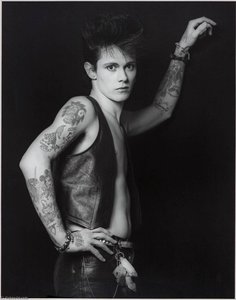
The artwork displayed on this page is protected by copyright law, which means we cannot legally create or sell an identical reproduction. This protection is enforced under international agreements such as the Berne Convention and by national laws, including those outlined by the U.S. Copyright Law - Title 17.
This method fully complies with copyright regulations because it does not involve copying or duplicating the protected artwork. Instead, it is a creative reinterpretation - a new painting that is influenced by the original but not identical to it.
Museum-quality giclée or canvas print with fast production and flexible finish options. ( Buy Hand Made Painting Switch to Digital Image)
Pick from our preset sizes that match the artwork's original proportions.

You may enter your own dimensions to fit a specific frame or space. If your selected size does not match the original image's proportions, we will either crop the artwork or extend the image with a mirrored or solid-fill edge. A digital mockup will be sent for your approval before production begins.
Please note that the on-screen preview does not reflect the actual cropping or extension. Only the mockup will accurately show the final composition.
While custom sizes are available, we recommend selecting a dimension from the predefined list to preserve the original proportions.
Worldwide Delivery () in 2 weeks instead of standard 4/5 weeks. (11 October)
Lily
Reproduction Size
Robert Mapplethorpe’s “Lily,” executed in 1984, stands as a testament to his singular vision—a masterful distillation of classical still life principles infused with an unsettling fascination for the sensual and the grotesque. More than just a depiction of a flower, it embodies Mapplethorpe's broader exploration of beauty and desire within a meticulously crafted framework that anticipates the anxieties of the AIDS era.
The photograph’s stark monochrome palette—primarily shades of black and white punctuated by subtle grey tones—immediately establishes its austere aesthetic. This deliberate choice underscores the artwork’s focus on form, texture, and light, mirroring Mapplethorpe's admiration for artists like Marcel Duchamp who championed conceptual art alongside formal precision. The image eschews any attempt at naturalistic representation, prioritizing instead a stylized elegance that elevates the lily to an object of contemplation.
Compositionally, “Lily” centers on a single white lily positioned slightly off-center against a dense black background. A slender stem ascends diagonally across the frame, guiding the viewer’s gaze towards the bloom and creating a dynamic interplay between horizontal and vertical lines. The dark backdrop serves to intensify the luminosity of the flower petals, highlighting their translucence and revealing intricate patterns of veins and folds—details meticulously captured by Mapplethorpe's use of a large-format camera.
Technically speaking, Mapplethorpe employed traditional photographic techniques honed during his formative years at Pratt Institute. The photograph’s sharpness is remarkable, achieved through careful attention to focus and exposure, demonstrating the artist’s mastery of manipulating light and shadow. The resulting image possesses a sculptural quality, capturing the subtle nuances of texture—the velvety smoothness of the petals juxtaposed with darker markings that suggest imperfections and add depth to the composition.
Beyond its formal merits, “Lily” resonates with deeper symbolic implications. The lily has long been associated with purity and resurrection in Christian iconography, yet Mapplethorpe’s appropriation of this motif disrupts conventional notions of sacred beauty. Instead, it confronts viewers with an unsettling gaze—a deliberate provocation that reflects the artist's preoccupation with confronting taboo subjects and challenging societal norms. Ultimately, “Lily” compels us to reconsider our perceptions of desire and vulnerability, cementing Mapplethorpe’s legacy as a provocateur who redefined the boundaries of artistic expression.
Further research into Robert Campin’s pioneering realism and spiritual depth in Early Netherlandish painting provides valuable context for appreciating Mapplethorpe's stylistic choices. Similarly, exploring Museo Robert Brady’s collection of international art expands understanding of broader artistic trends influencing Mapplethorpe’s oeuvre.
You can order a hand-painted reproduction of "Lily" by Robert Mapplethorpe directly on this page: a hand-painted oil reproduction on linen canvas, made to order.
The dominant color of "Lily" by Robert Mapplethorpe is black (#090a0b).
"Lily" by Robert Mapplethorpe is classified as iconic and belongs to the Contemporary Realism movement.
"Lily" by Robert Mapplethorpe is recorded as deep_shadow, with a dark luminance.
When "Lily" was created in 1984, Robert Mapplethorpe - born in 1946 - was 38 years old.
"Lily" by Robert Mapplethorpe was created in 1984.
"Lily" is attributed to Robert Mapplethorpe.


1946 - 1989 , United States of America

Explore the profound artistry of black and white photography. From historical mastery to the interplay of light and shadow, discover how monochrome captures timeless emotion and form through a sophisticated lens of art history.

Master the nuances of Giclée printing with our expert guide. Discover how pigment-based inks and museum-grade substrates create fade-resistant, high-fidelity art reproductions designed for discerning collectors seeking unparalleled quality and longevity.

 Send
Send Share
Share
 Details
 Guide
Guide

 Download
 Similars
 Diaporama
 Stats
Stats


 Read More






































 Glass option is only available in size under 110 CM