The artwork displayed on this page is protected by copyright law, which means we cannot legally create or sell an identical reproduction. This protection is enforced under international agreements such as the Berne Convention and by national laws, including those outlined by the U.S. Copyright Law - Title 17.
This method fully complies with copyright regulations because it does not involve copying or duplicating the protected artwork. Instead, it is a creative reinterpretation - a new painting that is influenced by the original but not identical to it.
Museum-quality giclée or canvas print with fast production and flexible finish options. ( Buy Hand Made Painting Switch to Digital Image)
Pick from our preset sizes that match the artwork's original proportions.

Type the width and the height you need, to fit your frame or your wall. A print can only be cut, never made bigger than the picture, so a size with a different shape loses a part of the image. We send you a digital mockup to approve before we print anything. The picture shown on this page does not show the real cut — only the mockup does.
Worldwide Delivery () in 2 weeks instead of standard 4/5 weeks. (20 October)
Ajitto
Reproduction Size
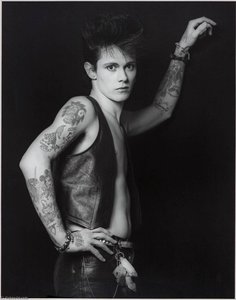
This arresting monochrome photograph, titled Ajitto, immediately draws the viewer into an intimate space defined by shadow and exquisite form. It is a study in stillness, capturing a nude male figure seated upon a simple stool. The composition itself speaks to a deliberate sense of balance; the subject occupies the center, lending the piece a formal gravity that belies the vulnerability of the pose. Shot from a slightly elevated angle, the perspective subtly elevates the man, suggesting a moment of profound self-examination or quiet authority. The entire visual experience is stripped down to its elemental components—light, shadow, and flesh—inviting an almost meditative gaze.
The technical brilliance of this piece lies in its masterful handling of the black and white spectrum. By eschewing color entirely, the artist forces our attention onto the tactile reality of the scene. Observe how the diffused yet directional lighting sculpts every plane; it is not merely illumination, but a tool for revelation. The contrast between the smooth, yielding texture of skin and the more structured roughness suggested by the stool’s covering creates a rich dialogue across the surface. These textural variations are articulated through soft, gradual tonal shifts rather than harsh lines, lending an almost painterly quality to what is fundamentally a photographic print. It showcases a meticulous attention to detail, characteristic of high-art studio portraiture.
To view Ajitto is to engage with the legacy of photographers like Robert Mapplethorpe, whose work often navigated the delicate intersection of beauty, desire, and the human condition. The subject’s posture—the downward gaze, the clasped hands—suggests a deep well of introspection, perhaps tinged with melancholy or restraint. These symbolic elements transform the portrait from a mere depiction into an emotional landscape. It speaks to universal themes of vulnerability and self-possession, making it resonant whether viewed in a gallery setting or as a sophisticated accent piece within a curated interior space.
For the discerning collector or designer seeking art that transcends mere decoration, this reproduction offers depth. The size, 35 x 45 cm, allows it to command attention without overwhelming a room's scale. It functions as an intellectual anchor—a piece that rewards prolonged looking. Owning Ajitto is acquiring not just a photograph, but a carefully composed meditation on the human form under the scrutiny of light. It promises a sophisticated dialogue between classical portraiture and the stark, powerful aesthetics of twentieth-century photographic modernism.
The colors of "Ajitto" show a soft shadow luminance.
The X-Ray page of "Ajitto" by Robert Mapplethorpe is an interactive viewer that lets you slide through eleven optical layers of the artwork's image, including an X-ray style view.
"Ajitto" is available as a high-resolution digital image download, purchased directly on its Digital Image page.


1946 - 1989 , United States of America
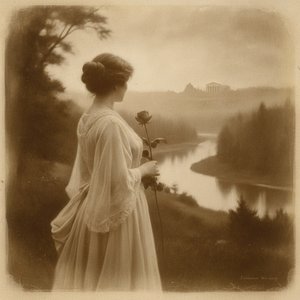
Explore the profound history of Pictorialism, the revolutionary movement that elevated photography to a fine art. Uncover how visionaries used painterly techniques and soft focus to transcend mere documentation, imbuing the lens with the emotional depth of classical masterpieces.

Explore the profound emotional depth of documentary photography art. Discover how collectors curate powerful historical narratives through museum-quality black and white prints and fine art reproductions that preserve humanity's most resilient moments.

Explore the profound artistry of black and white photography. From historical mastery to the interplay of light and shadow, discover how monochrome captures timeless emotion and form through a sophisticated lens of art history.

Elevate your most cherished memories with WahooArt’s bespoke service. We transform your personal photos into breathtaking, hand-painted black & white oil masterpieces. Experience museum-quality craftsmanship and timeless elegance for your private collection. Discover the art of legacy.

Explore the profound evolution of contemporary photography through a connoisseur's lens. From monochrome mastery to digital innovation, discover how modern photographic works shape fine art collections and define our cultural legacy.

 Send
Send Share
Share
 Details
 Guide
Guide

 Download
 Similars
 Diaporama
 Stats
Stats


 Read More






































 Glass option is only available in size under 110 CM