FREE ART CONSULTATION

x
Buy Painting Buy PaintingBuy Image Buy Image SendSend
DetailsDetails Add to favorites Add to favorites DownloadDownload SimilarsSimilars X-RayX-Ray DiaporamaDiaporama

Pages #10

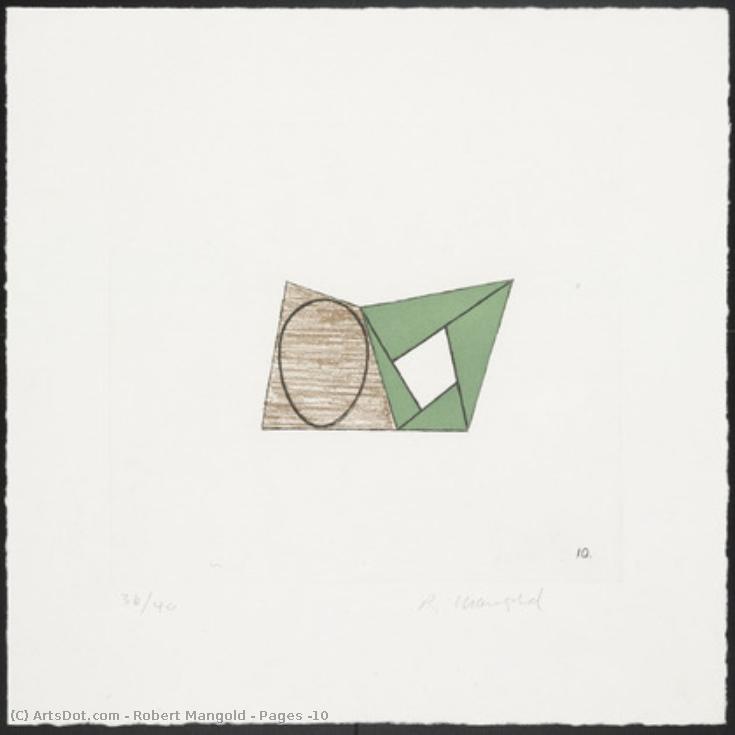
A minimalist abstract composition of geometric shapes and muted tones by Robert Mangold evokes a sense of quiet contemplation, offering a sophisticated addition to any modern collection.

Robert Mangold (b. 1937) is a leading American minimalist painter renowned for shaped canvases, geometric abstraction & subtle color fields. Explore his influential work challenging traditional painting boundaries.

Giclée / Art Print

Museum-quality giclée or canvas print with fast production and flexible finish options.

Standard
custom
CM
INCH

Pick from our preset sizes that match the artwork's original proportions.

width
height

You may enter your own dimensions to fit a specific frame or space. If your selected size does not match the original image's proportions, we will either crop the artwork or extend the image with a mirrored or solid-fill edge. A digital mockup will be sent for your approval before production begins.
Please note that the on-screen preview does not reflect the actual cropping or extension. Only the mockup will accurately show the final composition.
While custom sizes are available, we recommend selecting a dimension from the predefined list to preserve the original proportions.

Worldwide Delivery () in 2 weeks instead of standard 4/5 weeks. (5 July)

why_choose_icon
Free Worldwide Express Shipping
why_choose_icon
High-Quality Linen Canvas
why_choose_icon
Full Shipping Insurance
why_choose_icon
Customs Tax Refund Guarantee
why_choose_icon
True Color Matching Guarantee
why_choose_icon
60-Day Return Policy (Defects Only)
why_choose_icon
100% Money-Back Guarantee
why_choose_icon
Bulk Discount Offer

Total Price

-

reproduction

Pages #10

Giclée / Art Print

Reproduction Size

-

Total Price

-

Quick Facts

  • Subject or theme: Form and color relationships
  • Artist: Robert Mangold
  • Artistic style: Minimalist abstract
  • Medium: Graphite and watercolor on paper
  • Movement: Minimalism, Concrete Art
  • Dimensions: 22 x 25 cm

Art Quiz

There is only one correct answer for each question.

Question 1:
What is the primary artistic style of 'Pages #10'?
Question 2:
Which geometric shapes are the dominant elements in this composition?
Question 3:
What materials were likely used to create this artwork?
Question 4:
How is depth achieved in this flat, abstract composition?
Question 5:
What is the overall color palette of the piece?

Collectible Description

A Symphony of Minimalist Precision

In the quiet realm of abstract geometry, Robert Mangold’s Pages #10 stands as a profound testament to the power of restraint. Created in 1989, this delicate composition invites the viewer into a meditative space where the noise of the outside world dissolves into a study of pure form. The artwork presents a masterful arrangement of geometric shapes—a singular, commanding circle and a series of soft triangles—that dance across a pale, cream-colored expanse. There is an inherent grace in how these elements interact; they do not compete for attention but rather exist in a state of balanced tension. The composition, clustered subtly toward the upper left, avoids the stagnation of perfect symmetry, opting instead for a spontaneous yet controlled movement that guides the eye through a rhythmic, visual poem.

The technical execution of Pages #10 reveals Mangold’s deep-seated appreciation for precision and the subtle nuances of medium. Utilizing what appears to be graphite and watercolor on paper, the artist achieves a breathtakingly smooth texture that feels both organic and meticulously planned. The color palette is intentionally muted, relying on soft greens and warm, light beiges to create a sense of atmospheric depth without the need for heavy shadows. Each edge is defined with a clean, decisive line, suggesting the hand of an artist who understands that in minimalism, every millimeter carries immense weight. This layering of flat colors and precise boundaries creates a subtle illusion of depth, where shapes overlap to suggest a structural complexity hidden beneath a deceptively simple surface.

The Architecture of Calm

To encounter Mangold’s work is to experience a "quiet revolution" in the language of painting. Emerging from an era dominated by the raw emotion of Abstract Expressionism, Mangold sought a more intellectual and structured approach to the canvas. Pages #10 embodies this transition, moving away from gestural chaos toward a search for underlying order. The symbolism within the piece is not found in representational imagery, but in the relationship between the void and the form. The way the green triangles intersect with the circular boundary evokes a sense of cosmic balance, reminiscent of the mathematical elegance found in nature. It is an art of contemplation, designed to evoke feelings of serenity, stability, and a profound sense of peace.

For the discerning collector or interior designer, this piece offers more than mere decoration; it provides an anchor of sophistication for any modern environment. Its understated aesthetic makes it an ideal centerpiece for spaces dedicated to reflection, such as a minimalist study, a contemporary gallery-style living room, or a high-end boutique hotel suite. The artwork’s ability to harmonize with neutral tones while providing a focal point of geometric interest allows it to integrate seamlessly into diverse architectural styles. Owning a reproduction of Pages #10 is an opportunity to bring the disciplined beauty of American Minimalism into one's personal sanctuary, fostering an atmosphere of timeless elegance and intellectual depth.

Related Artworks


Artist Biography

A Quiet Revolution in Form: The World of Robert Mangold

Robert Mangold emerged as a pivotal figure in the American art landscape of the 1960s, though his impact wasn’t one of bombast or overt gesture. Instead, it was a quiet revolution—a subtle dismantling of traditional painting conventions that paved the way for new explorations of form, color, and perception. Born in North Tonawanda, New York, in 1937, Mangold's path to becoming a leading minimalist painter wasn’t immediately clear. He initially pursued engineering studies before recognizing the compelling pull of artistic expression, ultimately earning degrees from the University of Buffalo and Yale University School of Art. This early exposure to technical disciplines perhaps informed his later meticulous approach to painting, where precision and conceptual rigor are paramount. Mangold's journey began within the shadow of Abstract Expressionism, but he quickly discerned a desire for something more restrained, more intellectual—a move away from the subjective emotionality toward an objective exploration of the fundamental elements of art.

The Influence of Pioneers and the Birth of a Style

Mangold’s artistic development was profoundly shaped by encounters with the giants of abstraction who preceded him. The austere geometries of Kazimir Malevich, the carefully calibrated compositions of Piet Mondrian, and the expansive color fields of Barnett Newman all resonated deeply, providing a foundation for his own unique vision. He wasn’t simply imitating these masters; rather, he was absorbing their core principles—the reduction to essential forms, the emphasis on flatness, the exploration of spatial relationships—and reinterpreting them through a distinctly contemporary lens. This period marked a deliberate rejection of the gestural intensity that characterized Abstract Expressionism. Mangold sought to eliminate any trace of the artist’s hand, striving for a sense of impersonal objectivity. It was in this pursuit that he began experimenting with shaped canvases – a defining characteristic of his mature style. These weren't arbitrary forms; they were carefully considered interventions, challenging the very notion of what a painting *could* be.

Shaped Canvases and Conceptual Rigor

The introduction of shaped canvases wasn’t merely an aesthetic choice for Mangold; it was a conceptual one. By abandoning the traditional rectangular format, he disrupted the established relationship between image and support, forcing viewers to confront the physicality of the painting as an object in space. His compositions typically feature geometric abstraction—simplified shapes and lines arranged with meticulous precision. These forms aren’t representational; they don't refer to anything outside themselves. Instead, they exist purely as arrangements of color and line, inviting contemplation of their inherent qualities. Mangold’s palette is often muted, favoring subtle pastel tones that create atmospheric effects without overwhelming the viewer. This restraint extends to his technique: surfaces are smooth and even, devoid of brushstrokes or any other evidence of manual manipulation. The result is a sense of serene detachment—a painting that feels both present and remote, inviting prolonged observation. Major series like the Plane/Figure Series, with its explorations of divided canvas compositions, and the Ring Series, featuring circular forms within rectangular fields, demonstrate his consistent engagement with these core principles.

Legacy and Lasting Impact

Robert Mangold’s influence on contemporary art is undeniable. He played a crucial role in shaping the development of minimalist painting, expanding the possibilities of abstract art and challenging conventional notions of representation. Alongside artists like Robert Ryman, he represents the heart of minimalist painting—a commitment to conceptual rigor and formal reduction. His work has been widely exhibited in museums and galleries around the world, finding homes in prominent collections such as The Museum of Modern Art and The Metropolitan Museum of Art in New York, and The Tate Modern in London. Beyond his paintings, Mangold’s explorations extended into wall paintings, large-scale works designed to interact with architectural spaces, and the Column Structure Series, which investigated verticality and spatial relationships. His legacy isn't simply about the specific forms he created; it’s about the questions he raised—questions that continue to resonate with artists today who grapple with the fundamental elements of art and the possibilities of abstraction. He demonstrated that profound artistic expression could emerge not from grand gestures, but from a quiet, persistent exploration of form and color.
Robert Mangold

Robert Mangold

1937 - , United States of America

Quick Facts

  • Artistic Movement Or Style: Minimalism
  • Artists Or Movements Influenced By This Artist:
    • Robert Ryman
    • Contemporary artists
  • Artists Who Influenced This Artist:
    • Kazimir Malevich
    • Piet Mondrian
    • Barnett Newman
  • Date Of Birth: 1937
  • Full Name: Robert Mangold
  • Nationality: American
  • Notable Artworks:
    • Untitled
    • 1/2 V Series (Medium Scale)
    • Untitled (Skowhegan Suite)
  • Place Of Birth: North Tonawanda, USA
Explore artworks organized by themes, styles, and characteristics.