

Museum-quality giclée or canvas print with fast production and flexible finish options. ( Buy Hand Made Painting Switch to Digital Image)





























Pick from our preset sizes that match the artwork's original proportions.

You may enter your own dimensions to fit a specific frame or space. If your selected size does not match the original image's proportions, we will either crop the artwork or extend the image with a mirrored or solid-fill edge. A digital mockup will be sent for your approval before production begins.
Please note that the on-screen preview does not reflect the actual cropping or extension. Only the mockup will accurately show the final composition.
While custom sizes are available, we recommend selecting a dimension from the predefined list to preserve the original proportions.
Worldwide Delivery () in 2 weeks instead of standard 4/5 weeks. (26 September)


Landscape with Waterfall
Reproduction Size
Robert Lewis Reid's "Landscape with Waterfall," painted in 1890, isn't merely a depiction of a picturesque scene; it’s an immersive experience—a carefully orchestrated tableau of light, color, and the raw power of nature. This oil on canvas masterpiece, currently residing within the Detroit Institute of Arts, offers a glimpse into the burgeoning American Impressionist movement while simultaneously echoing the traditions of European landscape painting. Reid, born in Stockbridge, Massachusetts, was deeply influenced by his time studying under Otto Grundmann in Boston, absorbing foundational skills in draftsmanship before venturing to France and immersing himself in the vibrant artistic atmosphere of Étaples.
The composition immediately draws the viewer into a verdant world dominated by a cascading waterfall. The water itself isn’t rendered with photographic precision; instead, it's captured as a dynamic ribbon of light and shadow, its movement suggested through loose brushstrokes and carefully chosen hues—a blend of blues, greens, and violets that shimmer in the reflected sunlight. The surrounding landscape is equally evocative: dense forests of towering trees frame the scene, their foliage rendered with a remarkable sense of texture and depth. A winding road cuts through the heart of the woods, subtly introducing an element of human presence without disrupting the overall tranquility.
Reid's artistic style is characterized by his bold brushstrokes and a vibrant, almost luminous palette. He eschewed meticulous detail in favor of capturing the *impression* of light and atmosphere—a hallmark of the Impressionist movement. Notice how he uses short, broken strokes to build up color and texture, creating a sense of immediacy and spontaneity. The painting isn’t about precise representation; it's about conveying the feeling of being present within this natural setting. The artist masterfully employs atmospheric perspective, with distant elements appearing paler and less defined, further enhancing the illusion of depth.
Furthermore, Reid’s use of color is particularly noteworthy. He avoids overly saturated hues, opting instead for a more muted palette—a deliberate choice that contributes to the painting's overall sense of serenity and realism. The interplay of light and shadow is expertly rendered, creating a dynamic visual experience that shifts with the viewer’s perspective. The subtle gradations of color – from the deep greens of the forest floor to the shimmering blues of the water – are testament to Reid’s keen observation skills and his ability to translate them onto canvas.
"Landscape with Waterfall" was created during a period of significant artistic transition in America. The late 19th century witnessed the rise of American Impressionism, influenced by European movements like Impressionism and Post-Impressionism. Reid’s work reflects this evolving aesthetic, while also retaining elements of traditional landscape painting—particularly those found in the works of artists such as John Frederick Kensett and George Agnew Reid (whose own landscapes often featured dramatic waterfalls). Kensett's influence is particularly evident in the composition and use of light, though Reid’s work possesses a greater sense of emotional depth and personal expression.
Interestingly, Reid’s career spanned several artistic disciplines. He was not only a painter but also a muralist, working on significant commissions for public buildings, including those at the 1893 World's Columbian Exposition in Chicago. This versatility demonstrates his broad artistic talent and his commitment to engaging with the visual arts in diverse ways. His work served as a bridge between traditional academic painting and the more experimental approaches of modern art.
Beyond its technical merits, “Landscape with Waterfall” resonates deeply on an emotional level. The scene evokes a sense of peace, tranquility, and connection to nature—a sentiment that was particularly appealing to audiences at the time. The waterfall itself can be interpreted as a symbol of renewal, transformation, and the relentless power of nature. The presence of the two figures in the painting adds a subtle layer of human interaction, suggesting a moment of contemplation amidst the grandeur of the landscape.
Today, “Landscape with Waterfall” stands as a testament to Robert Lewis Reid’s artistic vision—a captivating work that continues to inspire and delight viewers. Reproductions of this iconic painting offer an accessible way to experience its beauty and serenity within one's own home or studio, bringing the spirit of American Impressionism into contemporary spaces.


1862 - 1929 , United States of America

Explore the rich history of landscape art with WahooArt. Discover renowned artists, movements like Impressionism & tonalism, and expert guidance for collecting timeless pieces. Find your perfect serene escape today!

Explore the captivating world of Luminism & the Hudson River School with our expert analysis. Discover the history, artists, and enduring beauty of 19th-century American landscape painting. Find museum-quality reproductions at WahooArt.

Explore the captivating portraits of James Otto Lewis, a pivotal figure bridging 19th-century realism & American Modernism. Discover his groundbreaking work documenting Native American culture and regional identity.

Explore the rich history of landscape art with WahooArt. Discover renowned artists, movements like Impressionism & Romanticism, and expert guidance for collecting timeless pieces. Find your perfect serene escape today!
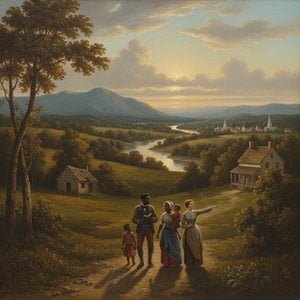
Discover Robert Seldon Duncanson, the first internationally acclaimed African American landscape artist. Explore his connection to the Hudson River School, abolitionism, and enduring legacy through serene vistas & powerful symbolism.

 Preview
 Send
Send Share
Share
 Details
 Guide
Guide

 Download
 Similars
 X-Ray
X-Ray Diaporama
 Stats
Stats


 Read More







 Glass option is only available in size under 110 CM


