

Museum-quality giclée or canvas print with fast production and flexible finish options. ( Buy Hand Made Painting Switch to Digital Image)
Pick from our preset sizes that match the artwork's original proportions.

Type the width and the height you need, to fit your frame or your wall. A print can only be cut, never made bigger than the picture, so a size with a different shape loses a part of the image. We send you a digital mockup to approve before we print anything. The picture shown on this page does not show the real cut — only the mockup does.
Worldwide Delivery () in 2 weeks instead of standard 4/5 weeks. (21 October)
Lilium candidum
Reproduction Size
"Lilium candidum" by Robert Havell is in the public domain - its copyright has expired. Copyright duration runs from the artist's death, which occurred in 1878.
"Lilium candidum" by Robert Havell can be previewed on your own wall with the artwork's AR Preview page, using augmented reality on a compatible device.
The color intensity of "Lilium candidum" is monochromatic. Intensity describes how strong the colors appear.

Robert Havell (1793-1878) was a renowned English engraver, etcher, and painter. Born in Reading, Berkshire, England, he came from a family deeply rooted in the arts. His father, Robert Havell the Elder, was also an accomplished engraver and publisher. The Havell family boasted numerous artists, writers, publishers, educators, and musicians, providing young Robert with an environment rich in creative stimulation.
Growing up within such a creatively inclined family, Havell was exposed to art from a very early age. He received his initial training from his father, mastering the techniques of engraving and etching. This foundational education proved crucial for his later success. His artistic style developed with a keen attention to detail and an ability to capture the essence of his subjects.
Havell is most famously known for his pivotal role in producing The Birds of America by John James Audubon. Between 1827 and 1838, he served as the engraver and publisher of this monumental work. This collaboration showcased Havell’s exceptional skill in aquatint – a technique involving etching designs onto copper plates to create tonal variations. The sheer scale and ambition of The Birds of America cemented both Audubon's and Havell’s reputations.
Havell’s artistic style was characterized by precision, detail, and a sensitivity to the natural world. While best known for his aquatints of Audubon’s birds, he also created landscapes and portraits demonstrating his versatility as an artist. Some notable works include his engraving of “A Battle,” which highlights his mastery of composition and technique. Other significant pieces include:
Havell’s work reflects an interest in both the natural world and historical events. His collaboration with Audubon clearly demonstrates a fascination with ornithology and wildlife. He also showed an appreciation for Indian art and culture, which subtly influenced his aesthetic sensibilities. The Hudson River School movement, with its emphasis on romantic landscapes, also appears to have impacted his landscape paintings.
Robert Havell Jr. died in London in 1878, leaving behind a lasting legacy as one of the foremost practitioners of aquatint engraving. His meticulous work on The Birds of America remains a testament to his skill and dedication. He played an integral role in popularizing American wildlife art and contributed significantly to the development of printmaking techniques during the 19th century. Today, his works are celebrated by art lovers worldwide and can be found in prominent collections, including those available at WahooArt.com.

1793 - 1878 , United Kingdom

Explore the exquisite intersection of science and art in botanical illustration. Discover the history, technical mastery, and timeless beauty of scientific floral studies from Renaissance masters to modern collectors.

Discover the timeless elegance of hand-painted botanical art. From Impressionist florals to Victorian realism, elevate your luxury interiors with museum-quality oil reproductions and bespoke commissions curated by WahooArt's master artists.

Discover the exquisite intersection of science and fine art. Explore the history of scientific illustration, from botanical watercolor masters to nature's intricate geometry, through an expert lens of art history and technical precision.
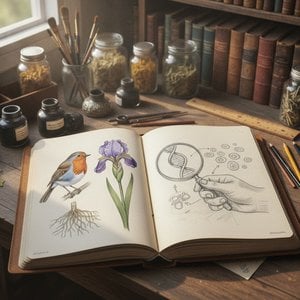
Explore the profound elegance of naturalistic illustration, where scientific precision meets artistic grace. Discover how the masters of botanical realism inspire timeless, museum-quality oil reproductions for sophisticated, high-end interiors and architectural spaces.
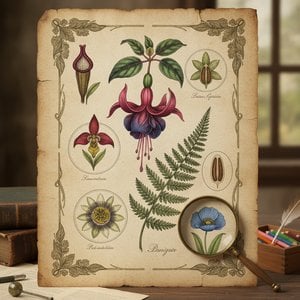
Discover the exquisite world of Victorian botanical art. Explore the intersection of scientific precision and luxury aesthetics through masterfully curated floral illustrations and hand-painted oil reproductions for discerning collectors and fine interiors.

 Preview
 Send
Send Share
Share
 Details
 Guide
Guide

 Download
 Similars
 X-Ray
X-Ray Diaporama
 Stats
Stats
 Read More






































 Glass option is only available in size under 110 CM


