x


 1700
1700 125.0 x 100.0 cm
Museum-quality giclée or canvas print with fast production and flexible finish options. ( Buy Hand Made Painting Buy Image)
Pick from our preset sizes that match the artwork's original proportions.

You may enter your own dimensions to fit a specific frame or space. If your selected size does not match the original image's proportions, we will either crop the artwork or extend the image with a mirrored or solid-fill edge. A digital mockup will be sent for your approval before production begins.
Please note that the on-screen preview does not reflect the actual cropping or extension. Only the mockup will accurately show the final composition.
While custom sizes are available, we recommend selecting a dimension from the predefined list to preserve the original proportions.
Worldwide Delivery () in 2 weeks instead of standard 4/5 weeks. (28 August)


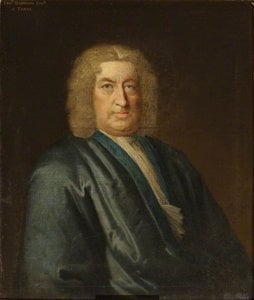
Sir John Holt
Reproduction Size

Richard van Bleeck (1670-1733) emerges from the vibrant tapestry of 17th-century Dutch painting as a quietly significant figure, a master whose influence often resides in the nuanced details of his portraits and genre scenes. Born in The Hague, into a family connected to sculpture – his father was a respected artist – van Bleeck’s artistic journey began with training under Theodor van der Schuer and Daniel Haringh, absorbing the stylistic elements of both masters before forging his own distinctive path. While not achieving the immediate fame of Rembrandt or Vermeer, van Bleeck cultivated a loyal following and left behind a body of work that reveals a keen understanding of human psychology and a remarkable ability to capture fleeting moments of emotion.
Van Bleeck’s early career was marked by a period in London, beginning around 1723. This relocation proved pivotal, exposing him to the burgeoning English art market and providing opportunities to paint for a diverse clientele – including members of the aristocracy, merchants, and even prominent figures within the Catholic community. His time in England saw a shift towards more theatrical compositions, often depicting subjects engaged in conversation or contemplation, imbued with an air of restrained elegance. He skillfully employed light and shadow, a technique known as chiaroscuro, to create dramatic effects and draw attention to key features of his sitters’ faces – subtle smiles, thoughtful gazes, and expressions of quiet dignity.
Understanding van Bleeck’s artistic development requires acknowledging the profound influence of his early mentors: Theodor van der Schuer and Daniel Haringh. Van der Schuer, a prominent painter known for his landscapes and portraits, instilled in van Bleeck a foundational understanding of composition and color theory. Haringh, a master of genre scenes and still lifes, introduced him to techniques of depicting everyday life and capturing the details of domestic interiors. These influences are evident in van Bleeck’s early works, which demonstrate a careful balance between academic training and personal artistic expression.
Van der Schuer's emphasis on theatricality and dramatic lighting – particularly his work with the Confrerie Pictura, a group of artists dedicated to exploring themes of beauty and virtue – likely resonated deeply with van Bleeck. Haringh’s focus on capturing the nuances of human emotion and portraying subjects in relatable situations further shaped van Bleeck's artistic vision. It is through this synthesis of influences that van Bleeck developed his unique style, characterized by a subtle blend of realism and theatricality.
The move to London in 1733 marked a significant turning point in van Bleeck’s career. London offered him access to a wealthy and diverse clientele, including members of the English aristocracy and the Catholic community – a group often marginalized in Protestant England. This patronage allowed van Bleeck to experiment with new compositional approaches and explore themes that were not always readily embraced in the Netherlands.
His London portraits are generally more theatrical than his earlier works, frequently depicting subjects engaged in conversation or contemplation within richly decorated interiors. He skillfully used lighting and color to create a sense of drama and intrigue, drawing attention to key features of his sitters’ faces and clothing. The inclusion of allegorical elements – such as symbols of virtue, wealth, and knowledge – further enhanced the symbolic richness of these portraits.
Despite not achieving widespread fame during his lifetime, Richard van Bleeck's work has been increasingly recognized for its artistic merit and historical significance. His portraits offer a valuable glimpse into the social and cultural life of 18th-century England and the Netherlands, revealing the aspirations, anxieties, and values of a diverse range of individuals. His subtle mastery of light, shadow, and human expression continues to captivate viewers today, solidifying his place as a significant figure in the history of Dutch Golden Age painting.
Van Bleeck’s legacy is further enhanced by the fact that he was the father of Pieter van Bleeck, who also followed in his father's footsteps as a portrait painter. This familial connection underscores the importance of Richard van Bleeck’s artistic lineage and his contribution to the development of Dutch portraiture.

1670 - 1733


Stay updated with the latest art news, exclusive offers, and decoration ideas.
Tell us about your project and our art experts will provide you with 3 personalized art suggestions.
Let Us Curate 3 Options Just for You - Free!

 Preview
 Send
Send Share
Share
 Details

 Download
 Similars
 X-Ray
X-Ray Diaporama
 Read More




































 Glass option is only available in size under 110 CM