

Hand-painted oil on canvas in your size and frame, made to order by our artists. ( Switch to Print Switch to Digital Image)





























Pick from our preset sizes that match the artwork's original proportions.

Type the width and the height you need, to fit your frame or your wall. This is hand-painted, so for a size with a different shape the artist can paint a bit more around the picture, or cut a bit — you choose. We send you a digital mockup to approve before the painting starts. The picture shown on this page does not show the real result — only the mockup does.
Worldwide Delivery () in 3/4 weeks instead of standard 5 weeks. (23 October). No compromise on quality.
Mrs. Joseph Wright
Reproduction Size
In the delicate brushstrokes of Ralph Earl’s 1792 masterpiece, "Mrs. Joseph Wright," we find more than just a mere likeness; we encounter a profound dialogue between person and place. This exquisite oil on canvas serves as a breathtaking portal to the American colonial era, capturing a moment of quiet dignity that transcends the centuries. The subject, draped in a luminous white dress accented by a soft blue sash, sits with an air of poised grace. Her bonnet, rendered with meticulous care, frames a face that engages the viewer through a gaze both attentive and serene. There is an intimate magnetism in her expression, a subtle invitation to step into her world, making this portrait an ideal centerpiece for those looking to infuse their interiors with a sense of historical soul and timeless sophistication.
The artistry of Ralph Earl shines brightest in his ability to harmonize the human form with the grandeur of the natural world. While the foreground focuses on the intricate textures of 18th-century fashion—the crispness of the white fabric and the gentle drape of the sash—the background unfolds into a sweeping, panoramic landscape. Through a masterful use of perspective, Earl invites us to look beyond the window, revealing distant mountains that rise against the horizon. This juxtaposition of the intimate, domestic setting with the vast, untamed beauty of the American wilderness creates a sense of depth and atmospheric wonder. For the discerning collector or interior designer, this composition offers a unique balance of focused detail and expansive tranquility, perfect for creating a focal point in a room that demands both elegance and breathability.
As a self-taught virtuoso, Ralph Earl brought a singular vision to the American portraiture tradition. His technique in "Mrs. Joseph Wright" demonstrates an exceptional command over light and color, utilizing subtle gradations to breathe life into the subject's skin tones and the folds of her attire. The way light interacts with the white fabric suggests a soft, natural illumination, perhaps from a nearby window, which enhances the painting's lifelike quality. This attention to detail is not merely decorative; it serves to ground the subject in a tangible reality, making her presence feel remarkably immediate even after more than two hundred years.
To possess a high-quality reproduction of this work is to bring a piece of the Smithsonian American Art Museum’s legacy into one's own home. The painting stands as a testament to an era of burgeoning American identity, where portraiture was used to document status, character, and the connection to the land. Whether placed in a formal study, a sunlit gallery, or a contemporary living space, this reproduction offers an evocative layer of storytelling. It provides an opportunity for art lovers to surround themselves with the quiet majesty of the past, celebrating the enduring beauty of Earl’s colonial vision and the timeless allure of classical portraiture.
The author of "Mrs. Joseph Wright" is Ralph Earl, and the work is dated 1792.
The guide to "Mrs. Joseph Wright" is the artwork's Guide page - a printable factsheet showing the artwork with its caption, credit line and identity table (artist, dates, medium, original size, collection).
The calm emotion of "Mrs. Joseph Wright" accompanies its American Portraiture style.

In the tapestry of early American art, few threads are as vibrant or as uniquely textured as those woven by Ralph Earl. A self-taught master who emerged from the rugged landscapes of colonial New England, Earl possessed a rare ability to capture both the intimate dignity of the individual and the sweeping grandeur of the burgeoning American wilderness. Born in 1751 in the Massachusetts countryside, his journey was one of profound transformation—from an itinerant craftsman navigating the uncertainties of a young nation to a sophisticated portraitist whose work would eventually command the attention of the colonial elite.
Earl’s early years were defined by a restless pursuit of skill and a deep connection to the visual pulse of his era. Without the benefit of formal academic training, he developed a distinctive style characterized by a meticulous attention to detail and a certain rhythmic vitality. His establishment of a studio in New Haven, Connecticut, around 1774 marked the beginning of a prolific period of portraiture. These works were more than mere likenesses; they were carefully constructed symbols of status, character, and the burgeoning identity of a people on the precipice of revolution. Through his brush, the faces of the colonial era were immortalized with a sense of permanence and grace.
The turbulent atmosphere of the American Revolution served as both a backdrop and a catalyst for Earl’s creative evolution. As the fires of conflict ignited at Lexington and Concord, Earl did not merely observe from the sidelines; he translated the chaos of war into powerful visual narratives. His collaboration with engraver Amos Doolittle resulted in a series of dramatic battle scenes that functioned as potent propaganda for the revolutionary cause. These prints, disseminated widely, demonstrated Earl’s capacity to use art as a tool for social commentary and political expression, blending his technical prowess with a profound sense of historical urgency.
Seeking to refine his burgeoning talent, Earl undertook a daring and transformative voyage to England in 1778. Legend suggests he traveled under the guise of a servant to a British captain, a testament to the resourcefulness and determination that defined his character. This period of exposure to European traditions provided him with invaluable insights into the classical techniques of portraiture and landscape. Upon his return to American shores, his work began to exhibit a newfound sophistication, blending the rugged honesty of his American roots with the refined elegance of the Old World.
While his portraits remain cornerstone achievements of his career, Earl’s contribution to the American landscape tradition is nothing short of monumental. He possessed an extraordinary eye for the sublime, most notably evidenced in his breathtaking depictions of Niagara Falls. In these panoramic visions, he moved beyond simple documentation, instead capturing the overwhelming power and spiritual majesty of the natural world. His ability to scale his vision from the intimate details of a sitter's lace collar to the thundering expanse of a waterfall demonstrates a versatility that few of his contemporaries could match.
The historical significance of Ralph Earl lies in his role as a bridge between the colonial past and the emerging American identity. His oeuvre serves as a visual archive of a nation in flux, documenting the faces, the politics, and the landscapes that shaped the United States. Through his work, we encounter the quiet strength of the colonial subject and the untamed beauty of the American frontier. Today, Earl is remembered not just as a painter, but as a visionary who helped define the visual language of a new era, leaving behind a legacy that continues to resonate with the spirit of discovery and resilience.

1751 - 1801 , United States of America

Embark on a visual journey through the evolution of fashion photography. Discover how masters like Gianfranco Ferré blended geometry, surrealism, and texture to redefine high-fashion art for collectors and connoisseurs of luxury imagery.
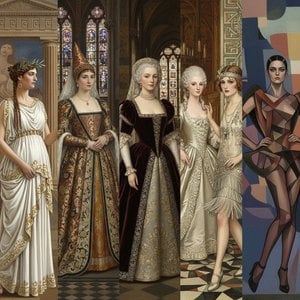
Explore the breathtaking intersection of fine art and high fashion. Discover how iconic masterpieces from Art Deco to Impressionism have shaped the world of luxury couture and timeless design in this curated visual journey.

Discover the exquisite world of fashion illustration art. From Art Deco elegance to bespoke oil reproductions, explore how timeless sartorial beauty transforms luxury interiors through masterfully crafted canvas works and curated historical masterpieces.

 Preview
 Send
Send Share
Share
 Details
 Guide
Guide

 Download
 Similars
 X-Ray
X-Ray Diaporama
 Stats
Stats

 Read More









 Glass option is only available in size under 110 CM


