

Hand-painted oil on canvas in your size and frame, made to order by our artists. ( Switch to Print Switch to Digital Image)





























Pick from our preset sizes that match the artwork's original proportions.

You may enter your own dimensions to fit a specific frame or space. If your selected size does not match the original image's proportions, we will either crop the artwork or extend the painting with additional hand-painted elements. A digital mockup will be sent for your approval before production begins.
Please note that the on-screen preview does not reflect the actual cropping or extension. Only the mockup will accurately show the final composition.
While custom sizes are available, we recommend selecting a dimension from the predefined list to preserve the original proportions.
Worldwide Delivery () in 3/4 weeks instead of standard 5 weeks. (20 September). No compromise on quality.


Etude pour une baigneuse
Reproduction Size
In the quiet realm of Pierre-Auguste Renoir’s “Étude pour une baigneuse” (Study for a Bather), we find a profound departure from the vibrant, sun-drenched palettes typically associated with the Impressionist master. This exquisite drypoint etching, executed around 1906, invites the viewer into a more intimate, contemplative space. Rather than the dazzling colors of a Parisian garden, Renoir presents us with a monochromatic meditation, utilizing a sophisticated range of grayscale hues—from the softest creams to the deepest, most velvety charcoates. The artwork captures a fleeting glimpse of beauty, not through the spectacle of light and color, but through the delicate interplay of line and shadow.
The subject matter is deceptively simple yet deeply evocative: a nude female figure seated in a moment of quiet repose. There is an undeniable sense of vulnerability and intimacy in her pose, as if we have stumbled upon a private moment during the artist's preparatory process. This deliberate choice to present a study rather than a finished masterpiece allows us to witness the very heartbeat of creation. The figure serves as both a model and a collaborator, her form acting as the canvas upon which Renoir explores the nuances of human anatomy and the subtle textures of skin.
Technically, this piece is a triumph of printmaking. Renoir employs the drypoint technique with a masterful command of hatching and cross-hatching to sculpt form out of emptiness. Without the aid of color, the artist relies entirely on the density and direction of his lines to suggest volume, weight, and movement. The linework is wonderfully expressive—loose, gestural, and occasionally sketchy—which lends the piece an air of spontaneity and immediacy. These rhythmic strokes create a tactile quality, where one can almost feel the grain of the paper and the soft contours of the bather's body.
The composition is thoughtfully arranged to guide the eye through a harmonious visual flow. By positioning the figure slightly off-center and employing a vertical orientation, Renoir creates a dynamic balance that prevents the image from feeling static. The way the composition crops the subject at the knees and upper chest focuses our attention on the organic, flowing shapes of the torso, emphasizing the grace of the human silhouette. For the discerning collector or interior designer, this piece offers a sophisticated focal point that brings a sense of classical elegance and understated luxury to any curated space.
To look upon “Étude pour une baigneuse” is to understand the enduring essence of Impressionism. While the movement is often celebrated for its pursuit of transient light, this work proves that the same spirit can be captured through tonal variation and emotional depth. It reflects a period in Renoir's career where he was deeply engaged with the fundamental elements of art—form, light, and texture—stripping away the distractions of color to reveal the structural beauty beneath.
For those seeking to bring a piece of art history into their homes, this reproduction offers more than just decoration; it offers an emotional connection to the late works of one of France's greatest masters. The artwork’s ability to evoke feelings of tranquility, intimacy, and timelessness makes it a versatile choice for modern interiors, whether placed in a minimalist gallery-style setting or a warm, traditional study. It remains a poignant reminder that even in the simplest of studies, there lies an infinite capacity for beauty and profound artistic truth.


1841 - 1919 , France

Journey through history with 10 legendary etchings that redefined art. From Rembrandt to Goya, explore the stories behind these timeless masterpieces and find museum-quality reproductions for your decor. Discover all masterpieces on WahooArt.com.
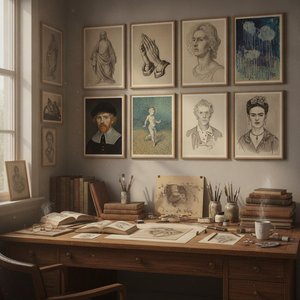
Journey through history with 10 iconic artworks exploring the theme of study. From classical sketches to masterwork oil paintings, discover the stories behind these timeless pieces. Find museum-quality art reproductions and decor inspiration. Explore the full collection on WahooArt.com.

Journey through the light and color of the Impressionist landscape movement. Explore 10 iconic masterpieces by legends like Monet, uncovering the stories behind these timeless works. Find museum-quality art reproductions for your decor at WahooArt.com. Discover all masterpieces online.

 Preview
 Send
Send Share
Share
 Details
 Guide
Guide

 Download
 Similars
 X-Ray
X-Ray Diaporama
 Stats
Stats

 Read More







 Glass option is only available in size under 110 CM


