Oil On CanvasWallArtEarly Netherlandish Painting
 1450Renaissance
 14.0 x 19.0 cm
 Städel Museum
Purchase a high-resolution, enhanced digital image, far superior to the online preview.
Each file is meticulously prepared by our in-house specialists using advanced tools and expert manual retouching. We ensure every image has exceptional clarity, precise color accuracy, and fine detail.
The final file is delivered via email within 72 hours, optimized for immediate use in professional, editorial, and print environments. This is the same quality trusted by top-tier design studios, publishers, and galleries.
Download a high-resolution file for personal display, printing, and creative projects. ( Switch to Print Buy Hand Made Painting)
When you choose WahooArt.com, you're not just getting an image - you're receiving a professionally enhanced digital artwork, crafted with precision and backed by a satisfaction guarantee. Here's everything that comes with your order, automatically:

Your high-resolution digital image file will be emailed to you within 72 hours of ordering - ready for immediate use.

Your artwork is professionally optimized using advanced AI tools and manual editing, ensuring maximum detail, clarity, and color accuracy.

Accidentally deleted or lost your file? No worries - we'll resend it to you anytime, free of charge.

Enjoy your artwork instantly with zero customs, duties, or delivery fees - digital downloads are always tax-free.

We ensure your digital image reflects the original colors as closely as possible using professional tools and color management.

If you're not satisfied with your digital image, we'll revise it or refund 100% within 100 days - no questions asked.

Not satisfied? Get a full refund within 100 days of receiving your digital file - no questions asked.

Buy 3 images, save 10% - Buy 5, save 15% - Buy 10+, save 20%. Great for creative projects, galleries, and agencies.
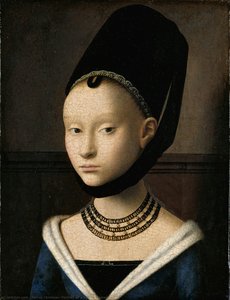
Petrus Christus's “The Falconer,” painted around 1450, is more than just a depiction of a man with a falcon; it’s a meticulously crafted window into the burgeoning artistic landscape of Bruges during the early 15th century. Measuring a modest 14 x 19 cm, this intimate painting reveals the remarkable skill and observational acuity of its creator, a young master emerging from the workshops of the era's most celebrated painters.
The subject himself – a falconer – immediately evokes associations with nobility and status. The man’s attire, a richly textured robe, speaks to his position, while the bird itself, perched confidently on his arm, is a symbol of both skill and dominion. Christus's handling of this seemingly simple scene demonstrates an extraordinary attention to detail. The falcon’s feathers are rendered with astonishing realism, capturing the texture and movement of its plumage – a hallmark of the Flemish school’s pioneering use of oil paint, allowing for nuanced shading and luminous effects that were revolutionary at the time.
Christus was a key figure in the transition from the more stylized approaches of earlier Gothic painting to the burgeoning realism championed by artists like Jan van Eyck. His use of oil paint, though still relatively new, is evident in the subtle gradations of light and shadow that define the man’s face and clothing. The artist's meticulous attention to detail – the folds of the robe, the texture of the fur hat, the precise rendering of the falcon’s eye – demonstrates a deep understanding of human anatomy and animal form. This level of realism was not merely decorative; it reflected a growing intellectual interest in observing and accurately representing the world around him.
The painting's scale further contributes to its impact. Its small size invites close scrutiny, encouraging the viewer to appreciate the artist’s painstaking work and the intricate details that he has brought to life. The composition is balanced and harmonious, drawing the eye naturally from the falconer’s face to the bird itself, creating a sense of quiet contemplation.
"The Falconer" was created in Bruges, a thriving center of commerce and art during this period. Bruges was experiencing a cultural renaissance fueled by wealthy merchants and guilds who commissioned ambitious works of art. The falcon itself held symbolic significance – representing courage, nobility, and the ability to soar above earthly concerns. Christus’s work reflects the humanist values emerging at the time, emphasizing observation, reason, and an appreciation for beauty.
Painted in 1450, this artwork represents a pivotal moment in art history, bridging the gap between medieval artistic conventions and the burgeoning ideals of the Renaissance. Its creation marks the rise of a new generation of Flemish artists who would shape the course of European painting for centuries to come.

1465 - 1476 , Belgium

 Preview
 Send
Send Share
Share
 Details
 Guide
Guide

 Download
 Similars
 X-Ray
X-Ray Diaporama
 Stats
Stats Read More