Preview AR preview Buy Hand Made Painting Switch to Digital Image Send
Details Guide Add to favorites Download Similars X-Ray Diaporama Stats

Studies for

Explore the art of Paul Sérusier (1864-1927), a French Post-Impressionist painter & pioneer of abstract art. Discover his Cloisonnism style, influence on Les Nabis, and key works like 'The Talisman'.

Giclée / Art Print

Museum-quality giclée or canvas print with fast production and flexible finish options. ( Buy Hand Made Painting Switch to Digital Image)

Corner sample of the P118B picture frame: moulded polystyrene, 5 cm wide and 3 cm thick
P118B $10
Corner sample of the P118H picture frame: moulded polystyrene, 5 cm wide and 3 cm thick
P118H $10
Corner sample of the P118W picture frame: moulded polystyrene, 5 cm wide and 3 cm thick
P118W $10
Corner sample of the P438Z picture frame: moulded polystyrene, 5.5 cm wide and 3.5 cm thick
P438Z $10
Corner sample of the P508JH picture frame: moulded polystyrene, 7 cm wide and 3.5 cm thick
P508JH $12
Corner sample of the P508YH picture frame: moulded polystyrene, 7 cm wide and 3.5 cm thick
P508YH $12
Corner sample of the P805H picture frame: moulded polystyrene, 5 cm wide and 3.5 cm thick
P805H $10
Corner sample of the P805Z picture frame: moulded polystyrene, 5 cm wide and 3.5 cm thick
P805Z $10
Corner sample of the P919BZ picture frame: moulded polystyrene, 7 cm wide and 3.5 cm thick
P919BZ $10
Corner sample of the P919G picture frame: moulded polystyrene, 7 cm wide and 3.5 cm thick
P919G $10
Corner sample of the P919XJ picture frame: moulded polystyrene, 7 cm wide and 3.5 cm thick
P919XJ $10
Corner sample of the P959ZH picture frame: moulded polystyrene, 5 cm wide and 3 cm thick
P959ZH $10
Corner sample of the P968JZ picture frame: moulded polystyrene, 6 cm wide and 4 cm thick
P968JZ $12
Corner sample of the W106C picture frame: solid wood, 5 cm wide and 3 cm thick
W106C $8
Corner sample of the W218G picture frame: solid wood, 5 cm wide and 3 cm thick
W218G $10
Corner sample of the W218JH picture frame: solid wood, 5 cm wide and 3 cm thick
W218JH $8
Corner sample of the W218Y picture frame: solid wood, 5 cm wide and 3 cm thick
W218Y $10
Corner sample of the W307PJ picture frame: solid wood, 6 cm wide and 3 cm thick
W307PJ $10
Corner sample of the W316G picture frame: solid wood, 6 cm wide and 3 cm thick
W316G $10
Corner sample of the W316PJ picture frame: solid wood, 6 cm wide and 3 cm thick
W316PJ $8
Corner sample of the W316Y picture frame: solid wood, 6 cm wide and 3 cm thick
W316Y $10
Corner sample of the W398PJ picture frame: solid wood, 5 cm wide and 3 cm thick
W398PJ $8
Corner sample of the W4111J picture frame: solid wood, 6.5 cm wide and 3.5 cm thick
W4111J $10
Corner sample of the W500HY picture frame: solid wood, 7 cm wide and 5 cm thick
W500HY $15
Corner sample of the W500JH picture frame: solid wood, 7 cm wide and 5 cm thick
W500JH $15
Corner sample of the W692G picture frame: solid wood, 8 cm wide and 4 cm thick
W692G $12
Corner sample of the W849H picture frame: solid wood, 5 cm wide and 3 cm thick
W849H $8
Corner sample of the W940BG picture frame: solid wood, 7.5 cm wide and 4.5 cm thick
W940BG $15
Corner sample of the W953PJ picture frame: solid wood, 6 cm wide and 3.5 cm thick
W953PJ $8

Standard
custom
CM
INCH

Pick from our preset sizes that match the artwork's original proportions.

width
height

You may enter your own dimensions to fit a specific frame or space. If your selected size does not match the original image's proportions, we will either crop the artwork or extend the image with a mirrored or solid-fill edge. A digital mockup will be sent for your approval before production begins.
Please note that the on-screen preview does not reflect the actual cropping or extension. Only the mockup will accurately show the final composition.
While custom sizes are available, we recommend selecting a dimension from the predefined list to preserve the original proportions.

Worldwide Delivery () in 2 weeks instead of standard 4/5 weeks. (13 October)

Free Worldwide Express Shipping
High-Quality Linen Canvas
Full Shipping Insurance
Customs Tax Refund Guarantee
True Color Matching Guarantee
100-Day Return Policy (Defects Only)
100% Money-Back Guarantee
Bulk Discount Offer

Total Price

$ 69

Studies for

Giclée / Art Print

Reproduction Size

-

Total Price

$ 69

Quick Facts

  • Influences: Paul Gauguin
  • Location: Musée de Pont-Aven
  • Movement: Post-Impressionism
  • Subject or theme: Portrait
  • Year: 1893
  • Notable elements or techniques: Cloissonism, Experimental abstraction

Art Quiz

There is only one correct answer for each question.

Question 1:
What artistic movement is Paul Serusier associated with?
Question 2:
In what year was 'Studies for' created?
Question 3:
Where is the painting 'Studies for' currently housed?
Question 4:
What medium was used to create this artwork?
Question 5:
Paul Serusier collaborated closely with which artist during his time in Pont-Aven?

A Moment Frozen in Pencil: Exploring Paul Sérusier’s “Studies for”

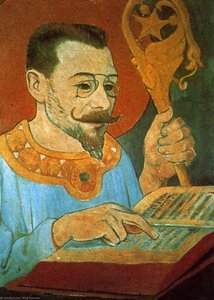
Paul Serusier's "Studies for," executed in 1893, stands as a pivotal work within the burgeoning avant-garde movement of Impressionism and its subsequent evolution into abstract art. Captured on paper with meticulous pencil strokes, this unassuming composition belies an ambitious exploration of form and color—a testament to Serusier’s pioneering spirit and his profound influence on artists like Gauguin and Bonnard. The painting depicts a woman gazing downwards, her hands clasped in contemplation, a posture that speaks volumes about introspection and vulnerability. Her dress is simple yet elegant, grounding the figure against the backdrop of a hazy meadow—a deliberate choice reflecting Serusier’s fascination with capturing atmospheric effects and conveying emotional resonance.
  • Style & Technique: “Studies for” exemplifies cloisonnism, a technique championed by Gauguin and Serusier themselves. Cloisonnism departs from traditional painting methods by dividing the surface into distinct panels or cells filled with color—a method that prioritizes visual clarity and symbolic representation over realistic depiction. The pencil strokes are deliberately loose and expressive, capturing the essence of observation rather than striving for photographic accuracy.
  • Historical Context: Created during the heady days of 1893, “Studies for” emerged from the crucible of Les Nabis—a group of artists who sought to liberate painting from academic constraints. Influenced by Japanese prints and Cézanne’s geometric explorations, Serusier pushed boundaries, questioning established conventions and embracing a radically new aesthetic language.
  • Symbolism & Emotion: The woman's downward gaze is laden with symbolic significance—representing contemplation, sorrow, or perhaps an acceptance of fate. The meadow itself serves as a visual metaphor for tranquility and renewal, juxtaposed against the quiet stillness of the figure. Serusier’s masterful use of tonal variation contributes to the painting’s emotional depth, conveying a sense of melancholy yet imbued with subtle optimism.
  • Location & Significance: Currently housed at Musée de Pont-Aven in France, “Studies for” remains an invaluable artifact of artistic innovation. Its influence extends far beyond its immediate contemporaries, shaping the trajectory of modern art and inspiring generations of artists to experiment with abstraction and explore the expressive potential of tonal color.

Further Exploration: The Legacy of Cloisonnism

Serusier’s embrace of cloisonnism wasn't merely a stylistic choice; it represented a fundamental shift in artistic thinking. By rejecting illusionistic representation, artists like Serusier sought to distill the visual experience into its purest form—a deliberate rejection of academic realism and an affirmation of subjective perception. This approach paved the way for subsequent developments in abstract art, demonstrating that beauty could reside not just in accurate depiction but also in carefully considered compositional elements and tonal harmonies.

A Reproduction Worth Considering

WahooArt.com offers exceptional reproductions of “Studies for,” meticulously crafted to capture the nuances of Serusier’s original vision. Utilizing archival pigments and printing techniques, our reproductions faithfully reproduce the painting's subtle color palette and textural qualities—allowing collectors and interior designers alike to experience the artwork's evocative beauty firsthand. Explore our collection today and bring a piece of Impressionist history into your home.

Questions & Answers

How does the style of "Studies for" relate to its creator's era?

"Studies for" by Paul Sérusier is placed in the Post-Impressionism movement, within the 19th-Century era of its creator.

In which year and which movement was "Studies for" made?

"Studies for" was created in 1893 as a work of the Post-Impressionism movement. Date and movement anchor the artwork in art history.

Did "Studies for" stay in its artist's homeland?

Yes - the artwork is kept in the artist's home country. Paul Sérusier was born in France, and the original "Studies for" is held in a museum in France.

What does "Studies for" by Paul Sérusier depict, and in what mood?

"Studies for" by Paul Sérusier combines woman, pencil drawing, landscape, gesture, minimalism, composition, symbolism with a serene atmosphere.

How big is the original "Studies for"?

The recorded dimensions of "Studies for" by Paul Sérusier are 11 x 14 cm. Reproductions can be ordered in other sizes while keeping the same proportions.

Which print setup is suggested for "Studies for" by Paul Sérusier?

medium size, portrait orientation: that is the print setup suggested for "Studies for" by Paul Sérusier.

What is the emotional tone of "Studies for" by Paul Sérusier?

"Studies for" is associated with a reflective feeling. The emotional tone describes the impression the work gives.

Is "Studies for" by Paul Sérusier a bright or a dark artwork?

Overall, "Studies for" is recorded as brilliant. Perceived brightness describes how light or dark the work appears.


Artist Biography

early life and education

paul sérusier, a french painter, was born on november 9, 1864, in paris. he studied at the académie julian, where he became a monitor in the mid-1880s. this marked the beginning of his artistic journey, which would eventually lead him to pioneer abstract art and inspire the avant-garde nabis movement, synthetism, and cloisonnism.

artistic career

in the summer of 1888, sérusier traveled to pont-aven, where he joined a small group of artists centered around paul gauguin. under gauguin's close supervision, sérusier painted "the talisman," an extreme exercise in cloisonnism that approximated pure abstraction. this piece showcased his innovative style and willingness to experiment with new techniques. as a post-impressionist painter, sérusier was part of the group les nabis, alongside pierre bonnard, édouard vuillard, and maurice denis. although not as widely recognized as some of his peers, sérusier's contributions to the development of abstract art are undeniable.

notable works and legacy

some of sérusier's notable works include: sérusier's later years saw him teaching at the académie ranson and publishing his book "abc de la peinture" in 1921. he passed away on october 7, 1927, in morlaix.

artistic movement and influence

sérusier's work was influenced by cloisonnism, a style characterized by bold and flat forms separated by dark contours. this movement, which emerged in the late 19th century, played a significant role in shaping the development of modern art. key takeaways: * paul sérusier was a french painter who pioneered abstract art and inspired the nabis movement. * he studied at the académie julian and later taught at the académie ranson. * sérusier's work was influenced by cloisonnism, a style characterized by bold and flat forms.
Paul Sérusier

Paul Sérusier

1864 - 1927 , France

Quick Facts

  • Full Name: Louis-Paul-Henri Sérusier
  • Nationality: French
  • Date Of Birth: 1864
  • Date Of Death: 1927
  • Place Of Birth: Paris, France
  • Notable Artworks:
    • The Talisman
    • Landscape at the Bois d’Amour
  • Artistic Movement Or Style: Post-Impressionism
  • Artists Who Influenced This Artist:
    • Paul Gauguin
    • Maurice Denis
Explore artworks organized by themes, styles, and characteristics.