
x


Hand-painted oil on canvas in your size and frame, made to order by our artists. ( Buy Print Buy Image)





























Pick from our preset sizes that match the artwork's original proportions.

You may enter your own dimensions to fit a specific frame or space. If your selected size does not match the original image's proportions, we will either crop the artwork or extend the painting with additional hand-painted elements. A digital mockup will be sent for your approval before production begins.
Please note that the on-screen preview does not reflect the actual cropping or extension. Only the mockup will accurately show the final composition.
While custom sizes are available, we recommend selecting a dimension from the predefined list to preserve the original proportions.
Worldwide Delivery () in 3/4 weeks instead of standard 5 weeks. (29 August). No compromise on quality.


Nomad Mother
Reproduction Size
To stand before Paul Klee’s “Nomad Mother” is to enter a realm where the boundaries between the physical and the psychological dissolve into a vibrant, unsettling dance of color. The painting presents us with a woman's face, yet it eschews the comforts of traditional portraiture. There is no attempt at photographic realism here; instead, Klee invites the viewer into an intimate, abstract encounter. The central figure emerges from a sea of deep, commanding crimson—a backdrop that pulses with an almost visceral intensity. This bold use of color immediately establishes a mood of profound vulnerability and raw passion, pulling the observer into a space where emotion takes precedence over anatomy.
The composition is a masterclass in Expressionist economy. Klee utilizes simplified geometric shapes to construct the features of the face, creating a visage that feels both ancient and modern. The eyes, wide and perhaps startled, serve as windows into an inner landscape of surprise or deep-seated longing. By stripping away meticulous detail, Klee allows the viewer to focus on the rhythmic interplay of form and hue, making the artwork not just something to be seen, but something to be felt. For the collector or interior designer, this piece offers a striking focal point—a work that commands attention through its sheer emotional presence and sophisticated use of negative space.
Klee’s technical approach in “Nomad Mother” reveals his deep fascination with the structural elements of art. He employs a technique reminiscent of cloisonné painting, a method often associated with Byzantine mosaics where distinct areas of color are bounded by dark outlines. This creates a sense of compartmentalized light and shadow, giving the flat surface a textured, almost ethereal quality. The overlapping planes of color do not merely sit upon the canvas; they seem to vibrate against one another, inviting the eye to wander through multiple layers of meaning.
His brushwork remains loose and spontaneous, avoiding the rigid constraints of academic perfection. This fluidity is essential to the work's success, as it mirrors the movement of thought and feeling. The way the pigments bleed into one another at certain edges suggests a world in flux, much like the nomadic spirit suggested by the title. For those seeking to adorn a space with high-quality reproductions, the tactile depth achieved through Klee’s method provides a sense of luxury and intellectual depth that transcends mere decoration.
To truly appreciate “Nomad Mother,” one must consider the historical shadows cast by the years following World War I. This was an era of profound displacement, anxiety, and the shattering of old certainties across Europe. Klee’s work acts as a visual manifestation of this collective psychological state. The distortion of the facial features is not merely a stylistic choice but a reflection of a world that had lost its equilibrium. Through his lens, the "Nomad Mother" becomes a symbol of resilience amidst chaos—a figure navigating an uncertain landscape with a quiet, haunting strength.
The symbolism within the piece is as layered as Klee’s technique. The crimson background, while evocative of danger and intensity, also speaks to maternal instinct, fertility, and the protective warmth of the hearth. It is a color of lifeblood and passion, grounding the abstract forms in something fundamentally human. In an era defined by the rise of Surrealism and Expressionism, Klee’s ability to articulate complex themes of longing and identity through pure abstraction remains unparalleled. Owning or displaying a piece of this caliber is more than an aesthetic choice; it is an engagement with one of the most profound emotional legacies in modern art history.


1879 - 1940 , Switzerland

Journey through Paul Klee's 25 most iconic paintings & prints. Explore his abstract style, Bauhaus influence, and vibrant color palettes. Find museum-quality art reproductions & decor ideas at WahooArt.com. Discover all masterpieces online.

Explore 10 defining Abstract Expressionism masterpieces by Pollock, Rothko & de Kooning. Discover the stories behind these iconic paintings and find museum-quality art reproductions to elevate your home decor on .

Explore the captivating world of Paul Klee! Discover his innovative art, Bauhaus influence, & unique symbolic language. Expert analysis & high-quality reproductions at WahooArt.
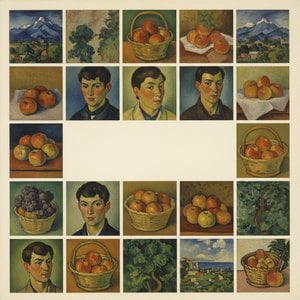
Journey through 25 iconic artworks by Paul Cézanne – a master of Impressionism and Post-Impressionism. Explore his landscapes, still lifes, and the stories behind these timeless masterpieces. Discover museum-quality reproductions & curated decor at WahooArt.com.

Explore 10 defining masterpieces of Geometric Abstraction! Discover Kandinsky, Mondrian & Malevich’s iconic works. Find museum-quality art reproductions and curated decor ideas to elevate your home at WahooArt.com.


Stay updated with the latest art news, exclusive offers, and decoration ideas.
Tell us about your project and our art experts will provide you with 3 personalized art suggestions.
Let Us Curate 3 Options Just for You - Free!

 Preview
 Send
Send Share
Share
 Details

 Download
 Similars
 X-Ray
X-Ray Diaporama

 Read More







 Glass option is only available in size under 110 CM


