
x


Hand-painted oil on canvas in your size and frame, made to order by our artists. ( Buy Print Buy Image)





























Pick from our preset sizes that match the artwork's original proportions.

You may enter your own dimensions to fit a specific frame or space. If your selected size does not match the original image's proportions, we will either crop the artwork or extend the painting with additional hand-painted elements. A digital mockup will be sent for your approval before production begins.
Please note that the on-screen preview does not reflect the actual cropping or extension. Only the mockup will accurately show the final composition.
While custom sizes are available, we recommend selecting a dimension from the predefined list to preserve the original proportions.
Worldwide Delivery () in 3/4 weeks instead of standard 5 weeks. (26 August). No compromise on quality.


Insula Dulcamara
Reproduction Size
Paul Klee’s “Insula Dulcamara,” completed in 1938 during his struggle with scleroderma, stands as a testament to the artist's unwavering commitment to exploring profound themes of identity and mortality within an abstract framework. More than just a visually arresting composition—characterized by a vibrant yellow background punctuated by swirling shapes and figures—the painting invites viewers into a complex dialogue about Klee’s personal anxieties and his artistic philosophy.
The artwork's genesis lies in Klee’s physical ailment, which profoundly impacted his creative process. Facing debilitating symptoms, he sought solace in art as a means of confronting existential questions. This introspection is palpable throughout “Insula Dulcamara,” where the artist meticulously crafts a visual narrative that transcends mere decorative beauty.
Initially conceived as “Calypso’s Island,” referencing Homer’s Odyssey and symbolizing Klee's own journey toward self-understanding, the painting depicts a stylized desert landscape populated by symbolic figures. The central motif—a large face or elephant—represents Klee himself, mirroring his physical vulnerability and hinting at the inevitability of death. Surrounding it are smaller shapes and symbols that contribute to the overall tapestry of meaning.
According to Chris Pike’s insightful analysis, the painting's contours mirror Klee’s name ("Paul"), emphasizing a deliberate act of self-representation. The pale face within the central figure symbolizes his skin discoloration resulting from scleroderma—a poignant reminder of his illness and its influence on his artistic vision.
Klee’s masterful use of color is paramount to “Insula Dulcamara’s” emotive power. Predominantly yellow, the hue embodies optimism and vitality—a deliberate contrast against the underlying anxieties surrounding mortality. However, splashes of red accentuate the face and other shapes, injecting a note of passion and urgency into the composition.
Executed on newsprint pasted to burlap, Klee employed a technique that prioritized textural richness and subtle layering. The juxtaposition of matte burlap and translucent newsprint creates an intriguing interplay between surface and depth—a characteristic feature of Klee’s oeuvre. This unconventional material choice underscores his desire to move beyond traditional artistic conventions and embrace new expressive possibilities.
“Insula Dulcamara” resides within the Zentrum Paul Klee in Bern, Switzerland—a museum dedicated to preserving and celebrating Klee’s extraordinary artistic legacy. Designed by Renzo Piano, the building itself embodies Klee's aesthetic principles, prioritizing simplicity and openness.
The Zentrum houses approximately 40 percent of Klee’s entire pictorial oeuvre, offering visitors unparalleled access to his groundbreaking artworks. Exploring “Insula Dulcamara” alongside other masterpieces allows for a deeper appreciation of Klee’s artistic vision—a vision rooted in both mythic storytelling and profound psychological introspection.
"Insula Dulcamara" isn't merely an aesthetically pleasing image; it’s a carefully constructed meditation on themes of identity, mortality, and the transformative power of art. Klee invites us to contemplate these weighty subjects alongside his playful exploration of form and color—a testament to his enduring influence on 20th-century art.


1879 - 1940 , Switzerland

Journey through Paul Klee's 25 most iconic paintings & prints. Explore his abstract style, Bauhaus influence, and vibrant color palettes. Find museum-quality art reproductions & decor ideas at WahooArt.com. Discover all masterpieces online.

Explore the captivating world of Paul Klee! Discover his innovative art, Bauhaus influence, & unique symbolic language. Expert analysis & high-quality reproductions at WahooArt.

Explore 10 defining masterpieces of Geometric Abstraction! Discover Kandinsky, Mondrian & Malevich’s iconic works. Find museum-quality art reproductions and curated decor ideas to elevate your home at WahooArt.com.
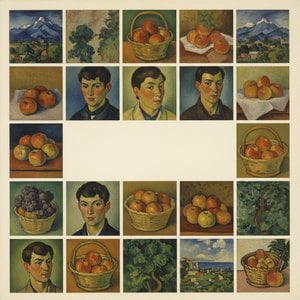
Journey through 25 iconic artworks by Paul Cézanne – a master of Impressionism and Post-Impressionism. Explore his landscapes, still lifes, and the stories behind these timeless masterpieces. Discover museum-quality reproductions & curated decor at WahooArt.com.

Journey through Wassily Kandinsky's 25 most iconic abstract paintings. Explore his revolutionary use of color, form & spiritual expressionism. Find museum-quality Kandinsky reproductions and elevate your home decor with WahooArt.com. Discover all masterpieces on WahooArt.com!


Stay updated with the latest art news, exclusive offers, and decoration ideas.
Tell us about your project and our art experts will provide you with 3 personalized art suggestions.
Let Us Curate 3 Options Just for You - Free!

 Preview
 Send
Send Share
Share
 Details

 Download
 Similars
 X-Ray
X-Ray Diaporama

 Read More







 Glass option is only available in size under 110 CM


