Purchase a high-resolution, enhanced digital image, far superior to the online preview.
Each file is meticulously prepared by our in-house specialists using advanced tools and expert manual retouching. We ensure every image has exceptional clarity, precise color accuracy, and fine detail.
The final file is delivered via email within 72 hours, optimized for immediate use in professional, editorial, and print environments. This is the same quality trusted by top-tier design studios, publishers, and galleries.
Download a high-resolution file for personal display, printing, and creative projects. ( Switch to Print Buy Hand Made Painting)
When you choose WahooArt.com, you're not just getting an image - you're receiving a professionally enhanced digital artwork, crafted with precision and backed by a satisfaction guarantee. Here's everything that comes with your order, automatically:
Your high-resolution digital image file will be emailed to you within 72 hours of ordering - ready for immediate use.
Your artwork is professionally optimized using advanced AI tools and manual editing, ensuring maximum detail, clarity, and color accuracy.
Accidentally deleted or lost your file? No worries - we'll resend it to you anytime, free of charge.
Enjoy your artwork instantly with zero customs, duties, or delivery fees - digital downloads are always tax-free.
We ensure your digital image reflects the original colors as closely as possible using professional tools and color management.
If you're not satisfied with your digital image, we'll revise it or refund 100% within 100 days - no questions asked.
Not satisfied? Get a full refund within 100 days of receiving your digital file - no questions asked.
Buy 3 images, save 10% - Buy 5, save 15% - Buy 10+, save 20%. Great for creative projects, galleries, and agencies.
Jackson Pollock was a revolutionary figure in the abstract expressionist movement, reshaping artistic perception and challenging conventional notions of painting. His groundbreaking drip technique—characterized by pouring and splattering paint onto canvas—established him as one of the most influential artists of the 20th century, cementing his place in art history.
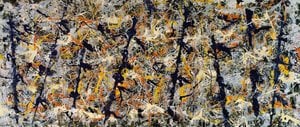
“The Grayed Rainbow,” painted in 1953, exemplifies Pollock’s distinctive style. This monumental canvas transcends mere visual representation; it embodies a profound exploration of emotion and process, inviting viewers into a dialogue with the artist's subconscious.
Born Paul Jackson Pollock on January 28, 1912, in Cody, Wyoming, Pollock’s formative years were marked by nomadic experiences shaped by his father’s profession as a land surveyor. This itinerant upbringing instilled within him an inherent restlessness—a desire to break free from established boundaries and forge new artistic paths.
He pursued formal training at NYU and the Art Students League, absorbing foundational techniques while simultaneously rejecting academic constraints. Early influences included regionalist painters like Thomas Hart Benton and David Alfaro Siqueiros, alongside the stylistic explorations of Surrealism and Native American art—elements that would coalesce into Pollock’s singular vision.
“The Grayed Rainbow” is a testament to Pollock's mastery of drip painting. Measuring 68 x 104 inches, the canvas pulsates with dynamic energy as countless lines and shapes cascade across its surface. Paint was applied using a variety of methods—from forceful pours to delicate splatters—creating a textured tapestry that defies categorization.
Dominantly gray, punctuated by flashes of black, white, and orange, the painting speaks to themes of chance, spontaneity, and the inherent beauty found within imperfection. Pollock’s deliberate disregard for traditional compositional rules underscores his commitment to conveying raw emotion and capturing the immediacy of artistic creation.
“The Grayed Rainbow” stands as a cornerstone of abstract expressionism—a movement born from the anxieties and aspirations of postwar America. Artists like Pollock sought to liberate painting from representational constraints, prioritizing gesture and emotion over precise depiction.
Pollock’s exploration of color—particularly the subtle interplay between gray and hidden hues—reflects a fascination with both the natural world and psychological depth. The painting encourages contemplation on the relationship between form and feeling, inviting viewers to interpret its visual language as they see fit.
Discover more about abstract expressionism and other art movements on https://WahooArt.com.
Learn more about Jackson Pollock and his work on https://WahooArt.com.
The historical period of "Grayed Rainbow" by Paul Jackson Pollock is Modern. This classification situates the work in art history.
The perceived brightness of "Grayed Rainbow" by Paul Jackson Pollock is brilliant. It can be matched to the light of the intended space.
The dominant color of "Grayed Rainbow" by Paul Jackson Pollock is rosy brown (#b3a596).

Paul Jackson Pollock, born in Cody, Wyoming, in 1912, was a restless spirit from the outset. His early life was marked by frequent relocation as his father pursued work as a land surveyor across the vast landscapes of the American West. This itinerant existence instilled in young Pollock a deep connection to the natural world and an exposure to diverse cultures, particularly through encounters with Native American art during those surveying trips – impressions that would subtly permeate his artistic vision later in life. Though he never explicitly imitated Indigenous styles, the raw energy and spiritual resonance of these early experiences undoubtedly left their mark.
Pollock’s formal artistic training began at the Manual Arts High School in Los Angeles, followed by studies at the Art Students League of New York under the tutelage of Thomas Hart Benton. Benton, a prominent figure in the Regionalist movement, emphasized rhythmic composition and narrative themes rooted in American life. While Pollock initially absorbed these lessons, his inherent inclination leaned toward more abstract explorations. He was also profoundly impacted by Mexican muralists like José Clemente Orozco, whose powerful depictions of social struggle resonated deeply with him. These early influences laid a foundation, but it was the burgeoning world of Surrealism that truly unlocked Pollock’s artistic potential.
The 1930s saw Pollock experimenting with various techniques, seeking alternatives to traditional brushwork. He began pouring paint, exploring its fluidity and unpredictable nature. However, it was around 1947 that his artistic trajectory underwent a radical transformation. Abandoning the easel altogether, Pollock laid canvases directly on the floor, initiating what would become known as his “drip technique.” He then proceeded to drip, splash, and fling paint onto the canvas from above, orchestrating a dynamic dance between artist, medium, and surface.
This wasn’t merely about applying paint; it was about embodying the act of creation itself. Pollock's canvases became arenas for physical expression, capturing the immediacy of his gestures and emotions. The resulting paintings are characterized by their “all-over” composition – a lack of central focus that invites the viewer to explore the entire surface as a unified field of energy. Intricate networks of lines and colors intertwine, creating a visual complexity that is both captivating and challenging. He employed unconventional tools—sticks, knives, even syringes—to manipulate the paint in unpredictable ways, further emphasizing the spontaneous nature of his process.
This innovative approach positioned Pollock as a central figure in the burgeoning Abstract Expressionist movement, which emerged in post-World War II New York City. Abstract Expressionism prioritized spontaneous gesture, large scale, and non-representational imagery, reflecting a broader cultural shift away from traditional artistic conventions. His marriage to fellow artist Lee Krasner was also pivotal; she provided unwavering emotional support and actively encouraged his artistic development, recognizing the groundbreaking nature of his work.
Pollock’s most celebrated works—such as Number 1, 1950 (Lavender Mist), One: Number 31, 1950, Blue Poles: Number 11, 1952, and Convergence—are testaments to his revolutionary technique. These paintings are not simply images; they are records of a performance, imbued with the artist’s physical presence and emotional intensity. The dynamic energy that emanates from these canvases is palpable, drawing viewers into a world of pure abstraction.
His style transcends mere aesthetics; it's an exploration of process over product. Pollock sought to capture the immediacy of his actions and emotions on canvas, rejecting traditional notions of composition and representation. He delved into Jungian psychology, exploring archetypes and the subconscious in his art, seeking to tap into universal symbols and primal energies.
Pollock’s impact on the history of art is immeasurable. He fundamentally altered the way artists approached painting, breaking free from easel-based methods and embracing a more performative approach. His work helped solidify New York City's position as a global center for modern art, shifting the focus away from European dominance. His influence can be seen in the work of countless artists who followed, including those associated with Color Field painting and later forms of abstract expressionism.
Though initially met with mixed reviews—some critics dismissed his work as chaotic or lacking skill—Pollock’s reputation grew steadily after his untimely death in 1956 at the age of 44. Today, he is universally recognized as one of the most important and influential artists of the 20th century, a visionary who dared to challenge conventions and redefine the boundaries of artistic expression. His innovative techniques and expressive style continue to inspire and provoke, ensuring his enduring legacy for generations to come.

1912 - 1956 , United States of America

 Preview
 Send
Send Share
Share
 Details
 Guide
Guide

 Download
 Similars
 X-Ray
X-Ray Diaporama
 Stats
Stats

 Read More