Acrylic On CanvasWallArtSurrealist Dreamscapes
 1939Modern
 117.0 x 147.0 cm
Purchase a high-resolution, enhanced digital image, far superior to the online preview.
Each file is meticulously prepared by our in-house specialists using advanced tools and expert manual retouching. We ensure every image has exceptional clarity, precise color accuracy, and fine detail.
The final file is delivered via email within 72 hours, optimized for immediate use in professional, editorial, and print environments. This is the same quality trusted by top-tier design studios, publishers, and galleries.
Download a high-resolution file for personal display, printing, and creative projects. ( Switch to Print Buy Hand Made Painting)
When you choose WahooArt.com, you're not just getting an image - you're receiving a professionally enhanced digital artwork, crafted with precision and backed by a satisfaction guarantee. Here's everything that comes with your order, automatically:

Your high-resolution digital image file will be emailed to you within 72 hours of ordering - ready for immediate use.

Your artwork is professionally optimized using advanced AI tools and manual editing, ensuring maximum detail, clarity, and color accuracy.

Accidentally deleted or lost your file? No worries - we'll resend it to you anytime, free of charge.

Enjoy your artwork instantly with zero customs, duties, or delivery fees - digital downloads are always tax-free.

We ensure your digital image reflects the original colors as closely as possible using professional tools and color management.

If you're not satisfied with your digital image, we'll revise it or refund 100% within 100 days - no questions asked.

Not satisfied? Get a full refund within 100 days of receiving your digital file - no questions asked.

Buy 3 images, save 10% - Buy 5, save 15% - Buy 10+, save 20%. Great for creative projects, galleries, and agencies.
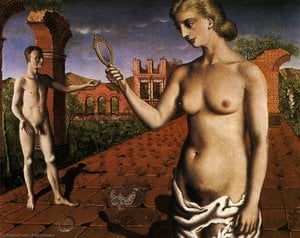
Paul Delvaux’s 1939 painting, “Pygmalion,” is more than just a depiction of a woman interacting with statues; it’s a meticulously crafted exploration of desire, the unsettling beauty of the uncanny, and the enduring power of classical myth. Measuring 117 x 147 cm, this surrealist masterpiece immediately draws the viewer into its enigmatic world, populated by figures rendered in Delvaux's signature style – a precise, almost photographic realism that simultaneously elevates and distorts reality. The scene unfolds within a dimly lit interior, suggesting a studio or perhaps a private chamber, where the woman’s presence is both alluring and profoundly unsettling. Her posture, ambiguous between invitation and restraint, invites speculation about her intentions and the nature of her relationship with the two imposing nude statues flanking her.
“Pygmalion” resonates with a complex layering of symbolism, drawing heavily from classical mythology while simultaneously reflecting the anxieties and uncertainties of the interwar period. The statues themselves represent idealized masculinity – powerful, imposing, and ultimately unattainable. Their nudity is not merely anatomical; it’s symbolic of vulnerability and exposure, mirroring the woman's own potential fragility within this charged scene. The presence of other figures in the background—a man on the left and another on the right—adds to the sense of unease and suggests a voyeuristic element, further complicating the narrative. Delvaux expertly utilizes these elements to evoke a feeling of psychological tension, prompting viewers to confront their own desires and anxieties about beauty, power, and representation.
Created in 1939, “Pygmalion” emerged during a pivotal moment in art history – the height of Surrealism. Following the devastation of World War I and the rise of totalitarian regimes, artists sought to challenge conventional notions of reality and explore the subconscious mind. Delvaux, though often resistant to rigid categorization, embraced the core tenets of Surrealism: dream imagery, irrational juxtapositions, and a fascination with the uncanny. His work reflects this broader movement’s interest in exploring the darker aspects of human psychology and questioning established social norms. The painting's stark realism within a surreal context is particularly characteristic of Delvaux's approach.
“Pygmalion” possesses a haunting beauty that transcends its narrative complexity. It’s a work that lingers in the mind long after viewing, prompting contemplation about the nature of desire, identity, and the relationship between art and reality. This meticulously crafted reproduction captures not only the visual details of Delvaux's original but also the emotional depth and psychological intensity that make it such a significant piece of Surrealist art. Its enduring appeal makes it an ideal addition to any discerning collection or a captivating focal point for interior design, offering a glimpse into the visionary world of Paul Delvaux.

1897 - 1994 , Belgium

 Preview
 Send
Send Share
Share
 Details

 Download
 Similars
 X-Ray
X-Ray Diaporama
 Stats
Stats Read More