

 OilWallArtPost-Impressionism
 189219th Century
 135.0 x 182.0 cm
 Barnes Foundation
Museum-quality giclée or canvas print with fast production and flexible finish options. ( Buy Hand Made Painting Switch to Digital Image)





























Pick from our preset sizes that match the artwork's original proportions.

You may enter your own dimensions to fit a specific frame or space. If your selected size does not match the original image's proportions, we will either crop the artwork or extend the image with a mirrored or solid-fill edge. A digital mockup will be sent for your approval before production begins.
Please note that the on-screen preview does not reflect the actual cropping or extension. Only the mockup will accurately show the final composition.
While custom sizes are available, we recommend selecting a dimension from the predefined list to preserve the original proportions.
Worldwide Delivery () in 2 weeks instead of standard 4/5 weeks. (22 September)


The Card Players (Barnes)
Reproduction Size
Paul Cézanne's “The Card Players,” a cornerstone of his artistic development during the early 1890s, isn’t merely a depiction of a game; it’s a profound meditation on form, perception, and the quiet dignity of everyday life. Housed within the Barnes Foundation in Philadelphia, this monumental canvas—a significant departure from the bustling scenes of Parisian salon painting—offers a glimpse into Cézanne's revolutionary approach to art, one that would profoundly influence generations of artists to come. The work stands as a pivotal bridge between the fleeting impressions of Impressionism and the fragmented, geometric explorations of Cubism, marking a decisive shift in how artists approached representation.
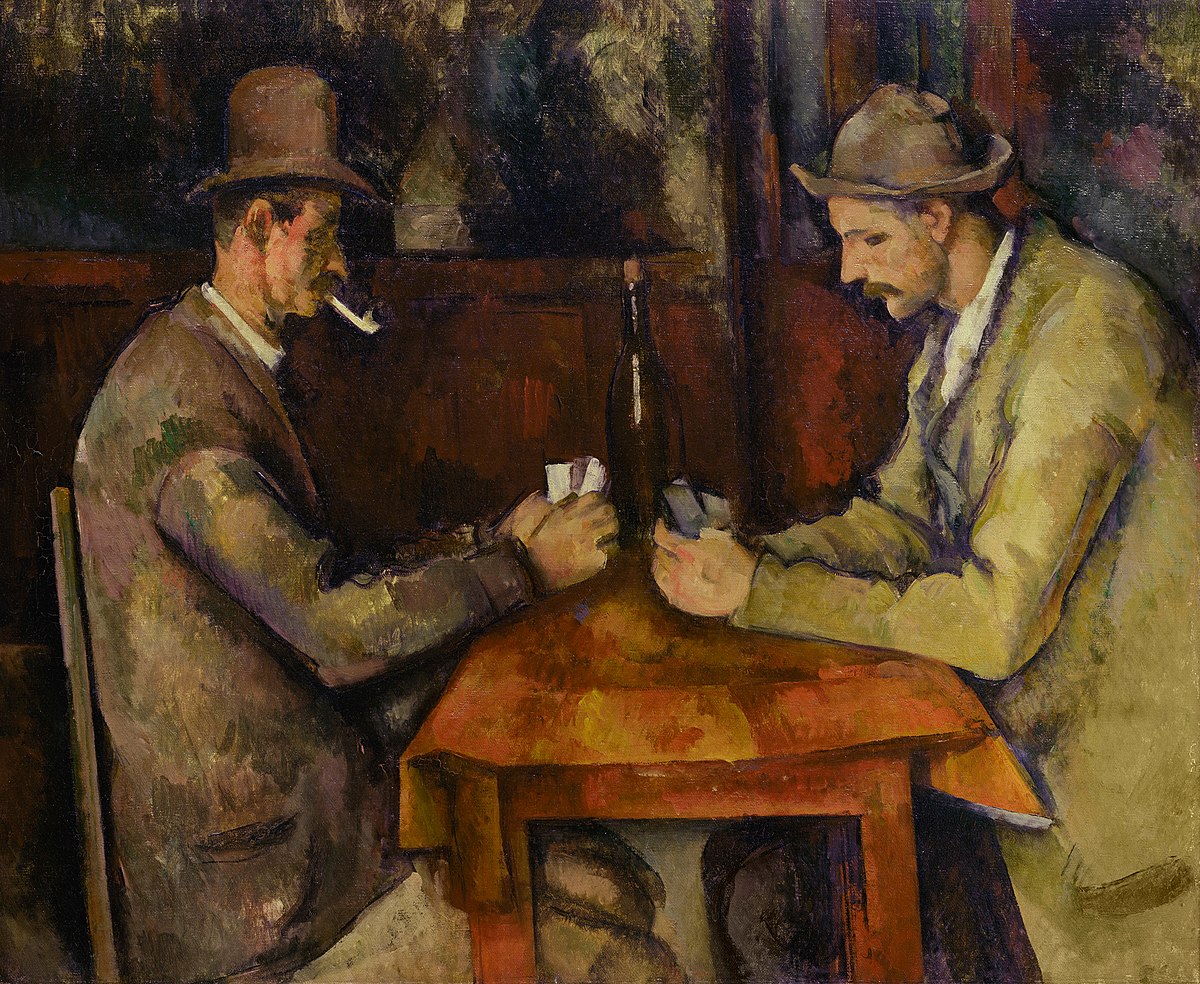
Cézanne’s subject matter—a group of Provençal peasants engrossed in a game of cards—was initially rooted in 17th-century Dutch and French genre paintings, which often depicted boisterous tavern scenes filled with gamblers. However, Cézanne deliberately stripped away the drama and revelry, replacing them with an atmosphere of quiet contemplation. The figures are rendered as stoic, almost sculptural forms, their faces cast downward, eyes fixed intently on the cards before them. This deliberate restraint transforms a potentially frivolous subject into something imbued with a subtle, almost melancholic intensity. He chose local farmhands, some of whom worked directly on his family estate at Jas de Bouffan, imbuing the scene with a sense of authenticity and grounding it in the realities of rural life.
What truly distinguishes “The Card Players” is Cézanne's masterful manipulation of form and color. His brushstrokes are not blended or smoothed, but rather remain distinct and exploratory—a hallmark of his style. He employed planes of colour and small, broken brushstrokes to build up complex fields of tone, creating a sense of depth and volume that defies traditional perspective. The figures themselves aren’t sharply defined; instead, they emerge from the surrounding space through Cézanne's careful attention to shape and mass. Notice how he uses overlapping planes—the table, the chairs, the wall—to create an illusion of three-dimensionality, a technique that foreshadowed the abstract forms of Cubism. The muted earth tones – browns, ochres, and greys – contribute to the painting’s somber mood, while subtle variations in color suggest the texture of fabric and the sheen of polished wood.
Beyond its formal innovations, “The Card Players” invites contemplation about the nature of observation. Cézanne wasn't simply recording a scene; he was actively engaging with it, dissecting it into its fundamental components—shape, color, and space—and then reassembling them according to his own visual logic. The cards themselves become symbols of order and structure within the seemingly chaotic arrangement of the figures. The painting can be interpreted as an exploration of the relationship between the artist’s eye and the world around him – a testament to Cézanne's belief that art should not merely imitate nature, but rather reveal its underlying essence. The quiet intensity of the scene suggests a deeper meditation on time, memory, and the simple pleasures of human connection.


1839 - 1906 , France

Explore the transformative era of Post-Impressionism. Discover how masters like Cézanne and Matisse revolutionized color and form, moving beyond Impressionism to shape modern art history through structural innovation and expressive emotion.
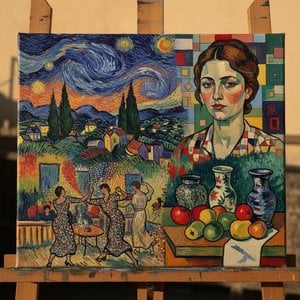
Unveil the profound revolution of Post-Impressionism. Explore how masters like Van Gogh and Cézanne utilized bold colors and emotional depth to transcend mere representation, laying the foundation for modern art. A sophisticated journey through history's most emotive brushstrokes.

Master the nuances of Impressionism vs. Post-Impressionism with our expert guide. Explore the revolutionary shift from Monet’s fleeting light to Van Gogh’s emotional depth. Discover how these iconic movements continue to inspire fine art collectors and modern interiors today.

Explore the vibrant evolution of Post-Impressionism. From Seurat's revolutionary Pointillism to the emotional depth of masters, discover how this movement redefined modern art history through color, structure, and unparalleled creative expression.
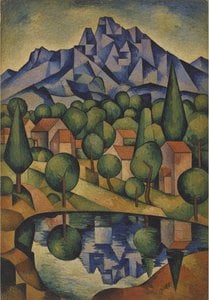
Explore the profound legacy of Paul Cézanne. Discover how his mastery of geometric forms and vibrant color bridged Impressionism and Cubism, offering timeless inspiration for fine art collectors and enthusiasts seeking to understand the foundations of modern art.

 Preview
 Send
Send Share
Share
 Details
 Guide
Guide

 Download
 Similars
 X-Ray
X-Ray Diaporama
 Stats
Stats Read More







 Glass option is only available in size under 110 CM


