

Museum-quality giclée or canvas print with fast production and flexible finish options. ( Buy Hand Made Painting Switch to Digital Image)





























Pick from our preset sizes that match the artwork's original proportions.

Type the width and the height you need, to fit your frame or your wall. A print can only be cut, never made bigger than the picture, so a size with a different shape loses a part of the image. We send you a digital mockup to approve before we print anything. The picture shown on this page does not show the real cut — only the mockup does.
Worldwide Delivery () in 2 weeks instead of standard 4/5 weeks. (23 October)
The Bathers 2
Reproduction Size
Paul Cézanne's "The Bathers," a captivating study in form, color, and the human connection to nature, stands as a pivotal work bridging the Impressionist era with the nascent explorations of Cubism. Completed around 1884-1887, this piece isn’t merely a depiction of nude figures; it's an investigation into the very essence of perception – how we see and represent the world around us. Unlike the fleeting impressions favored by his Impressionist predecessors, Cézanne sought to capture not just what he *saw*, but the underlying structure and geometry that informed his vision. This work exemplifies a shift towards a more intellectual and deliberate approach to painting, laying the groundwork for future generations of avant-garde artists.
The scene unfolds with an understated elegance – a small group of bathers nestled within a loosely defined wooded setting. There’s no dramatic narrative or overt emotional display; instead, Cézanne presents us with a moment of quiet observation, inviting the viewer to become part of the tableau. The composition is remarkably simple, prioritizing arrangement and interaction over detailed representation. Figures are clustered together, suggesting an informal gathering, yet there's no single focal point, encouraging the eye to wander across the canvas in a continuous, almost meditative, exploration. Cézanne’s technique leans heavily on watercolor or gouache applied with visible brushstrokes – a deliberate choice that rejects the smooth, polished surfaces of academic painting. The loose application of paint creates a sense of immediacy and spontaneity, as if the artist were capturing a fleeting impression rather than meticulously rendering every detail.
The color palette is remarkably restrained, dominated by earthy greens, blues, and creams. These muted tones contribute to a sense of tranquility and grounding, mirroring the natural setting. Crucially, Cézanne doesn’t use color to create illusionistic depth or simulate light; rather, he employs it to define form and structure. The figures themselves are simplified into basic geometric shapes – triangles, rectangles, circles – reflecting his belief that all forms can be reduced to these fundamental elements. This approach is strikingly evident in the arrangement of the bathers within the landscape; they seem to emerge from and recede into the surrounding foliage, creating a harmonious interplay between human form and natural geometry. The use of lines is equally deliberate, sketching out the contours of both figures and vegetation without sharp delineation, further emphasizing the work’s study-like quality.
While “The Bathers” lacks overt symbolism, it resonates with profound emotional depth. It speaks to a fundamental human desire for connection – not just with others, but also with the natural world. Cézanne’s repeated exploration of bathers in various settings reflects his fascination with the relationship between humanity and nature, suggesting a longing for simplicity, peace, and a return to primal instincts. The diffused lighting and muted colors contribute to a feeling of quiet contemplation, inviting the viewer to lose themselves in the scene's serene atmosphere. It’s a work that transcends mere representation, offering instead a glimpse into Cézanne’s deeply personal vision of beauty and harmony.
WahooArt offers exquisite hand-painted reproductions of “The Bathers,” allowing you to bring this iconic masterpiece into your home or office. Each reproduction is meticulously crafted by skilled artists using archival quality materials, ensuring that the colors and details remain vibrant for generations to come. Explore our collection today and experience the timeless allure of Cézanne’s vision.
"The Bathers 2" by Paul Cézanne combines a neutrals palette with a tranquil tone.
"The Bathers 2" by Paul Cézanne displays a strong color unity color harmony.
"The Bathers 2" belongs to the Late Period of Paul Cézanne's career. This classification relates the work to the artist's development.

Paul Cézanne was born in Aix-en-Provence, France, into a family with deep roots in the local banking industry. His father, Louis-Auguste Cézanne, helped found the Banque Cézanne et Cabassol, providing a level of financial stability that many of his contemporaries lacked. This security allowed Paul to move away from the legal studies his father had planned for him. Though he initially studied law at the University of Aix-en-Provence, he abandoned those studies in 1860 to focus entirely on painting. His early years were spent in the company of friends like Émile Zola, and together they shared a childhood of swimming and fishing along the banks of the Arc River.
The early works of Cézanne often carried the weight of Romanticism, utilizing dark palettes and heavy, expressive brushwork. He was influenced by the dramatic tonal contrasts found in the tradition of Eugène Delacroix. However, his approach began to shift as he moved toward Paris. He sought a way to move beyond the fleeting light captured by the Impressionists. Instead of merely recording a passing moment, he wanted to find the permanent structure within nature. He looked at a mountain or a piece of fruit and saw the underlying geometry—the cones, spheres, and cylinders that form the bones of the world.
Cézanne developed a technique characterized by small, repetitive, and constructive brushstrokes. He layered these patches of color to build up volume and texture, creating a sense of solidity. This method allowed him to explore spatial relationships without relying on traditional single-point perspective. In many of his compositions, objects appear independent within the space, often presented from multiple viewpoints at once. This rejection of classical perspective rules helped create a new pictorial language.
His subject matter was deeply tied to his surroundings in Provence. The Mont Sainte-Victoire became a recurring presence in his work, appearing in approximately eighty different paintings and watercolors over many years. He also found profound meaning in the simplest objects. His still lifes, featuring items like apples, jars, and cups, were not mere decorations but intense studies of light, shadow, and mass. Through these works, he demonstrated how color modulation could define shape without the need for traditional shading.
By the time of his death in 1906, Cézanne had fundamentally altered the direction of modern painting. His emphasis on geometric form and multiple perspectives provided a foundation for the Cubist movement. Artists such as Pablo Picasso and Georges Braque drew heavily from his analytical approach to nature. His use of bold, non-naturalistic color also left an impression on the Fauvists, including Henri Matisse. He moved art away from the imitation of reality toward a construction of visual experience based on perception and structure.

1839 - 1906 , France

Explore the rich history of landscape art with WahooArt. Discover renowned artists, movements like Impressionism & tonalism, and expert guidance for collecting timeless pieces. Find your perfect serene escape today!

Journey into the heart of Impressionism! Explore 10 masterpieces by Monet, Renoir & Degas that revolutionized landscape art. Discover their stories, techniques & find museum-quality reproductions to elevate your home decor on WahooArt.com.

Explore the rich history of landscape art with WahooArt. Discover renowned artists, movements like Impressionism & Romanticism, and expert guidance for collecting timeless pieces. Find your perfect serene escape today!
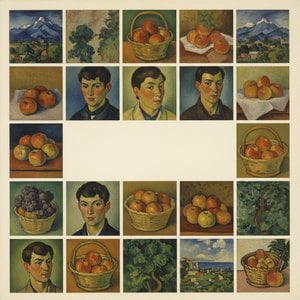
Journey through 25 iconic artworks by Paul Cézanne – a master of Impressionism and Post-Impressionism. Explore his landscapes, still lifes, and the stories behind these timeless masterpieces. Discover museum-quality reproductions & curated decor at WahooArt.com.

Journey through Impressionism's heart with 10 iconic paintings by Monet, Renoir & Degas. Explore light, color & the stories behind these masterpieces. Find museum-quality art reproductions and elevate your home decor on WahooArt.com.

 Preview
 Send
Send Share
Share
 Details
 Guide
Guide

 Download
 Similars
 X-Ray
X-Ray Diaporama
 Stats
Stats

 Read More









 Glass option is only available in size under 110 CM


