
x


 Oil On CanvasWallArtPost-Impressionism
 187919th Century
 55.0 x 46.0 cm
Museum-quality giclée or canvas print with fast production and flexible finish options. ( Buy Hand Made Painting Buy Image)





























Pick from our preset sizes that match the artwork's original proportions.

You may enter your own dimensions to fit a specific frame or space. If your selected size does not match the original image's proportions, we will either crop the artwork or extend the image with a mirrored or solid-fill edge. A digital mockup will be sent for your approval before production begins.
Please note that the on-screen preview does not reflect the actual cropping or extension. Only the mockup will accurately show the final composition.
While custom sizes are available, we recommend selecting a dimension from the predefined list to preserve the original proportions.
Worldwide Delivery () in 2 weeks instead of standard 4/5 weeks. (28 August)


Seated Woman
Reproduction Size
Paul Cézanne (1839-1906) stands as a monumental figure in the artistic landscape of late 19th century France, recognized not merely for his prolific output but fundamentally for reshaping the very foundations upon which modern art would be built. He deftly navigated the turbulent waters between Impressionism’s fleeting impressions and Cubism's fractured perspectives, establishing himself as a pivotal innovator whose influence reverberates through generations of artists.
Initially drawn to Romantic landscapes and influenced by Barbizon painters—artists who championed tonal realism—Cézanne embarked on an independent artistic journey fueled by an unwavering fascination with the underlying structure of objects. This preoccupation would become his defining characteristic, propelling him toward a revolutionary approach that challenged conventional academic conventions.
Despite his groundbreaking structural innovations, Cézanne remained deeply rooted in Impressionist principles. He meticulously studied how light interacted with surfaces, striving to convey the feeling of a scene rather than its precise visual details. Like Monet and Renoir before him, Cézanne sought to capture the ephemeral qualities of daylight—the dappled shadows, the shimmering highlights—transforming them into palpable elements within his compositions.
His masterful use of shading—particularly in paintings like “Seated Woman”—created a sense of three-dimensionality that defied traditional perspective. Cézanne’s technique mirrored the advancements made by Impressionists who had begun to experiment with capturing light and color in ways previously unimaginable, marking a crucial step toward the emergence of Cubism.
Initially met with skepticism and ridicule from critics of his time—who deemed his work “primitive” and “unfinished”—Cézanne’s genius was recognized by fellow artists like Camille Pissarro and Ambroise Vollard, who championed his vision early on. Henri Matisse and Pablo Picasso famously declared Cézanne “the father of us all,” acknowledging his profound impact on the development of avant-garde art movements.
His insistence on simplifying forms and prioritizing underlying structure paved the way for Cubism—a revolutionary artistic movement spearheaded by Picasso and Georges Braque—which shattered conventional notions of representation and ushered in a new era of artistic experimentation. Cézanne’s enduring legacy continues to inspire artists today, cementing his place as one of the most influential figures in modern art history.


1839 - 1906 , France

Explore the transformative era of Post-Impressionism. Discover how masters like Cézanne and Matisse revolutionized color and form, moving beyond Impressionism to shape modern art history through structural innovation and expressive emotion.

Master the nuances of Impressionism vs. Post-Impressionism with our expert guide. Explore the revolutionary shift from Monet’s fleeting light to Van Gogh’s emotional depth. Discover how these iconic movements continue to inspire fine art collectors and modern interiors today.
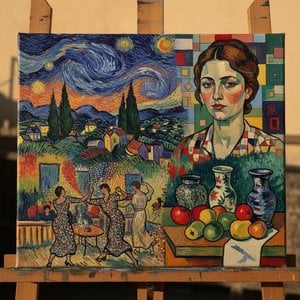
Unveil the profound revolution of Post-Impressionism. Explore how masters like Van Gogh and Cézanne utilized bold colors and emotional depth to transcend mere representation, laying the foundation for modern art. A sophisticated journey through history's most emotive brushstrokes.
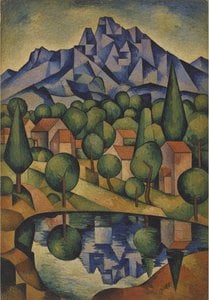
Explore the profound legacy of Paul Cézanne. Discover how his mastery of geometric forms and vibrant color bridged Impressionism and Cubism, offering timeless inspiration for fine art collectors and enthusiasts seeking to understand the foundations of modern art.

Explore the structural genius of Paul Cézanne. Discover how his mastery of geometric form and color bridged Impressionism and Cubism in this definitive guide for art enthusiasts and collectors.


Stay updated with the latest art news, exclusive offers, and decoration ideas.
Tell us about your project and our art experts will provide you with 3 personalized art suggestions.
Let Us Curate 3 Options Just for You - Free!

 Preview
 Send
Send Share
Share
 Details

 Download
 Similars
 X-Ray
X-Ray Diaporama
 Read More







 Glass option is only available in size under 110 CM


