Preview AR preview Buy Hand Made Painting Switch to Digital Image Send
Details Guide Add to favorites Download Similars X-Ray Diaporama Q&A Stats

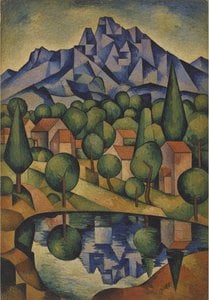
Leda with Swan

Discover Paul Cézanne’s ‘Leda with Swan’! A post-impressionist masterpiece featuring a reclining nude & swan. Explore its dynamic composition, bold colors & mythological depth. #Cezanne #Art

Post-Impressionist master Paul Cezanne bridged Impressionism and Cubism with Mont Sainte-Victoire. Explore his revolutionary works today.

Giclée / Art Print

Museum-quality giclée or canvas print with fast production and flexible finish options. ( Buy Hand Made Painting Switch to Digital Image)

Corner sample of the P118B picture frame: moulded polystyrene, 5 cm wide and 3 cm thick
P118B $10
Corner sample of the P118H picture frame: moulded polystyrene, 5 cm wide and 3 cm thick
P118H $10
Corner sample of the P118W picture frame: moulded polystyrene, 5 cm wide and 3 cm thick
P118W $10
Corner sample of the P438Z picture frame: moulded polystyrene, 5.5 cm wide and 3.5 cm thick
P438Z $10
Corner sample of the P508JH picture frame: moulded polystyrene, 7 cm wide and 3.5 cm thick
P508JH $12
Corner sample of the P508YH picture frame: moulded polystyrene, 7 cm wide and 3.5 cm thick
P508YH $12
Corner sample of the P805H picture frame: moulded polystyrene, 5 cm wide and 3.5 cm thick
P805H $10
Corner sample of the P805Z picture frame: moulded polystyrene, 5 cm wide and 3.5 cm thick
P805Z $10
Corner sample of the P919BZ picture frame: moulded polystyrene, 7 cm wide and 3.5 cm thick
P919BZ $10
Corner sample of the P919G picture frame: moulded polystyrene, 7 cm wide and 3.5 cm thick
P919G $10
Corner sample of the P919XJ picture frame: moulded polystyrene, 7 cm wide and 3.5 cm thick
P919XJ $10
Corner sample of the P959ZH picture frame: moulded polystyrene, 5 cm wide and 3 cm thick
P959ZH $10
Corner sample of the P968JZ picture frame: moulded polystyrene, 6 cm wide and 4 cm thick
P968JZ $12
Corner sample of the W106C picture frame: solid wood, 5 cm wide and 3 cm thick
W106C $8
Corner sample of the W218G picture frame: solid wood, 5 cm wide and 3 cm thick
W218G $10
Corner sample of the W218JH picture frame: solid wood, 5 cm wide and 3 cm thick
W218JH $8
Corner sample of the W218Y picture frame: solid wood, 5 cm wide and 3 cm thick
W218Y $10
Corner sample of the W307PJ picture frame: solid wood, 6 cm wide and 3 cm thick
W307PJ $10
Corner sample of the W316G picture frame: solid wood, 6 cm wide and 3 cm thick
W316G $10
Corner sample of the W316PJ picture frame: solid wood, 6 cm wide and 3 cm thick
W316PJ $8
Corner sample of the W316Y picture frame: solid wood, 6 cm wide and 3 cm thick
W316Y $10
Corner sample of the W398PJ picture frame: solid wood, 5 cm wide and 3 cm thick
W398PJ $8
Corner sample of the W4111J picture frame: solid wood, 6.5 cm wide and 3.5 cm thick
W4111J $10
Corner sample of the W500HY picture frame: solid wood, 7 cm wide and 5 cm thick
W500HY $15
Corner sample of the W500JH picture frame: solid wood, 7 cm wide and 5 cm thick
W500JH $15
Corner sample of the W692G picture frame: solid wood, 8 cm wide and 4 cm thick
W692G $12
Corner sample of the W849H picture frame: solid wood, 5 cm wide and 3 cm thick
W849H $8
Corner sample of the W940BG picture frame: solid wood, 7.5 cm wide and 4.5 cm thick
W940BG $15
Corner sample of the W953PJ picture frame: solid wood, 6 cm wide and 3.5 cm thick
W953PJ $8

Standard
custom
CM
INCH

Pick from our preset sizes that match the artwork's original proportions.

width
height

Type the width and the height you need, to fit your frame or your wall. A print can only be cut, never made bigger than the picture, so a size with a different shape loses a part of the image. We send you a digital mockup to approve before we print anything. The picture shown on this page does not show the real cut — only the mockup does.

Worldwide Delivery () in 2 weeks instead of standard 4/5 weeks. (29 October)

Free Worldwide Express Shipping
High-Quality Linen Canvas
Full Shipping Insurance
Customs Tax Refund Guarantee
True Color Matching Guarantee
100-Day Return Policy (Defects Only)
100% Money-Back Guarantee
Bulk Discount Offer

Total Price

$ 69

Leda with Swan

Giclée / Art Print

Reproduction Size

-

Total Price

$ 69

Quick Facts

  • subject: Greek mythology - Leda and Zeus (as a swan)
  • title: Leda with Swan
  • style: Bold brushstrokes, vivid colors, pyramidal composition
  • movement: Post-Impressionism

Art Quiz

There is only one correct answer for each question.

Question 1:
Paul Cézanne is considered a pivotal figure in the transition between which two art movements?
Question 2:
The artwork 'Leda with Swan' depicts a scene from what source of stories?
Question 3:
What is a defining characteristic of Cézanne's artistic style as demonstrated in 'Leda with Swan'?
Question 4:
The composition of 'Leda with Swan' utilizes what structural element to organize the figures?
Question 5:
What is a key characteristic of Cézanne's brushstroke technique in this painting, as described in the image description?

A Myth Reimagined: Cézanne’s ‘Leda with Swan’

Paul Cézanne's interpretation of the classical myth of Leda and the Swan, painted around 1880, is a captivating departure from traditional depictions. Rather than focusing on overt sensuality, Cézanne explores the psychological tension and formal relationships within the scene. The painting presents Leda reclining, not in yielding submission, but with a quiet dignity as she interacts with the swan – Zeus in disguise. This isn’t merely an illustration of mythology; it's a study in form, color, and the complexities of human interaction.

Post-Impressionist Innovation: Style & Technique

  • Brushwork & Texture: Cézanne’s signature broken brushstrokes are immediately apparent. He doesn't blend colors seamlessly; instead, he applies them in distinct patches, creating a textured surface that vibrates with energy and light. This technique anticipates the fragmentation of form seen in Cubism.
  • Color & Composition: The palette is dominated by cool blues, purples, and ochre tones, lending a melancholic yet serene atmosphere. Cézanne employs a pyramidal composition, grounding Leda at the base and elevating the swan, creating balance while emphasizing their dynamic relationship.
  • Form & Structure: Cézanne prioritizes structure over precise representation. Figures are simplified into geometric forms, foreshadowing his later explorations of reducing natural shapes to their essential components – cylinders, spheres, and cones. This focus on underlying form is a hallmark of his revolutionary style.

Echoes of Antiquity & Modern Sensibility

The myth of Leda and the Swan has resonated with artists for centuries, representing themes of seduction, power, and divine intervention. Cézanne’s approach is unique; he strips away much of the overt eroticism often associated with the subject. Instead, he presents a more introspective scene, focusing on the psychological space between Leda and Zeus. The painting reflects the late 19th-century shift towards subjective experience and emotional expression – key tenets of Post-Impressionism. The story itself, steeped in Greek mythology, provides a rich historical context, while Cézanne’s treatment feels distinctly modern.

Emotional Resonance & Interior Impact

‘Leda with Swan’ evokes a sense of quiet contemplation and subtle tension. It's not a painting that shouts for attention; rather, it draws the viewer in with its nuanced color palette and intriguing composition. As an interior design element, this artwork would lend sophistication and intellectual depth to any space. Its muted tones complement both modern and traditional settings, while its complex subject matter sparks conversation and invites ongoing discovery. A reproduction of this piece offers not just aesthetic beauty but a connection to art history’s pivotal moment – the dawn of modernism.

Questions & Answers

Where can I find a guide to "Leda with Swan"?

A Guide page is available for "Leda with Swan" by Paul Cézanne: a printable factsheet about the artwork, designed for students and classroom use.

Is Paul Cézanne, creator of "Leda with Swan", known under other names?

Paul Cézanne appears under the alternate names Pau Cesana.

Which palette and lead color define "Leda with Swan"?

"Leda with Swan" by Paul Cézanne uses an earthy palette, with phthalo green (#2e2327) as the dominant color.


Artist Biography

The Architect of Form

Paul Cézanne was born in Aix-en-Provence, France, into a family with deep roots in the local banking industry. His father, Louis-Auguste Cézanne, helped found the Banque Cézanne et Cabassol, providing a level of financial stability that many of his contemporaries lacked. This security allowed Paul to move away from the legal studies his father had planned for him. Though he initially studied law at the University of Aix-en-Provence, he abandoned those studies in 1860 to focus entirely on painting. His early years were spent in the company of friends like Émile Zola, and together they shared a childhood of swimming and fishing along the banks of the Arc River.

The early works of Cézanne often carried the weight of Romanticism, utilizing dark palettes and heavy, expressive brushwork. He was influenced by the dramatic tonal contrasts found in the tradition of Eugène Delacroix. However, his approach began to shift as he moved toward Paris. He sought a way to move beyond the fleeting light captured by the Impressionists. Instead of merely recording a passing moment, he wanted to find the permanent structure within nature. He looked at a mountain or a piece of fruit and saw the underlying geometry—the cones, spheres, and cylinders that form the bones of the world.

A New Way of Seeing

Cézanne developed a technique characterized by small, repetitive, and constructive brushstrokes. He layered these patches of color to build up volume and texture, creating a sense of solidity. This method allowed him to explore spatial relationships without relying on traditional single-point perspective. In many of his compositions, objects appear independent within the space, often presented from multiple viewpoints at once. This rejection of classical perspective rules helped create a new pictorial language.

His subject matter was deeply tied to his surroundings in Provence. The Mont Sainte-Victoire became a recurring presence in his work, appearing in approximately eighty different paintings and watercolors over many years. He also found profound meaning in the simplest objects. His still lifes, featuring items like apples, jars, and cups, were not mere decorations but intense studies of light, shadow, and mass. Through these works, he demonstrated how color modulation could define shape without the need for traditional shading.

  • The Bathers (Les Grandes Baigneuses)
  • Mont Sainte-Victoire series
  • Still Life with Apples and a Pot of Primroses
  • Portrait of Émile Zola
  • The Card Players

A Lasting Influence

By the time of his death in 1906, Cézanne had fundamentally altered the direction of modern painting. His emphasis on geometric form and multiple perspectives provided a foundation for the Cubist movement. Artists such as Pablo Picasso and Georges Braque drew heavily from his analytical approach to nature. His use of bold, non-naturalistic color also left an impression on the Fauvists, including Henri Matisse. He moved art away from the imitation of reality toward a construction of visual experience based on perception and structure.

Paul Cézanne

Paul Cézanne

1839 - 1906 , France

Quick Facts

  • Artistic Movement Or Style: Post-Impressionism
  • Artists Or Movements Influenced By This Artist:
    • Cubism
    • Fauvism
    • Pablo Picasso
    • Henri Matisse
  • Artists Who Influenced This Artist:
    • Paul Gauguin
    • Georges Seurat
  • Full Name: Paul Cézanne
  • Nationality: French
  • Notable Artworks:
    • The Pond at Jas de Bouffan
    • Portrait of Émile Zola
    • Mont Sainte-Victoire series
    • Bathers
  • Place Of Birth: Aix-en-Provence, France
  • Date Of Birth: 1839
  • Date Of Death: 1906
Explore artworks organized by themes, styles, and characteristics.