
x


Purchase a high-resolution, enhanced digital image, far superior to the online preview.
Each file is meticulously prepared by our in-house specialists using advanced tools and expert manual retouching. We ensure every image has exceptional clarity, precise color accuracy, and fine detail.
The final file is delivered via email within 72 hours, optimized for immediate use in professional, editorial, and print environments. This is the same quality trusted by top-tier design studios, publishers, and galleries.
Download a high-resolution file for personal display, printing, and creative projects. ( Buy Print Buy Hand Made Painting)
When you choose WahooArt.com, you're not just getting an image - you're receiving a professionally enhanced digital artwork, crafted with precision and backed by a satisfaction guarantee. Here's everything that comes with your order, automatically:

Your high-resolution digital image file will be emailed to you within 72 hours of ordering - ready for immediate use.

Your artwork is professionally optimized using advanced AI tools and manual editing, ensuring maximum detail, clarity, and color accuracy.

Accidentally deleted or lost your file? No worries - we'll resend it to you anytime, free of charge.

Enjoy your artwork instantly with zero customs, duties, or delivery fees - digital downloads are always tax-free.

We ensure your digital image reflects the original colors as closely as possible using professional tools and color management.

If you're not satisfied with your digital image, we'll revise it or refund 100% within 60 days - no questions asked.

Not satisfied? Get a full refund within 60 days of receiving your digital file - no questions asked.

Buy 3 images, save 10% - Buy 5, save 15% - Buy 10+, save 20%. Great for creative projects, galleries, and agencies.
The scene captured by this evocative work, "The Visitor," invites the viewer into an intimate moment suspended just outside the frame of time. It is not merely a depiction of people gathered at a table; it is a study in anticipation, a quiet drama unfolding under the soft wash of diffused light. The composition centers around a palpable tension—the arrival or observation of the 'Visitor' amidst a group already settled into conversation. This sense of being an unseen witness lends the piece an immediate, almost conspiratorial allure, making the viewer feel privy to a secret moment in domestic life.
Technically, the artwork speaks volumes through its medium. The visible evidence of drypoint etching—the delicate cross-hatching and nuanced tonal variations—is breathtaking. The artist has employed line not just to outline form, but to build atmosphere itself. These fine, closely spaced lines create a rich, textured surface that absorbs light and shadow with equal grace. The monochromatic palette, dominated by shades of grey and beige, forces the eye to concentrate on value and contrast rather than color. This restraint is what elevates the piece; it transforms mere representation into pure mood.
Dating from 1893, this work situates itself at a fascinating crossroads in late nineteenth-century art. While the subject matter touches upon the realism of genre painting, the execution hints at an Impressionistic sensibility—a desire to capture the fleeting quality of light and human interaction. Paul Albert Besnard, whose hand guided this piece, was known for bridging academic discipline with a fascination for modern light effects. Here, we see that foundation utilized not in grand color statements, but in the subtle interplay between shadow and form, giving the scene both structure and ethereal movement.
The symbolic weight of "The Visitor" lies precisely in its ambiguity. Who is this person? What message does their presence carry for the established group? This mystery imbues the piece with a subtle melancholy, suggesting that every gathering, no matter how comfortable, exists under the potential shadow of change or revelation. The soft lighting and overlapping figures create a sense of contained intimacy, yet the outsider figure acts as a catalyst, reminding us that life’s most profound moments are often those tinged with anticipation.
For collectors and designers alike, this reproduction offers more than just wall decor; it offers an emotional anchor. The sophisticated interplay of shadow and texture allows it to complement a vast array of interior styles, from richly paneled libraries to minimalist modern spaces. Owning "The Visitor" is acquiring a piece that demands quiet contemplation—a visual pause button for any room, inviting conversation not about the art itself, but about the stories it suggests.

Paul Albert Besnard (1849-1934) stands as a singular figure in the tapestry of French art, a painter who navigated the shifting tides of the late nineteenth and early twentieth centuries with a unique, unclassifiable grace. Born in Paris, his artistic journey began within the rigorous confines of the École des Beaux-Arts, where he studied under Jean Bremond. His early development was profoundly shaped by the meticulous realism of Alexandre Cabanel, an influence that provided Besnard with a disciplined academic foundation. Yet, beneath this classical training beat the heart of a modernizer, one who would eventually move beyond the rigid boundaries of tradition to embrace the ephemeral beauty of light and atmosphere.
As his career matured, Besnard began to bridge the gap between the structured world of academic painting and the vibrant, sensory explorations of Impressionism. While he did not fully abandon form for the sake of pure abstraction, he became a master of color, utilizing a palette that felt both luminous and deeply emotive. His work is characterized by an unwavering fascination with how light interacts with surfaces, whether it be the delicate skin in a portrait or the sweeping architectural expanses of his grandest commissions. This ability to marry the monumental with the intimate allowed him to transcend the labels of his era, creating a style that felt both timeless and strikingly contemporary.
Besnard’s true genius was perhaps most visible in his ability to translate modern sensibilities onto a grand, decorative scale. He did not merely paint pictures; he transformed spaces. His ambitious frescoes, which adorn some of France's most prestigious institutions, serve as a testament to his vision of art as a public, immersive experience. These works can be found in locations such as:
In these massive undertakings, Besnard eschewed the overtly dramatic or theatrical aesthetics favored by many of his contemporaries. Instead, he utilized a more subtle, atmospheric approach that allowed the light to guide the viewer's eye, ensuring that even the most massive compositions retained a sense of poetic intimacy and spiritual depth.
Beyond the sweeping vistas of his frescoes, Besnard was a prolific creator of much more personal works. He possessed an extraordinary ability to capture the psychological essence of his subjects through oil, watercolor, pastel, and etching. His portraits are celebrated not just for their technical precision, but for their profound emotional resonance. In his depiction of Madame Georges Rodenbach, one finds a daring exploration of beauty that challenges conventional norms, showcasing his skill in rendering texture and character with equal fervor.
His versatility as a printmaker and draftsman allowed him to experiment with the interplay of shadow and light on a much more delicate scale. Whether capturing the regal presence of The King and Queen of Belgium or the quietude of a landscape, Besnard’s work remains anchored by an influence reminiscent of Thomas Gainsborough—a certain elegance and rhythmic flow that elevates the subject matter. Ultimately, Paul Albert Besnard’s significance lies in this very duality: he was an artist who could command the largest halls of France while simultaneously capturing the most fleeting, delicate whispers of light.
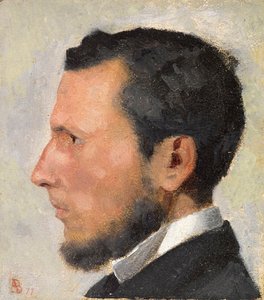
1849 - 1934 , France


Stay updated with the latest art news, exclusive offers, and decoration ideas.
Tell us about your project and our art experts will provide you with 3 personalized art suggestions.
Let Us Curate 3 Options Just for You - Free!

 Preview
 Send
Send Share
Share
 Details

 Download
 Similars
 X-Ray
X-Ray Diaporama


 Read More


