FREE ART CONSULTATION

x
Buy Painting Buy PaintingBuy Image Buy Image SendSend
DetailsDetails Add to favorites Add to favorites DownloadDownload SimilarsSimilars X-RayX-Ray DiaporamaDiaporama

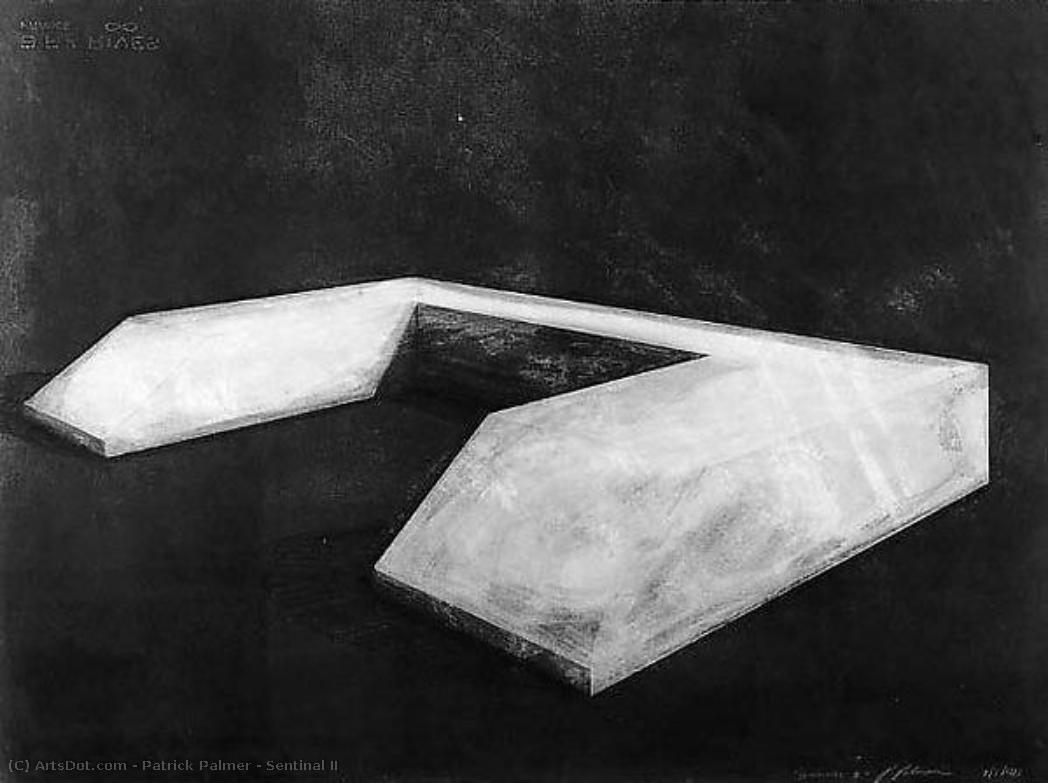
Sentinal II

Explore 'Sentinel II' by Patrick Palmer (1983). A striking abstract expressionist piece featuring bold geometry & impasto texture in black & white. Discover this unique British artwork.

Discover Patrick Palmer's exquisite portraits & nudes – classical British art blending tradition & subtle beauty. Explore his London-born style & captivating figures.

Giclée / Art Print

Museum-quality giclée or canvas print with fast production and flexible finish options.

Standard
custom
CM
INCH

Pick from our preset sizes that match the artwork's original proportions.

width
height

You may enter your own dimensions to fit a specific frame or space. If your selected size does not match the original image's proportions, we will either crop the artwork or extend the image with a mirrored or solid-fill edge. A digital mockup will be sent for your approval before production begins.
Please note that the on-screen preview does not reflect the actual cropping or extension. Only the mockup will accurately show the final composition.
While custom sizes are available, we recommend selecting a dimension from the predefined list to preserve the original proportions.

Worldwide Delivery () in 2 weeks instead of standard 4/5 weeks. (20 July)

why_choose_icon
Free Worldwide Express Shipping
why_choose_icon
High-Quality Linen Canvas
why_choose_icon
Full Shipping Insurance
why_choose_icon
Customs Tax Refund Guarantee
why_choose_icon
True Color Matching Guarantee
why_choose_icon
60-Day Return Policy (Defects Only)
why_choose_icon
100% Money-Back Guarantee
why_choose_icon
Bulk Discount Offer

Total Price

-

reproduction

Sentinal II

Giclée / Art Print

Reproduction Size

-

Total Price

-


Artist Biography

A Legacy of Subtle Form: The Life and Art of Patrick Palmer

Patrick Palmer, a name increasingly resonant within contemporary British art circles, embodies a quiet dedication to classical principles in an era often dominated by conceptualism. Born in London in 1964, his journey as an artist has been one of focused study and refinement, resulting in a body of work that speaks with a compelling intimacy and technical mastery. Unlike artists who burst onto the scene with radical departures, Palmer’s evolution has been marked by a deepening engagement with tradition—a deliberate pursuit of beauty through nuanced observation and skillful execution. He isn't an artist seeking to shock or dismantle; rather, he aims to reveal the enduring power of form and the subtle complexities of the human figure.

Early Influences and Academic Foundations

Palmer’s artistic lineage is rooted in a profound respect for the Old Masters, coupled with a uniquely personal mentorship that shaped his early direction. While formally trained, it was a close friendship with a confidante of Lucian Freud—a figure whose influence looms large over 20th-century British painting—that proved pivotal. This connection afforded Palmer invaluable insights into the direct observation of life and the psychological weight inherent in portraiture. He absorbed not merely technical skills but also an ethos: a commitment to unflinching honesty, a willingness to grapple with the imperfections of the human form, and a deep understanding of light’s ability to sculpt and reveal character. This period instilled in him a preference for oil paint, charcoal, graphite, and red chalk—materials that allow for a delicate range of tonal variation and expressive mark-making. The emphasis wasn't on grand narratives or overt symbolism but on the quiet dignity of his subjects and the tactile qualities of the medium itself.

The Art of Classical Nudes and Portraiture

Palmer’s oeuvre is characterized by two primary, yet interconnected, themes: the classical nude and portraiture—specifically, portraits of women. His nudes are not idealized representations but rather studies in form, light, and shadow, imbued with a sense of vulnerability and quiet strength. He eschews dramatic poses or contrived settings, opting instead for compositions that feel intimate and naturalistic. The figures exist within a liminal space, neither fully revealed nor entirely concealed, inviting the viewer to contemplate their physicality and emotional presence. His portraits share this same sensitivity, capturing not just likeness but also an inner life—a fleeting moment of contemplation or a subtle hint of personality. He is known for his ability to convey emotion through the delicate rendering of skin tones, the expressive use of light, and the careful observation of gesture. The red chalk drawings, in particular, demonstrate his exceptional draftsmanship and his mastery of tonal modeling.

Exhibition History and Critical Reception

Over the years, Patrick Palmer’s work has garnered increasing recognition within the UK art scene and beyond. He has exhibited extensively in galleries across Britain, building a dedicated following among collectors and critics alike. While he avoids self-promotion, his paintings have consistently received positive reviews for their technical skill, emotional depth, and quiet elegance. Critics often note the influence of Ingres and Corot in his work, but also acknowledge Palmer’s distinct voice—a contemporary sensibility that blends tradition with a uniquely British aesthetic. His success is not measured by sensational headlines or market hype, but rather by the enduring appeal of his paintings and the growing appreciation for his subtle yet powerful vision. He represents a counter-narrative within the art world: a testament to the value of focused study, technical mastery, and a commitment to beauty in its most understated form.

Historical Significance and Enduring Appeal

In an age saturated with digital imagery and conceptual abstraction, Patrick Palmer’s work offers a refreshing return to fundamental principles—a celebration of the human figure and the enduring power of oil paint. He stands as a vital link between the classical tradition and contemporary art practice, demonstrating that beauty and technical skill are not relics of the past but rather essential elements of artistic expression.
  • His commitment to direct observation and his refusal to compromise on quality have earned him respect among fellow artists.
  • The intimacy and vulnerability of his portraits resonate with viewers on a deeply emotional level.
  • He challenges the prevailing trends in contemporary art, offering an alternative vision that prioritizes skill, subtlety, and beauty.
As he continues to paint and exhibit, Patrick Palmer’s legacy as one of the UK's leading figurative artists is firmly established—a testament to the enduring power of classical form and the quiet dignity of the human spirit.
patrick palmer

patrick palmer

1964 - , United Kingdom

Quick Facts

  • Artistic Movement Or Style: Classical Figurative Art
  • Artists Who Influenced This Artist: ['Lucian Freud']
  • Date Of Birth: 1964
  • Full Name: Patrick Palmer
  • Nationality: British
  • Place Of Birth: London, UK
Explore artworks organized by themes, styles, and characteristics.