FREE ART CONSULTATION

x
Buy print Buy printBuy Image Buy Image SendSend
DetailsDetails Add to favorites Add to favorites DownloadDownload SimilarsSimilars X-RayX-Ray DiaporamaDiaporama

Red Garden

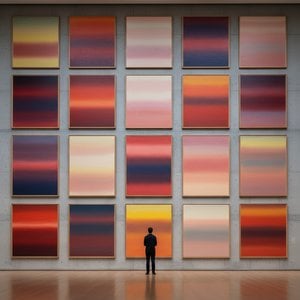
Red Garden is a striking lithograph by Patrick Heron, created in 1956. It exemplifies Heron's signature style—bold abstraction rooted in observation of the Cornish landscape.

Patrick Heron (1920-1999): Explore the vibrant world of this British abstract & figurative artist, renowned for his innovative use of colour, light, and form. Influenced by Cézanne & Matisse.

Hand Made Oil Reproduction

Hand-painted oil on canvas in your size and frame, made to order by our artists.

P118B $10
P118H $10
P118W $10
P438Z $10
P508JH $12
P508YH $12
P805H $10
P805Z $10
P919BZ $10
P919G $10
P919XJ $10
P959ZH $10
P968JZ $12
W106C $8
W218G $10
W218JH $8
W218Y $10
W307PJ $10
W316G $10
W316PJ $8
W316Y $10
W398PJ $8
W4111J $10
W500HY $15
W500JH $15
W692G $12
W849H $8
W940BG $15
W953PJ $8

Standard
custom
CM
INCH

Pick from our preset sizes that match the artwork's original proportions.

width
height

You may enter your own dimensions to fit a specific frame or space. If your selected size does not match the original image's proportions, we will either crop the artwork or extend the painting with additional hand-painted elements. A digital mockup will be sent for your approval before production begins.
Please note that the on-screen preview does not reflect the actual cropping or extension. Only the mockup will accurately show the final composition.
While custom sizes are available, we recommend selecting a dimension from the predefined list to preserve the original proportions.

Examples of what can be changed: Replace face with customer photo; Add pet (e.g., replace cat with dog); Include hidden message in background; Change background landscape or elements.
After order, WahooArt.com team will email client for instructions and provide a mockup preview

Worldwide Delivery () in 3/4 weeks instead of standard 5 weeks. (2 July). No compromise on quality.

why_choose_icon
Free Worldwide Express Shipping
why_choose_icon
High-Quality Linen Canvas
why_choose_icon
Full Shipping Insurance
why_choose_icon
Customs Tax Refund Guarantee
why_choose_icon
True Color Matching Guarantee
why_choose_icon
60-Day Return Policy (Defects Only)
why_choose_icon
100% Money-Back Guarantee
why_choose_icon
Bulk Discount Offer

Total Price

-

reproduction

Red Garden

Reproduction Medium

Reproduction Size

-

Total Price

-

Quick Facts

  • Notable elements or techniques: Layered brushstrokes; Geometric shapes
  • Artist: Patrick Heron
  • Dimensions: 55.8 x 38.4 cm
  • Location: Victoria and Albert Museum
  • Subject or theme: Organic forms; Garden imagery
  • Year: 1956
  • Title: Red Garden

Art Quiz

There is only one correct answer for each question.

Question 1:
What artistic movement is Patrick Heron’s ‘Red Garden’ primarily associated with?
Question 2:
The image description highlights what key characteristic of the artwork's composition?
Question 3:
What dominant color dominates ‘Red Garden’, contributing to its overall mood?
Question 4:
Based on the description, what technique is most likely employed in creating this artwork?
Question 5:
According to the text, what does the title ‘Red Garden’ suggest about the artwork's symbolism?

Artwork Description

Red Garden : An Exploration of Color and Form by Patrick Heron

The artwork ‘Red Garden’ by Patrick Heron stands as a cornerstone of British Abstract Expressionism, encapsulating the artist's profound engagement with color theory and his unwavering commitment to capturing the essence of natural landscapes through non-representational means. Executed in 1956, this lithograph on paper offers a glimpse into Heron’s distinctive visual vocabulary—a language born from meticulous observation and driven by an intuitive understanding of how pigment interacts with surface texture.

Composition and Visual Dynamics

At first glance, ‘Red Garden’ presents a seemingly chaotic arrangement of geometric shapes – rectangles and irregular forms – interwoven across the canvas. However, beneath this initial impression lies a carefully considered compositional strategy designed to evoke movement and depth. Heron eschewed traditional perspective conventions, opting instead for layering shapes that create an illusion of spatial recession. The deliberate asymmetry contributes to the artwork’s dynamism, guiding the viewer's eye across the surface and fostering contemplation about the interplay between color and form.

Color Palette: Crimson Resonance

Dominating the composition is a striking crimson hue—ranging from vibrant scarlet shades to deeper, richer tones—that serves as the primary focal point. Heron skillfully juxtaposes this dominant red with darker browns and blacks, establishing tonal contrasts that define the shapes and imbue them with shadow and texture. Subtle hints of creamy off-white appear intermittently, providing visual respite and subtly enhancing the overall luminosity of the artwork. The color palette isn’t merely decorative; it reflects Heron's fascination with geological formations—particularly red sandstone—which he frequently encountered during his time in Cornwall.

Technique: Layered Lithography

Heron’s technique is characterized by a deliberate layering process utilizing loose brushstrokes and meticulous etching to achieve the print’s textural qualities. Lithography, chosen as the medium, allowed for precise control over color distribution and tonal gradation—essential elements in conveying Heron's artistic vision. The artist employed a combination of drypoint and aquatint techniques to create subtle variations in surface sheen and depth, resulting in an image that possesses both visual richness and tactile resonance.

Symbolism: Echoes of Nature’s Complexity

The artwork’s title, ‘Red Garden,’ deliberately avoids literal depiction, inviting viewers to interpret its symbolic significance beyond the confines of representational imagery. Heron's exploration of color—specifically crimson—suggests notions of passion, energy, and growth—themes that resonate deeply with his connection to Cornwall’s rugged landscape. Simultaneously, the darker tones evoke a sense of underlying complexity and shadow, mirroring the multifaceted nature of natural environments and reflecting Heron’s philosophical preoccupation with exploring the relationship between human perception and reality.

Concluding Impression: A Momentary Capture

‘Red Garden’ transcends mere visual aesthetics; it embodies Heron's artistic philosophy—a belief that art should strive to capture fleeting moments of experience and convey profound emotional resonance. The artwork remains a testament to Heron’s mastery of abstraction, demonstrating how color and form can coalesce into an evocative image that speaks volumes about the artist’s inner world and his enduring fascination with the beauty of the natural realm. It is a piece that continues to inspire contemplation and appreciation for the transformative power of art.

Artist Biography

A Life Immersed in Colour and Light

Patrick Heron, a pivotal figure in 20th-century British art, wasn’t merely a painter; he was a visual poet, translating the vibrancy of the world onto canvas with an intensely personal language. Born in Headingley, Leeds, in 1920, his artistic journey began not within the hallowed halls of academia, but amidst the practicalities of family business and the burgeoning beauty of the Cornish landscape. His father, a clothes manufacturer and committed pacifist, fostered an environment where creativity flourished, allowing young Patrick to design fabric patterns even as a teenager – an early indication of his innate sensitivity to colour and form. This formative period, culminating in a move to Cornwall in 1925, proved crucial; the dramatic light and rugged scenery would become enduring motifs throughout his career, subtly informing his abstract explorations for decades to come. A pivotal moment arrived during a school trip to London’s National Gallery in 1933, where an encounter with the works of Paul Cézanne ignited a lifelong passion and profoundly shaped his artistic trajectory.

From Figurative Beginnings to Abstract Realms

Heron's initial forays into painting were deeply rooted in the traditions he admired – Matisse, Bonnard, Braque, and Cézanne all cast long shadows over his early work. *The Piano* (1943) is often cited as his first mature piece, demonstrating a nascent ability to capture atmosphere and emotion through colour and composition. Commissions followed, notably portraits of T.S. Eliot in 1947, solidifying his reputation as a skilled figurative artist. However, the post-war era witnessed a seismic shift in Heron’s approach. Influenced by the burgeoning American Abstract Expressionist movement and a renewed engagement with European modernism, he began to dismantle representational forms, venturing into the realm of pure abstraction. This transition wasn't abrupt; it was a gradual unfolding, spurred by his move to Eagles Nest in Cornwall in 1956 – a location that would become synonymous with his artistic identity. Here, surrounded by the raw beauty of the Cornish coast, he fully committed himself to exploring non-figurative forms and the expressive potential of colour relationships.

The Language of Stripes and Beyond

The late 1950s and 1960s saw the emergence of Heron’s signature ‘stripe’ paintings – bold, dynamic compositions characterized by elongated vertical lines and a dazzling array of vibrant hues. These weren't merely decorative exercises; they were rigorous investigations into the interplay of colour and space, pushing abstraction to its very limits. As Alan Bowness observed, these works were “suffused with light and color and full of a positive life-enhancing quality.” He wasn’t simply applying paint to canvas; he was constructing visual experiences, inviting viewers to immerse themselves in the pure sensation of colour. This period marked a high point in Heron's career, establishing him as a leading voice in British abstract art. Later, during the 1960s and 70s, his style evolved again, embracing what became known as ‘wobbly hard-edge’ painting. Works like *Cadmium with Violet, Scarlet, Emerald, Lemon and Venetian: 1969* exemplify this phase – bold colours and defined shapes coexisting in a dynamic tension, showcasing Heron's continued experimentation and refusal to be confined by stylistic conventions.

A Critic as Well as Creator

Patrick Heron was not solely an artist; he was also a formidable art critic and writer. He contributed regularly to publications such as the *New Statesman* and *Arts New York*, offering insightful, often provocative commentary on modern art. His writings weren’t merely supplementary to his painting; they were integral to his artistic practice, reflecting a deep intellectual engagement with the history and theory of art. Through his critical lens, Heron championed modernist ideals, challenging conventional notions of beauty and representation. He sought to illuminate the underlying principles that governed abstract expression, providing valuable context for understanding not only his own work but also the broader currents shaping the art world. This dual role – artist and critic – positioned him as a key intellectual figure in post-war Britain, fostering dialogue and debate within the artistic community.

A Lasting Legacy

Patrick Heron’s contribution to British art is undeniable. He stands as a leading figure in the development of abstraction, bridging the gap between European modernism and American Abstract Expressionism while forging his own unique path. His unwavering commitment to exploring colour, light, and form, coupled with his insightful critical writing, cemented his place in art history. He didn’t simply follow trends; he *created* them, influencing generations of artists who came after him. Heron's ability to “invent an imagery that was unmistakably his own, and yet which connects immediately with the natural world” remains a testament to his enduring artistic vision – a vision that continues to resonate with audiences today. His work serves as a powerful reminder of the transformative power of abstraction and the enduring beauty of colour itself.
Patrick Heron

Patrick Heron

1920 - 1999 , United Kingdom

Quick Facts

  • Artistic Movement Or Style: Abstract Expressionism
  • Artists Or Movements Influenced By This Artist: British abstract art
  • Artists Who Influenced This Artist:
    • Cézanne
    • Matisse
    • Braque
    • Bonnard
  • Date Of Birth: January 30, 1920
  • Date Of Death: March 20, 1999
  • Full Name: Patrick Heron
  • Nationality: British
  • Notable Artworks:
    • The Piano
    • St Ives Churchyard
    • A. S. Byatt
  • Place Of Birth: Leeds, United Kingdom
Explore artworks organized by themes, styles, and characteristics.