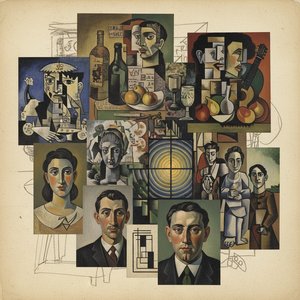
The first steps by Pablo Picasso, hand-painted oil painting reproduction by a master artist
Preview AR preview Switch to Print Switch to Digital Image Send
Details Guide Add to favorites Download Similars X-Ray Diaporama Q&A Presentation Stats

The first steps Hand-painted oil painting reproduction

Pablo Picasso

Co-founder of Cubism and creator of Guernica. Discover the revolutionary works of Pablo Picasso today.

The artwork displayed on this page is protected by copyright law, which means we cannot legally create or sell an identical reproduction. This protection is enforced under international agreements such as the Berne Convention and by national laws, including those outlined by the U.S. Copyright Law - Title 17.

As a respectful and legal alternative, we offer custom, hand-painted artworks inspired by the original. Our skilled and professional artists carefully study the original's style, mood, and artistic essence to create a new, unique piece that evokes the same feeling - while remaining an original creation in its own right.

This method fully complies with copyright regulations because it does not involve copying or duplicating the protected artwork. Instead, it is a creative reinterpretation - a new painting that is influenced by the original but not identical to it.

Hand Made Oil Reproduction

Hand-painted oil on canvas in your size and frame, made to order by our artists. ( Switch to Print Switch to Digital Image)

Corner sample of the P118B picture frame: moulded polystyrene, 5 cm wide and 3 cm thick
P118B $10
Corner sample of the P118H picture frame: moulded polystyrene, 5 cm wide and 3 cm thick
P118H $10
Corner sample of the P118W picture frame: moulded polystyrene, 5 cm wide and 3 cm thick
P118W $10
Corner sample of the P438Z picture frame: moulded polystyrene, 5.5 cm wide and 3.5 cm thick
P438Z $10
Corner sample of the P508JH picture frame: moulded polystyrene, 7 cm wide and 3.5 cm thick
P508JH $12
Corner sample of the P508YH picture frame: moulded polystyrene, 7 cm wide and 3.5 cm thick
P508YH $12
Corner sample of the P805H picture frame: moulded polystyrene, 5 cm wide and 3.5 cm thick
P805H $10
Corner sample of the P805Z picture frame: moulded polystyrene, 5 cm wide and 3.5 cm thick
P805Z $10
Corner sample of the P919BZ picture frame: moulded polystyrene, 7 cm wide and 3.5 cm thick
P919BZ $10
Corner sample of the P919G picture frame: moulded polystyrene, 7 cm wide and 3.5 cm thick
P919G $10
Corner sample of the P919XJ picture frame: moulded polystyrene, 7 cm wide and 3.5 cm thick
P919XJ $10
Corner sample of the P959ZH picture frame: moulded polystyrene, 5 cm wide and 3 cm thick
P959ZH $10
Corner sample of the P968JZ picture frame: moulded polystyrene, 6 cm wide and 4 cm thick
P968JZ $12
Corner sample of the W106C picture frame: solid wood, 5 cm wide and 3 cm thick
W106C $8
Corner sample of the W218G picture frame: solid wood, 5 cm wide and 3 cm thick
W218G $10
Corner sample of the W218JH picture frame: solid wood, 5 cm wide and 3 cm thick
W218JH $8
Corner sample of the W218Y picture frame: solid wood, 5 cm wide and 3 cm thick
W218Y $10
Corner sample of the W307PJ picture frame: solid wood, 6 cm wide and 3 cm thick
W307PJ $10
Corner sample of the W316G picture frame: solid wood, 6 cm wide and 3 cm thick
W316G $10
Corner sample of the W316PJ picture frame: solid wood, 6 cm wide and 3 cm thick
W316PJ $8
Corner sample of the W316Y picture frame: solid wood, 6 cm wide and 3 cm thick
W316Y $10
Corner sample of the W398PJ picture frame: solid wood, 5 cm wide and 3 cm thick
W398PJ $8
Corner sample of the W4111J picture frame: solid wood, 6.5 cm wide and 3.5 cm thick
W4111J $10
Corner sample of the W500HY picture frame: solid wood, 7 cm wide and 5 cm thick
W500HY $15
Corner sample of the W500JH picture frame: solid wood, 7 cm wide and 5 cm thick
W500JH $15
Corner sample of the W692G picture frame: solid wood, 8 cm wide and 4 cm thick
W692G $12
Corner sample of the W849H picture frame: solid wood, 5 cm wide and 3 cm thick
W849H $8
Corner sample of the W940BG picture frame: solid wood, 7.5 cm wide and 4.5 cm thick
W940BG $15
Corner sample of the W953PJ picture frame: solid wood, 6 cm wide and 3.5 cm thick
W953PJ $8

Standard
custom
CM
INCH

Pick from our preset sizes that match the artwork's original proportions.

width
height

Type the width and the height you need, to fit your frame or your wall. This is hand-painted, so for a size with a different shape the artist can paint a bit more around the picture, or cut a bit — you choose. We send you a digital mockup to approve before the painting starts. The picture shown on this page does not show the real result — only the mockup does.

Examples of what can be changed: Replace face with customer photo; Add pet (e.g., replace cat with dog); Include hidden message in background; Change background landscape or elements.
After order, WahooArt.com team will email client for instructions and provide a mockup preview

Worldwide Delivery () in 3/4 weeks instead of standard 5 weeks. (7 November). No compromise on quality.

Free Worldwide Express Shipping
High-Quality Linen Canvas
Full Shipping Insurance
Customs Tax Refund Guarantee
True Color Matching Guarantee
100-Day Return Policy (Defects Only)
100% Money-Back Guarantee
Bulk Discount Offer

Total Price

$ 272

The first steps

Reproduction Medium

Reproduction Size

-

Total Price

$ 272

Quick Facts

  • Artist: Pablo Picasso
  • Title: The first steps
  • Location: Private Collection
  • Year: 1943
  • Influences: Georges Braque

Pablo Picasso: A Revolutionary Artist

Pablo Ruiz y Picasso (1881–1973) stands as one of the most influential figures in 20th-century art, irrevocably reshaping visual language and challenging conventional notions of representation. Born in Málaga, Spain, his early life was marked by artistic inclination—his father, José Ruiz y Blasco, instilled in him a passion for drawing from a tender age, famously proclaiming “piz, piz” – attempting to say ‘pencil’. This formative influence propelled Picasso beyond his father’s abilities, demonstrating remarkable skill in capturing naturalistic forms. The family's relocation to A Coruña and later Barcelona exposed him to diverse artistic currents, fostering an independent spirit that clashed with the rigid academic instruction prevalent at the Royal Academy of San Fernando in Madrid. Despite these challenges, Picasso persisted in studying masters like Velázquez and Goya, honing his observational skills through self-directed study.

The Blue Period (1901–1906)

Picasso’s artistic journey commenced with a profound exploration of emotion—the Blue Period. Characterized by somber hues dominated by shades of blue and indigo, this phase reflected Picasso's preoccupation with themes of poverty, despair, and human suffering. Paintings from this era depict melancholic subjects like beggars, prostitutes, and musicians, rendered in a flattened perspective and textured brushstrokes that convey palpable sorrow. The stylistic choices were deliberate, aiming to express inner turmoil and conveying a sense of isolation—a poignant response to the hardships faced by marginalized individuals during the period. Notable works include “The Old Guitarist” (1903) and “La Vie,” capturing the essence of human vulnerability with masterful execution.

The Rose Period (1906–1907)

Following the Blue Period’s introspective gaze, Picasso transitioned into a more optimistic aesthetic—the Rose Period. Embracing warmer tones like pinks, oranges, and reds, this phase mirrored his burgeoning interest in human relationships and familial bonds. Subjects depicted during this period often portray circus performers, acrobats, and musicians, imbued with a sense of vitality and grace. The influence of Iberian sculpture is evident in Picasso’s stylistic innovations—particularly the use of simplified forms and expressive musculature—reflecting an engagement with classical art traditions. “Family of Saltimbanques” (1906) exemplifies this period's harmonious blend of observation and artistic interpretation, showcasing Picasso's evolving technique and expanding visual vocabulary.

Cubism: A Paradigm Shift

The breakthrough arrived in 1907 with Les Demoiselles d’Avignon—a painting that catapulted Picasso and Georges Braque into the forefront of Cubism. Rejecting traditional perspective and anatomical accuracy, Cubists fragmented objects into geometric planes, presenting multiple viewpoints simultaneously. This revolutionary approach aimed to transcend illusionistic representation, prioritizing conceptual understanding over visual realism. Analytical Cubism dissected subjects into constituent parts, analyzing their structure through orthogonal lines and muted colors—a painstaking process designed to dismantle conventional artistic conventions. Synthetic Cubism reintroduced color and texture, incorporating collage elements like newspaper clippings and fabric scraps—a bold assertion of artistic freedom and experimentation. Picasso’s contribution to Cubism was instrumental in shaping the movement's trajectory, establishing it as a cornerstone of modern art history.

“The First Steps” – A Synthesis of Emotion and Form

Painted in 1943 during the height of Picasso’s mature style, “The First Steps” embodies the culmination of his artistic explorations—a masterful synthesis of Cubist principles and expressive emotion. The artwork depicts a young child taking its first steps, rendered in fragmented geometric shapes that convey dynamism and immediacy. Picasso skillfully employs oil as the medium, layering textures and hues to heighten visual impact and imbue the composition with palpable warmth. The deliberate simplification of forms aligns seamlessly with Cubism’s core tenets—challenging traditional representation while simultaneously conveying a profound sense of tenderness and wonder. “The First Steps” stands as a testament to Picasso's enduring legacy—a timeless masterpiece that continues to inspire admiration for its innovative technique and evocative portrayal of human experience. At WahooArt, you can acquire a stunning reproduction of this iconic artwork.

Questions & Answers

How light is "The first steps" overall?

In terms of perceived brightness, "The first steps" by Pablo Picasso is balanced.

What use and space are recommended for "The first steps" by Pablo Picasso?

"The first steps" is suggested for accent, and the recommended space is a living room.

In which movement and which era is "The first steps" by Pablo Picasso placed?

In "The first steps" by Pablo Picasso, the Cubism movement meets the Modern era.


Artist Biography

The boy from Málaga

A child's first words in Málaga were “piz, piz,” a small attempt at saying pencil. This early pull toward the lead and paper was nurtured by his father, José Ruiz y Blasco, who taught him the basics of figure drawing and oil painting. The boy learned to copy the masters and draw from plaster casts under a disciplined eye. As he grew, the family moved through A Coruña and Barcelona. These years were marked by the quiet weight of loss, particularly the death of his sister, Conchita, from diphtheria when she was only seven. Such shadows would later find their way into the heavy, blue-green tones of his early work.

By thirteen, he was already taking entrance exams for advanced classes in Barcelona, finishing in a week what took others a month. His hands moved with a precision that even his father noticed, once seeing him paint over an unfinished sketch of a pigeon with such accuracy that the instructor realized the student had surpassed him. He eventually moved to Paris, a city where he would spend much of his adult life, constantly shifting his focus from one way of seeing to another.

Shifting palettes and fractured forms

The early twentieth century saw his work move through distinct phases of color and mood. There was the Blue Period, where the canvases were filled with beggars, the blind, and the lonely, rendered in somber shades of blue. This gave way to the Rose Period, a time when pinks, oranges, and reds appeared, often featuring the figures of circus performers like harlequins and acrobats. These years showed a man reacting to his own life and the world around him through the temperature of his palette.

In 1907, the way he handled space changed fundamentally with Les Demoiselles d'Avignon. Influenced by African masks and Iberian sculpture, he began to break objects into geometric shapes. Alongside Georges Braque, he developed Cubism. This involved two main stages:

  • Analytic Cubism: A method of fragmenting objects into muted, geometric pieces as if dissecting the form itself.
  • Synthetic Cubism: An approach that brought in collage elements like newspaper clippings and fabric scraps to add texture and new layers.

A life of constant change

His work never settled into a single way of being. He explored Neoclassicism with large, monumental figures and later engaged with the imagery of Surrealism, using distorted perspectives to tap into the subconscious. The violence of the Spanish Civil War left its mark on his canvas in 1937 through Guernica. This large oil painting used a stark palette of black, white, and grey to show the suffering of a bombed town, featuring a gored horse, a bull, and screaming women. It remains a heavy, monochromatic response to the chaos of war.

In his later years, he continued to experiment with ceramics, sculpture, and printmaking. He even created large-scale public works, such as the 1967 steel sculpture in Chicago, which was inspired by the head of his Afghan Hound, Kabul. He died in Mougins, France, leaving behind a massive collection of work that spans over seventy-six years of experimentation.

Pablo Picasso

Pablo Picasso

1881 - 1973 , Spain

Quick Facts

  • Full Name: Pablo Diego José Ruiz Picasso
  • Nationality: Spanish
  • Date Of Birth: 1881
  • Date Of Death: 1973
  • Place Of Birth: Malaga, Spain
  • Notable Artworks:
    • Les Demoiselles d'Avignon
    • Guernica
    • The Old Guitarist
    • La Vie
    • Family of Saltimbanques
  • Artistic Movement Or Style: Cubism, Surrealism
  • Artists Who Influenced This Artist:
    • Velázquez
    • Goya
    • Matisse
  • Artists Or Movements Influenced By This Artist:
    • Cubism
    • Modern art
Explore artworks organized by themes, styles, and characteristics.