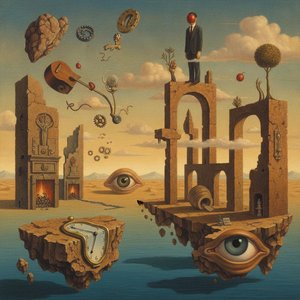
The artwork displayed on this page is protected by copyright law, which means we cannot legally create or sell an identical reproduction. This protection is enforced under international agreements such as the Berne Convention and by national laws, including those outlined by the U.S. Copyright Law - Title 17.
This method fully complies with copyright regulations because it does not involve copying or duplicating the protected artwork. Instead, it is a creative reinterpretation - a new painting that is influenced by the original but not identical to it.
Museum-quality giclée or canvas print with fast production and flexible finish options. ( Buy Hand Made Painting
Switch to Digital Image)
Pick from our preset sizes that match the artwork's original proportions.
Type the width and the height you need, to fit your frame or your wall. A print can only be cut, never made bigger than the picture, so a size with a different shape loses a part of the image. We send you a digital mockup to approve before we print anything. The picture shown on this page does not show the real cut — only the mockup does.
Worldwide Delivery () in 2 weeks instead of standard 4/5 weeks. (29 October)
Acrobat
Reproduction Size
In the vast, transformative catalog of Pablo Picasso, few works capture the delicate equilibrium between raw emotion and structural innovation quite like “Acrobat.” Executed in 1922, this watercolor masterpiece transcends mere visual representation; it embodies the core tenets of Surrealism and invites a profound contemplation on themes of precariousness, duality, and human vulnerability. The composition is deceptively simple—a solitary figure balancing precariously on one leg—yet it immediately establishes an intimate dialogue with the viewer. It prompts us to question the very nature of stability versus dynamism, and the eternal struggle between maintaining control and surrendering to the unknown.
The technique employed in this piece showcases Picasso's masterful command over the ethereal qualities of watercolor. Unlike the heavy, structured layers of his later works, the application here is fluid and light, capturing the interplay of light and shadow with remarkable subtlety. The loose, almost spontaneous brushstrokes contribute to an atmosphere of dreamlike disorientation, mirroring the subconscious mind’s exploration of irrationality and fantasy. This approach prioritizes emotional resonance over precise anatomical accuracy, allowing the figure to appear as much a phantom of the imagination as a physical being.
To understand “Acrobat,” one must look toward the cultural landscape of post-World War I Europe. Created during a period of immense societal upheaval, the painting aligns perfectly with the burgeoning Surrealist movement spearheaded by figures like André Breton. This era sought to liberate art from the rigid constraints of rationalism, embracing automatism and chance operations to bypass conscious thought. Picasso’s work reflects this broader cultural preoccupation with psychological disturbance and the search for meaning amidst chaos.
Every element within the frame is laden with artistic intention. The figure’s stance represents an inherent tension between balance and instability; the single leg serves as a poignant symbol of vulnerability, while the clasped hands convey a sense of both support and confinement. This duality suggests the human struggle to maintain equilibrium amidst external pressures. Even the choice of color carries weight; the predominant green garment adds a layer of organic mystery to the scene, grounding the surrealist dream in an earthy, yet haunting, palette.
For art lovers and collectors, “Acrobat” offers more than just a historical window; it provides a profound emotional anchor. For interior designers, this piece serves as a sophisticated focal point that can introduce a sense of movement and intellectual depth to a room. Whether placed in a minimalist contemporary setting or a classic study, the painting’s dreamlike quality invites quiet reflection and conversation.
Owning a high-quality reproduction of this work allows one to bring the revolutionary spirit of Picasso into the home. It is an invitation to appreciate the beauty found in imbalance and the strength found in vulnerability. As a piece of decor, it does not merely occupy space; it transforms it, offering a window into the restless, beautiful, and ever-evolving mind of a true master.
small size, portrait orientation: that is the print setup suggested for "Acrobat" by Pablo Picasso.
To preview a reproduction of "Acrobat" by Pablo Picasso, open the artwork's Preview page.
For a living room, the recommended print size of "Acrobat" by Pablo Picasso is small.
A child's first words in Málaga were “piz, piz,” a small attempt at saying pencil. This early pull toward the lead and paper was nurtured by his father, José Ruiz y Blasco, who taught him the basics of figure drawing and oil painting. The boy learned to copy the masters and draw from plaster casts under a disciplined eye. As he grew, the family moved through A Coruña and Barcelona. These years were marked by the quiet weight of loss, particularly the death of his sister, Conchita, from diphtheria when she was only seven. Such shadows would later find their way into the heavy, blue-green tones of his early work.
By thirteen, he was already taking entrance exams for advanced classes in Barcelona, finishing in a week what took others a month. His hands moved with a precision that even his father noticed, once seeing him paint over an unfinished sketch of a pigeon with such accuracy that the instructor realized the student had surpassed him. He eventually moved to Paris, a city where he would spend much of his adult life, constantly shifting his focus from one way of seeing to another.
The early twentieth century saw his work move through distinct phases of color and mood. There was the Blue Period, where the canvases were filled with beggars, the blind, and the lonely, rendered in somber shades of blue. This gave way to the Rose Period, a time when pinks, oranges, and reds appeared, often featuring the figures of circus performers like harlequins and acrobats. These years showed a man reacting to his own life and the world around him through the temperature of his palette.
In 1907, the way he handled space changed fundamentally with Les Demoiselles d'Avignon. Influenced by African masks and Iberian sculpture, he began to break objects into geometric shapes. Alongside Georges Braque, he developed Cubism. This involved two main stages:
His work never settled into a single way of being. He explored Neoclassicism with large, monumental figures and later engaged with the imagery of Surrealism, using distorted perspectives to tap into the subconscious. The violence of the Spanish Civil War left its mark on his canvas in 1937 through Guernica. This large oil painting used a stark palette of black, white, and grey to show the suffering of a bombed town, featuring a gored horse, a bull, and screaming women. It remains a heavy, monochromatic response to the chaos of war.
In his later years, he continued to experiment with ceramics, sculpture, and printmaking. He even created large-scale public works, such as the 1967 steel sculpture in Chicago, which was inspired by the head of his Afghan Hound, Kabul. He died in Mougins, France, leaving behind a massive collection of work that spans over seventy-six years of experimentation.

1881 - 1973 , Spain