x


 Oil On CanvasWallArtBaroque
 1621
1621 161.0 x 227.0 cm
 The J. Paul Getty Museum
Hand-painted oil on canvas in your size and frame, made to order by our artists. ( Buy Print Buy Image)





























Pick from our preset sizes that match the artwork's original proportions.

You may enter your own dimensions to fit a specific frame or space. If your selected size does not match the original image's proportions, we will either crop the artwork or extend the painting with additional hand-painted elements. A digital mockup will be sent for your approval before production begins.
Please note that the on-screen preview does not reflect the actual cropping or extension. Only the mockup will accurately show the final composition.
While custom sizes are available, we recommend selecting a dimension from the predefined list to preserve the original proportions.
Worldwide Delivery () in 3/4 weeks instead of standard 5 weeks. (26 August). No compromise on quality.


Danae
Reproduction Size
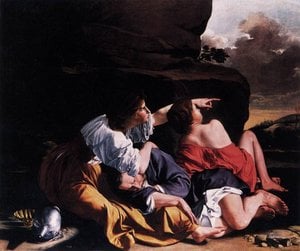
Orazio Gentileschi’s 1623 painting, *Danaë*, is more than just a depiction of a classical myth; it's a profound meditation on fate, beauty, and the transformative power of divine grace. Housed within the J. Paul Getty Museum in Los Angeles, this oil-on-canvas masterpiece stands as a testament to Gentileschi’s mastery of Baroque technique and his ability to infuse historical narrative with deeply felt emotion. The painting immediately captivates with its dramatic lighting – a hallmark of Caravaggio's influence – which sculpts the figures and creates an atmosphere of both vulnerability and opulent splendor.
At the heart of the composition lies Danaë, a young woman lying on her bed, draped in a sheer veil that hints at both modesty and impending revelation. Her arms are outstretched, a gesture simultaneously of surrender and anticipation. Above her, a cascade of golden coins – representing Zeus’s divine intervention – rains down upon the mattress, transforming the scene into a shimmering tableau of mythic birth. The artist skillfully renders the texture of the fabric, the weight of the gold, and the delicate curve of Danaë's body, demonstrating an exceptional command of form and detail. Notice how Gentileschi avoids idealization; Danaë is not a goddess but a mortal woman caught in the throes of a miraculous event.
The narrative depicted is rooted in Greek mythology, recounting the story of Danaë, daughter of King Aegyptus and the sea nymph Calliope. Faced with unwanted suitors, Aegyptus sought to protect his daughter by imprisoning her in a tower. Zeus, disguised as a shower of golden rain, descended into the tower and impregnated Danaë, resulting in the birth of Perseus, the legendary hero. The painting captures this pivotal moment – not the act of conception itself, but its immediate aftermath: the arrival of divine grace and the promise of a new life.
The symbolism is layered and rich. The golden rain isn’t merely a visual spectacle; it represents Zeus's power and his ability to transcend mortal boundaries. Danaë’s pose – vulnerable yet receptive – speaks to her acceptance of this extraordinary destiny. The presence of Eros, the god of love, pulling aside the curtain symbolizes the initiating force behind the divine intervention, highlighting the role of desire and fate in shaping human experience.
Gentileschi’s technical skill is evident throughout *Danaë*. He masterfully employs chiaroscuro – the dramatic contrast between light and shadow – to create a sense of depth and movement. The golden light emanating from the coins illuminates Danaë's face and body, while the surrounding areas remain shrouded in darkness, intensifying the drama of the scene. The artist’s brushwork is loose and expressive, conveying a feeling of immediacy and dynamism. Observe how he captures the swirling motion of the falling gold, creating an almost palpable sense of energy.
Furthermore, Gentileschi's use of color is particularly noteworthy. The rich hues of red, gold, and blue create a vibrant and luxurious atmosphere, reflecting the opulence associated with the gods. The subtle variations in tone contribute to the painting’s overall visual harmony, drawing the viewer’s eye through the composition.
Interestingly, *Danaë* is believed to be a reworking of an earlier painting by Gentileschi’s daughter, Artemisia Gentileschi, who also depicted the same subject. This suggests a close artistic relationship and a shared interest in exploring themes of female agency and divine intervention within a mythological context. Artemisia's own work often featured strong, independent women confronting adversity with courage and resilience – qualities that resonate powerfully in *Danaë*. Studying both paintings offers valuable insights into the evolving artistic sensibilities of the Gentileschi family and their contribution to the Baroque movement.
Today, *Danaë* remains a captivating masterpiece, inviting viewers to contemplate the complexities of myth, beauty, and the enduring power of divine grace. It’s a painting that speaks not only to the grandeur of ancient Greece but also to the timeless human experience of desire, fate, and transformation.


1563 - 1639 , Italy

Embark on a sophisticated journey through Italian Baroque art. Discover the dramatic interplay of light and emotion in Caravaggio’s masterpieces and explore how to bring this timeless grandeur into your collection with expert art insights.

Embark on a sophisticated journey through the eternal allure of mythological art. Discover how master painters breathe life into ancient legends, from Greek deities to Baroque masterpieces, and learn to curate these timeless narratives within your own exquisite art collection.


Stay updated with the latest art news, exclusive offers, and decoration ideas.
Tell us about your project and our art experts will provide you with 3 personalized art suggestions.
Let Us Curate 3 Options Just for You - Free!

 Preview
 Send
Send Share
Share
 Details

 Download
 Similars
 X-Ray
X-Ray Diaporama
 Read More







 Glass option is only available in size under 110 CM