FREE ART CONSULTATION

x
Buy print Buy printBuy Painting Buy Painting SendSend
DetailsDetails Add to favorites Add to favorites DownloadDownload SimilarsSimilars X-RayX-Ray DiaporamaDiaporama

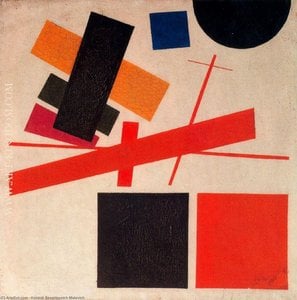
Non-objective Composition

Explore Olga Rozanova’s ‘Non-Objective Composition’ (1917). A dynamic geometric abstraction in red & white, influenced by Cubism & Constructivism. Discover its tension & unique style.

Discover Olga Rozanova (1886-1918), a Russian avant-garde pioneer who seamlessly blended Suprematism, Cubo-Futurism & Neo-Primitivism into vibrant abstract art. Explore her influential 'color painting' style and legacy.

Purchase a high-resolution, enhanced digital image, far superior to the online preview.

Each file is meticulously prepared by our in-house specialists using advanced tools and expert manual retouching. We ensure every image has exceptional clarity, precise color accuracy, and fine detail.

The final file is delivered via email within 72 hours, optimized for immediate use in professional, editorial, and print environments. This is the same quality trusted by top-tier design studios, publishers, and galleries.

Digital Image

Download a high-resolution file for personal display, printing, and creative projects.

Total Price

$9.99

Included in Every Digital Image Order

Expert Digital Delivery, Guaranteed

When you choose WahooArt.com, you're not just getting an image - you're receiving a professionally enhanced digital artwork, crafted with precision and backed by a satisfaction guarantee. Here's everything that comes with your order, automatically:

shipping_icon
Fast Email Delivery

Your high-resolution digital image file will be emailed to you within 72 hours of ordering - ready for immediate use.

canvas_icon
AI-Enhanced Digital File

Your artwork is professionally optimized using advanced AI tools and manual editing, ensuring maximum detail, clarity, and color accuracy.

insurance_icon
Free Lifetime Re-Delivery

Accidentally deleted or lost your file? No worries - we'll resend it to you anytime, free of charge.

tax_icon
No Import Fees - Ever

Enjoy your artwork instantly with zero customs, duties, or delivery fees - digital downloads are always tax-free.

color_icon
Color Accuracy Guarantee

We ensure your digital image reflects the original colors as closely as possible using professional tools and color management.

return_icon
60-Day Satisfaction Guarantee

If you're not satisfied with your digital image, we'll revise it or refund 100% within 60 days - no questions asked.

guarantee_icon
100% Money-Back Guarantee

Not satisfied? Get a full refund within 60 days of receiving your digital file - no questions asked.

discount_icon
Bulk Order Discounts

Buy 3 images, save 10% - Buy 5, save 15% - Buy 10+, save 20%. Great for creative projects, galleries, and agencies.

Related Artworks


Artist Biography

A Life Illuminated: The Pioneering Vision of Olga Rozanova

Olga Vladimirovna Rozanova, a name resonating with increasing force in the annals of 20th-century art, was a Russian avant-garde artist whose tragically short life belied an astonishingly prolific and innovative career. Born in 1886 in Melenki, Russia, to a family steeped in both civic duty – her father was a district police officer – and religious tradition through her Orthodox priest grandfather, Rozanova’s path diverged from convention as she pursued the burgeoning world of modern art in Moscow. After graduating from the Vladimir Women's Gymnasium in 1904, she immersed herself in artistic training, first at the Bolshakov Art School under Nikolai Ulyanov and sculptor Andrey Matveev, then auditing courses at the Stroganov School of Applied Art and finally honing her skills in Konstantin Yuon’s private studio. These formative years laid the groundwork for a restless exploration that would see her navigate and contribute to some of the most radical artistic movements of her time.

From Neo-Primitivism to the Brink of Abstraction

Rozanova's early work reflected the vibrant, often folkloric influences of Neo-Primitivism, a movement seeking inspiration in Russia’s traditional art and peasant culture. However, she quickly gravitated towards the dynamism of Cubo-Futurism around 1913, captivated by the Italian Futurist embrace of speed, technology, and the energy of modern life. This fascination culminated in her participation in the First Free International Futurist Exhibition in Rome in 1914, a bold step that brought her work to an international audience. Pieces like “In a Café” from this period demonstrate a synthesis of Russian sensibilities with the fragmented forms and energetic lines characteristic of Futurism. Yet, Rozanova wasn’t merely imitating; she was absorbing and transforming these influences, infusing them with a distinctly Russian emotional intensity. This period also saw her groundbreaking collaboration with poet Aleksei Kruchenykh, resulting in “samopismo,” a revolutionary form of Futurist book where text and image were inextricably linked – a precursor to concrete poetry and visual literature.

The Suprematist Turn and the Pursuit of Pure Feeling

A pivotal moment arrived in 1916 when Rozanova joined Kazimir Malevich’s Supremus group, embracing pure abstraction as the ultimate artistic expression. While deeply influenced by Malevich's theories, she didn’t simply replicate his geometric forms. Instead, Rozanova charted her own course within Suprematism, prioritizing color and emotional resonance over rigid structure. Her canvases became fields of vibrant hues, layered and interacting to evoke a sense of spiritual energy and inner experience. She believed that color possessed an inherent power to communicate directly with the soul, bypassing rational thought. This emphasis on subjective feeling distinguished her work from Malevich’s more austere approach and foreshadowed later developments in abstract art. Her “Non-Objective Composition (Suprematism)” exemplifies this shift, showcasing a dynamic interplay of shapes and colors that pulsate with life.

A Legacy Forged in Color: Anticipating Abstract Expressionism

In her final years, Rozanova developed what she termed "color painting," characterized by bold, simple canvases featuring large areas of saturated color. These works, such as “Green Stripe,” are remarkably prescient, anticipating the Color Field paintings of Mark Rothko and Barnett Newman decades later. They represent a radical reduction to essential forms and hues, aiming to evoke profound emotional responses through pure visual experience. Sadly, Rozanova’s promising career was cut short by illness; she succumbed to diphtheria in Moscow in 1918 at just thirty-two years old. Despite her untimely death, Olga Rozanova's contributions to the Russian avant-garde were significant. She wasn’t merely a follower of artistic trends but an active participant and innovator who pushed boundaries and explored new possibilities. Her unique voice within Suprematism, her pioneering work in combining text and image, and her visionary “color paintings” have secured her place as a pivotal figure in 20th-century art history – a legacy that continues to inspire artists and captivate audiences today. She remains an intellectual mother of Abstract Expressionism.
Olga Rozanova

Olga Rozanova

1886 - 1918 , Russia

Quick Facts

  • Artistic Movement Or Style:
    • Suprematism
    • Cubo-Futurism
    • Neo-Primitivism
  • Artists Or Movements Influenced By This Artist:
    • Abstract Expressionism
    • Mark Rothko
    • Barnett Newman
  • Artists Who Influenced This Artist: ['Kazimir Malevich']
  • Date Of Birth: 1886
  • Date Of Death: 1918
  • Full Name: Olga Rozanova
  • Nationality: Russian
  • Notable Artworks:
    • Lady in Pink
    • Green Stripe
    • Non-Objective Composition
  • Place Of Birth: Melenki, Russia