

Museum-quality giclée or canvas print with fast production and flexible finish options. ( Buy Hand Made Painting Switch to Digital Image)





























Pick from our preset sizes that match the artwork's original proportions.

You may enter your own dimensions to fit a specific frame or space. If your selected size does not match the original image's proportions, we will either crop the artwork or extend the image with a mirrored or solid-fill edge. A digital mockup will be sent for your approval before production begins.
Please note that the on-screen preview does not reflect the actual cropping or extension. Only the mockup will accurately show the final composition.
While custom sizes are available, we recommend selecting a dimension from the predefined list to preserve the original proportions.
Worldwide Delivery () in 2 weeks instead of standard 4/5 weeks. (11 October)
Silence
Reproduction Size
Odilon Redon's "Silence," painted in 1900, is more than just a pastel image; it’s an invitation to a profound and unsettling meditation. Created during a pivotal moment in artistic history – the burgeoning Symbolist movement grappling with the anxieties and dreams of the early 20th century – this work embodies Redon's signature ability to translate the intangible into a powerfully evocative visual experience. The painting immediately arrests the viewer with its muted palette, dominated by soft browns and grays that coalesce into an atmosphere of hushed reverence. It’s a space designed for contemplation, where the boundaries between reality and dream blur, inviting us to confront the unspoken anxieties and profound silences within ourselves.
Redon’s work is deeply rooted in the principles of Symbolism, a movement that sought to express subjective emotions and ideas through symbolic imagery rather than objective representation. “Silence” exemplifies this approach perfectly. The woman's gesture isn't simply about physical quiet; it represents a deeper state of being – a refusal to engage with the world, a retreat into the self. This interpretation aligns with Redon’s broader artistic philosophy, which emphasized exploring the subconscious and the realm of dreams, drawing heavily from the influence of artists like Paul Gauguin and Vincent van Gogh.
The painting's ambiguity is key to its power. There are no definitive answers offered; instead, Redon presents a question – one about restraint, contemplation, and perhaps even despair – allowing each viewer to project their own anxieties and interpretations onto the scene. The veiled figure becomes a mirror reflecting our own internal silences.
"Silence" was created at a time of immense social and artistic upheaval. The late 19th and early 20th centuries witnessed rapid industrialization, urbanization, and the rise of new philosophical ideas – all contributing to a sense of disorientation and uncertainty. Redon’s work reflects this atmosphere, anticipating many of the themes explored by later movements like Expressionism. His technical skill was also influenced by his training in etching and lithography, techniques that allowed him to create intricate, layered compositions filled with hidden details and symbolic resonances.
Interestingly, Redon's artistic trajectory reveals connections to Impressionism and the avant-garde tendencies of his time. While he departed from strict realism, he retained a keen eye for structure and form – a subtle nod to the influence of Paul Cézanne, who famously sought to reconcile observation with abstraction.
"Silence" remains a profoundly moving work, demonstrating Redon’s unparalleled ability to capture the essence of human emotion through evocative imagery. Its quiet intensity and ambiguous symbolism continue to resonate with viewers today, solidifying its place as a cornerstone of Symbolist art. This reproduction offers an exceptional opportunity to experience the beauty and power of this iconic painting firsthand.
The color harmony of "Silence" is recorded as strong color unity.
A large reproduction is suggested for "Silence" by Odilon Redon. Size can be adjusted while keeping the proportions.
A digital image of "Silence" by Odilon Redon can be purchased on this page: a high-resolution digital image download.
When "Silence" was created in 1900, Odilon Redon - born in 1840 - was 60 years old.
"Silence" connects the Symbolist Movement movement with France through its creator's birthplace.
"Silence" by Odilon Redon was created in 1900.
"Silence" is attributed to Odilon Redon.


1840 - 1916 , France

Discover museum-quality Giclée paper prints at WahooArt. Elevate your space with archival, pigment-based reproductions of the world's greatest masterpieces. Affordable, elegant, and designed for lasting beauty. Start curating your timeless art legacy today.

Explore the profound beauty of ethereal art. Discover how masters of Symbolism and Romanticism capture light, spirit, and dreamlike landscapes through evocative textures and atmospheric depth in this expert guide to classical artistry.
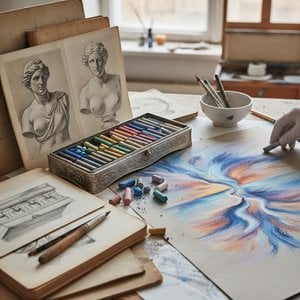
Explore the ethereal beauty of pastel art. Discover how Impressionist masters used soft hues and velvety textures to capture light. A professional guide for art enthusiasts seeking to understand, collect, and appreciate the delicate magic of this timeless medium.

Master the nuances of Giclée printing with our expert guide. Discover how pigment-based inks and museum-grade substrates create fade-resistant, high-fidelity art reproductions designed for discerning collectors seeking unparalleled quality and longevity.

Transform your digital artistry into a prestigious global brand with WahooArt’s premium Giclée prints. Experience museum-quality archival excellence and seamless on-demand fulfillment designed for the modern creative entrepreneur seeking to build a lasting artistic legacy.

 Preview
 Send
Send Share
Share
 Details
 Guide
Guide

 Download
 Similars
 X-Ray
X-Ray Diaporama
 Stats
Stats

 Read More









 Glass option is only available in size under 110 CM


