

The artwork displayed on this page is protected by copyright law, which means we cannot legally create or sell an identical reproduction. This protection is enforced under international agreements such as the Berne Convention and by national laws, including those outlined by the U.S. Copyright Law - Title 17.
As a respectful and legal alternative, we offer custom, hand-painted artworks inspired by the original. Our skilled and professional artists carefully study the original's style, mood, and artistic essence to create a new, unique piece that evokes the same feeling - while remaining an original creation in its own right.
This method fully complies with copyright regulations because it does not involve copying or duplicating the protected artwork. Instead, it is a creative reinterpretation - a new painting that is influenced by the original but not identical to it.
Hand-painted oil on canvas in your size and frame, made to order by our artists. ( Switch to Print Switch to Digital Image)





























Pick from our preset sizes that match the artwork's original proportions.

Type the width and the height you need, to fit your frame or your wall. This is hand-painted, so for a size with a different shape the artist can paint a bit more around the picture, or cut a bit — you choose. We send you a digital mockup to approve before the painting starts. The picture shown on this page does not show the real result — only the mockup does.
Worldwide Delivery () in 3/4 weeks instead of standard 5 weeks. (27 October). No compromise on quality.
Gentle Rainstorm
Reproduction Size

Norman Ackroyd, who passed away on September 16th, 2024, at the age of 86, was a towering figure in contemporary British printmaking. Though his career spanned decades and encompassed painting, mural commissions, and even forays into steel relief, it was as an etcher – a master of aquatint particularly – that he secured his enduring legacy. Ackroyd wasn’t merely recording landscapes; he was distilling their essence, capturing the raw poetry of place with a technical brilliance matched by few. His work offered a quiet resistance to the increasingly digital world, a testament to the power of slow craft and direct engagement with nature.
Born in Leeds, Yorkshire, in 1938, Ackroyd’s early life hinted at an artistic inclination despite initial familial skepticism. His father, Albert, was a master butcher, while his mother, Clara Briggs, was a weaver. This duality – the grounded practicality of one parent and the creative spirit of the other – perhaps informed the very nature of Ackroyd’s work: meticulous technique applied to subjects rooted in the tangible world. His formal training began at Leeds College of Art from 1957 to 1961, where he first encountered etching, a medium that would become his lifelong passion. This was followed by studies at the Royal College of Art between 1961 and 1964, under the guidance of Julian Trevelyan, alongside a generation of artists including David Hockney, Mary Quant, and Zandra Rhodes. The RCA proved pivotal, not only refining his skills but also introducing him to his first wife, the artist Sylvia Buckland.
Ackroyd’s artistic development was defined by a profound fascination with light and shadow. While he initially explored these elements through watercolor, it was through the rigorous, chemical process of etching and aquatint that he truly found his voice. He possessed an uncanny ability to manipulate tonal ranges, creating atmospheres that felt both physically present and ethereally fleeting. His work often captured the dramatic interplay of weather and terrain, from the serene, sun-drenched landscapes of County Kerry to the rugged, isolated beauty of St Kilda.
His technical prowess extended beyond paper into the realm of monumental sculpture. In Bermondsey, London, Ackroyd converted a former leather warehouse into a sprawling studio space that housed his massive etching press. It was here that he expanded his vision, receiving numerous mural commissions where he translated his etched sensibilities into etched stainless steel and bronze. This ability to scale his intimate observations of nature into grand, permanent installations demonstrated the versatility of his artistic language.
Throughout his illustrious career, Ackroyd’s contributions to the British art scene were met with profound respect and numerous accolades. His journey from a student in Leeds to a central figure in the London art world was marked by significant milestones:
Beyond the awards, Ackroyd’s historical significance lies in his role as a guardian of the "slow" medium. In an era of rapid reproduction, his commitment to the painstaking processes of aquatint and engraving served as a reminder of the beauty found in patience and precision. He leaves behind a body of work that remains a vital part of the British landscape tradition, inviting viewers to pause and witness the quiet, enduring majesty of the natural world.

1938 - , United Kingdom

Explore the rich history of landscape art with WahooArt. Discover renowned artists, movements like Impressionism & Romanticism, and expert guidance for collecting timeless pieces. Find your perfect serene escape today!
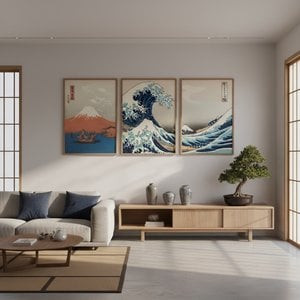
Journey through Katsushika Hokusai’s 25 most iconic artworks, including *The Great Wave*. Explore the ukiyo-e master's history, style & timeless Japanese woodblock prints. Find museum-quality reproductions for your home at WahooArt.com.

Journey through 10 Romantic landscape masterpieces by Friedrich, Turner & Cole. Explore emotional art, sublime nature scenes & iconic 19th-century paintings. Find museum-quality reproductions for your home at WahooArt.com – discover the full collection online!

Journey through John Constable's 25 most celebrated landscapes. Explore Romanticism, Dedham Vale & his masterful use of light in iconic paintings like 'Hay Wain'. Find museum-quality art reproductions and elevate your home decor on WahooArt.com.

Explore the world of giclée prints with WahooArt. Learn about archival quality, aesthetic nuances & investment potential. Expert guidance for discerning art collectors seeking museum-quality reproductions and lasting value.

 Preview
 Send
Send Share
Share
 Details
 Guide
Guide

 Download
 Similars
 X-Ray
X-Ray Diaporama
 Stats
Stats


 Read More









 Glass option is only available in size under 110 CM


