Preview AR preview Switch to Print Switch to Digital Image Send
Details Guide Add to favorites Download Similars X-Ray Diaporama Stats

Bacchic Scene

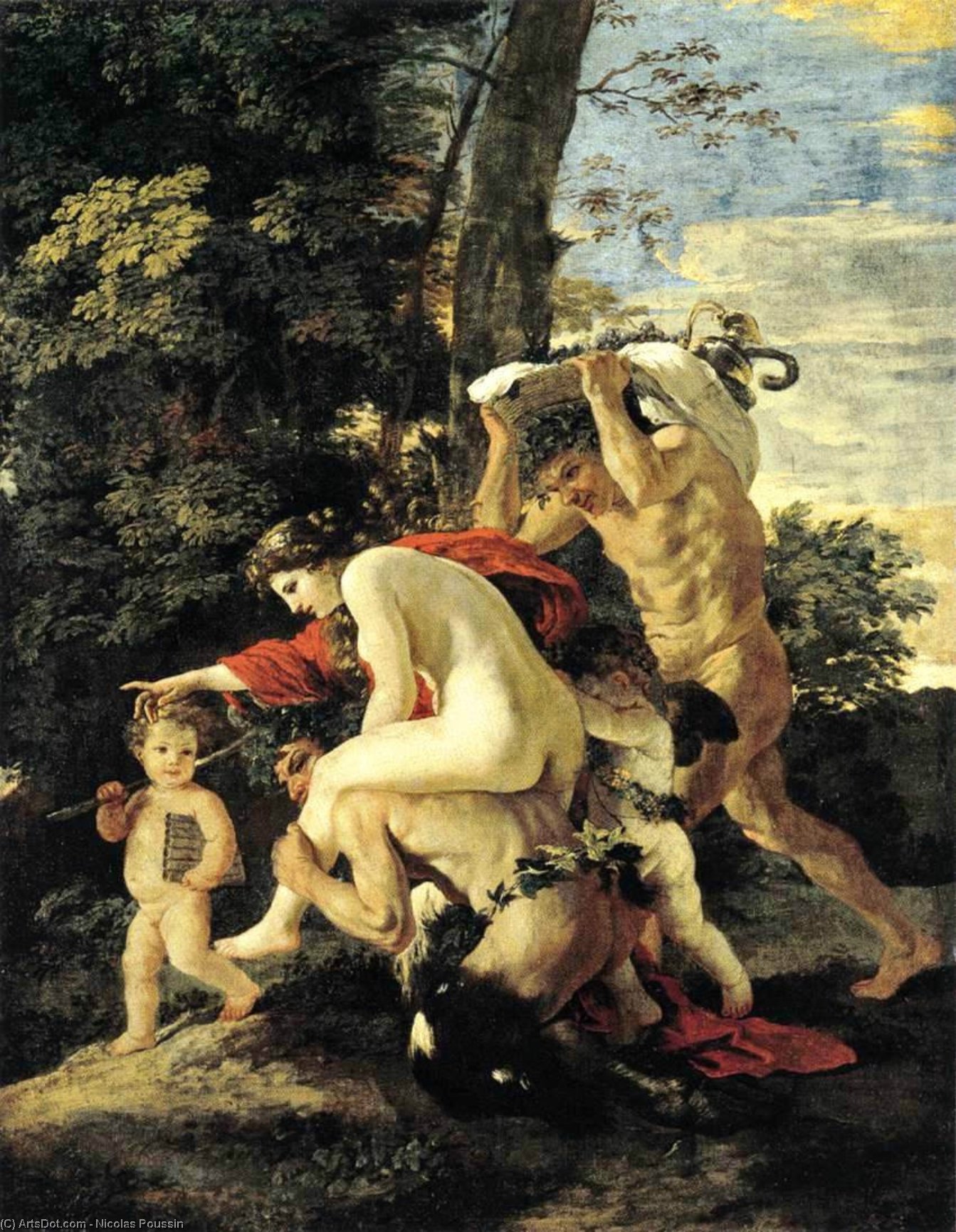
Nicolas Poussin’s ‘Bacchic Scene’ (1627) captures a lively Roman festival with mythological figures and dramatic chiaroscuro. Explore classical beauty & Baroque artistry in this masterpiece.

Explore Nicolas Poussin's masterful Baroque paintings—renowned for serene landscapes and mythological narratives inspired by classical antiquity. Discover iconic artworks at WahooArt.

Hand Made Oil Reproduction

Hand-painted oil on canvas in your size and frame, made to order by our artists. ( Switch to Print Switch to Digital Image)

Corner sample of the P118B picture frame: moulded polystyrene, 5 cm wide and 3 cm thick
P118B $10
Corner sample of the P118H picture frame: moulded polystyrene, 5 cm wide and 3 cm thick
P118H $10
Corner sample of the P118W picture frame: moulded polystyrene, 5 cm wide and 3 cm thick
P118W $10
Corner sample of the P438Z picture frame: moulded polystyrene, 5.5 cm wide and 3.5 cm thick
P438Z $10
Corner sample of the P508JH picture frame: moulded polystyrene, 7 cm wide and 3.5 cm thick
P508JH $12
Corner sample of the P508YH picture frame: moulded polystyrene, 7 cm wide and 3.5 cm thick
P508YH $12
Corner sample of the P805H picture frame: moulded polystyrene, 5 cm wide and 3.5 cm thick
P805H $10
Corner sample of the P805Z picture frame: moulded polystyrene, 5 cm wide and 3.5 cm thick
P805Z $10
Corner sample of the P919BZ picture frame: moulded polystyrene, 7 cm wide and 3.5 cm thick
P919BZ $10
Corner sample of the P919G picture frame: moulded polystyrene, 7 cm wide and 3.5 cm thick
P919G $10
Corner sample of the P919XJ picture frame: moulded polystyrene, 7 cm wide and 3.5 cm thick
P919XJ $10
Corner sample of the P959ZH picture frame: moulded polystyrene, 5 cm wide and 3 cm thick
P959ZH $10
Corner sample of the P968JZ picture frame: moulded polystyrene, 6 cm wide and 4 cm thick
P968JZ $12
Corner sample of the W106C picture frame: solid wood, 5 cm wide and 3 cm thick
W106C $8
Corner sample of the W218G picture frame: solid wood, 5 cm wide and 3 cm thick
W218G $10
Corner sample of the W218JH picture frame: solid wood, 5 cm wide and 3 cm thick
W218JH $8
Corner sample of the W218Y picture frame: solid wood, 5 cm wide and 3 cm thick
W218Y $10
Corner sample of the W307PJ picture frame: solid wood, 6 cm wide and 3 cm thick
W307PJ $10
Corner sample of the W316G picture frame: solid wood, 6 cm wide and 3 cm thick
W316G $10
Corner sample of the W316PJ picture frame: solid wood, 6 cm wide and 3 cm thick
W316PJ $8
Corner sample of the W316Y picture frame: solid wood, 6 cm wide and 3 cm thick
W316Y $10
Corner sample of the W398PJ picture frame: solid wood, 5 cm wide and 3 cm thick
W398PJ $8
Corner sample of the W4111J picture frame: solid wood, 6.5 cm wide and 3.5 cm thick
W4111J $10
Corner sample of the W500HY picture frame: solid wood, 7 cm wide and 5 cm thick
W500HY $15
Corner sample of the W500JH picture frame: solid wood, 7 cm wide and 5 cm thick
W500JH $15
Corner sample of the W692G picture frame: solid wood, 8 cm wide and 4 cm thick
W692G $12
Corner sample of the W849H picture frame: solid wood, 5 cm wide and 3 cm thick
W849H $8
Corner sample of the W940BG picture frame: solid wood, 7.5 cm wide and 4.5 cm thick
W940BG $15
Corner sample of the W953PJ picture frame: solid wood, 6 cm wide and 3.5 cm thick
W953PJ $8

Standard
custom
CM
INCH

Pick from our preset sizes that match the artwork's original proportions.

width
height

You may enter your own dimensions to fit a specific frame or space. If your selected size does not match the original image's proportions, we will either crop the artwork or extend the painting with additional hand-painted elements. A digital mockup will be sent for your approval before production begins.
Please note that the on-screen preview does not reflect the actual cropping or extension. Only the mockup will accurately show the final composition.
While custom sizes are available, we recommend selecting a dimension from the predefined list to preserve the original proportions.

Examples of what can be changed: Replace face with customer photo; Add pet (e.g., replace cat with dog); Include hidden message in background; Change background landscape or elements.
After order, WahooArt.com team will email client for instructions and provide a mockup preview

Worldwide Delivery () in 3/4 weeks instead of standard 5 weeks. (10 October). No compromise on quality.

Free Worldwide Express Shipping
High-Quality Linen Canvas
Full Shipping Insurance
Customs Tax Refund Guarantee
True Color Matching Guarantee
100-Day Return Policy (Defects Only)
100% Money-Back Guarantee
Bulk Discount Offer

Total Price

$ 272

Bacchic Scene

Reproduction Medium

Reproduction Size

-

Total Price

$ 272

Quick Facts

  • Notable elements or techniques: Chiaroscuro, classical influences
  • Medium: Oil on canvas
  • Dimensions: 96 x 75 cm
  • Influences: Roman mythology
  • Subject or theme: Bacchic revelry
  • Artistic style: Baroque, Classical
  • Title: Bacchic Scene

Art Quiz

There is only one correct answer for each question.

Question 1:
What is the primary subject depicted in Nicolas Poussin’s ‘Bacchic Scene’?
Question 2:
In which city is Nicolas Poussin’s ‘Bacchic Scene’ currently housed?
Question 3:
What artistic technique is prominently used by Poussin in ‘Bacchic Scene’ to create a sense of depth and drama?
Question 4:
The presence of a horse in the background of ‘Bacchic Scene’ primarily symbolizes:
Question 5:
Which of the following best describes Poussin’s artistic style as exemplified by ‘Bacchic Scene’?

A Window Into Ancient Reverie: Nicolas Poussin’s Bacchic Scene

Nicolas Poussin's Bacchic Scene, painted in 1627 and now residing within the Staatsliche Museen in Kassel, Germany, is more than just a depiction of revelry; it’s a meticulously crafted portal into the heart of Roman mythology and the intoxicating allure of Dionysian ecstasy. This masterful work transcends mere representation, offering a profound meditation on joy, abandon, and the human desire for liberation—themes that continue to resonate powerfully with viewers centuries later. Poussin, a pivotal figure bridging the Baroque and Classical eras, expertly blends the dynamism of the Baroque with the serene clarity and intellectual rigor characteristic of his classical influences, creating an image both vibrant and deeply contemplative.

The painting immediately captivates with its lush, almost dreamlike setting. A dense forest, teeming with verdant trees, forms the backdrop for a lively gathering of figures caught in the throes of celebration. The composition is carefully orchestrated, drawing the eye towards a central group dominated by three key figures: a man standing atop another seated figure, and a third positioned to the right. These aren’t merely participants; they are anchors within a swirling vortex of activity. Beyond this core trio, the scene unfolds with a supporting cast – two individuals glimpsed at the edges, a child nestled near the bottom left corner, and a horse subtly integrated into the background—each element contributing to the overall sense of abundance and unrestrained joy. The use of perspective is particularly noteworthy, creating an illusion of depth that draws the viewer into this immersive world.

Decoding the Language of Myth

At its core, the Bacchic Scene is a vibrant interpretation of Roman festivals dedicated to Bacchus, the god of wine, fertility, and ecstasy. The figures are not simply depicted as celebrating; they embody the very essence of Dionysian revelry—a state characterized by intoxication, loss of inhibitions, and a profound connection with nature. The presence of the horse is particularly significant, symbolizing wildness, freedom, and the untamed spirit of Bacchus. It’s a potent visual reminder of the primal forces at play within this scene, suggesting a return to instinctual joy and a rejection of societal constraints.

Symbolism permeates every aspect of the painting. The figures themselves are rendered in various states of intoxication—some dancing wildly, others reclining languidly, while still others engage in more intimate interactions. The scattered fruit and overflowing baskets further emphasize the abundance and generosity associated with Bacchus’s domain. Poussin masterfully employs chiaroscuro – a dramatic technique utilizing strong contrasts between light and dark – to sculpt the figures, lending them volume and creating a palpable sense of movement and drama. This masterful use of light not only enhances the visual impact but also contributes to the painting's overall atmosphere of heightened emotion.

A Synthesis of Styles: Poussin’s Artistic Legacy

Nicolas Poussin’s genius lies in his ability to seamlessly blend classical ideals with Baroque dynamism. He inherited the Baroque emphasis on dramatic lighting and movement, but tempered it with a profound understanding of classical composition and idealized beauty. The Bacchic Scene exemplifies this synthesis perfectly—it's both intensely emotional and remarkably controlled, both vibrant and serene. His meticulous attention to detail, evident in the rendering of drapery, foliage, and facial expressions, speaks to his dedication to realism while simultaneously elevating the scene to a level of timeless elegance.

The painting’s influence extends far beyond its own time. Artists like Thomas Robson created copies of Poussin's works, demonstrating the enduring appeal of his style. Considered a cornerstone of European art history, Poussin’s work continues to inspire and captivate audiences today. For those seeking to experience the beauty and intellectual depth of this masterpiece, WahooArt offers meticulously crafted hand-painted reproductions that faithfully capture the essence of Poussin's vision. Explore more of Poussin’s captivating works, such as Narcissus and Echo and Esther before Ahasuerus, available on WahooArt.com – a testament to an artist whose legacy continues to illuminate the world of art.

Discover more about Nicolas Poussin and his works on WahooArt.

Questions & Answers

How old was Nicolas Poussin when creating "Bacchic Scene" in 1627?

Nicolas Poussin made "Bacchic Scene" at the age of 33. The artist was born in 1594 and the work is dated 1627.

When was "Bacchic Scene" made?

"Bacchic Scene" by Nicolas Poussin was created in 1627.

What is the art-historical place of "Bacchic Scene" by Nicolas Poussin?

The art-historical classification of "Bacchic Scene" by Nicolas Poussin is Baroque, in the Renaissance period.

Who is the artist behind "Bacchic Scene"?

The artist behind "Bacchic Scene" is Nicolas Poussin. The work is catalogued under Nicolas Poussin's name.

What is "Bacchic Scene" made with, and in which style?

In "Bacchic Scene", the oil on canvas technique meets the Baroque movement.

What feeling does "Bacchic Scene" by Nicolas Poussin convey?

"Bacchic Scene" by Nicolas Poussin conveys a romantic feeling within an overall elegant mood.

Can I see "Bacchic Scene" by Nicolas Poussin under different lights?

The X-Ray page of "Bacchic Scene" by Nicolas Poussin is an interactive viewer that lets you slide through eleven optical layers of the artwork's image, including an X-ray style view.


Artist Biography

A Life Steeped in Classical Reverie

Nicolas Poussin, a name synonymous with the grandeur of French Baroque painting, was nonetheless a soul deeply rooted in Italian soil for much of his artistic life. Born in Le Havre, Normandy, in June 1594, his early years remain somewhat veiled in mystery, yet they undoubtedly laid the foundation for a career that would become pivotal in shaping the classical tradition within French art. Though he briefly studied in Paris during the early 1610s, absorbing influences from lesser-known artists of the time, it was his journey to Rome in 1624 that truly ignited his artistic destiny. This wasn’t merely a geographical relocation; it was an immersion into the heart of antiquity, a pilgrimage to the very source of inspiration that would define his aesthetic vision. Poussin's initial forays into painting were marked by a sensuous quality reminiscent of Venetian masters like Titian, yet even in these early works, a nascent sense of order and intellectual rigor began to emerge—a foreshadowing of the style he would so masterfully refine.

The Roman Years: Forging a Classical Ideal

Rome proved to be more than just a studio for Poussin; it became his intellectual crucible. He found himself amidst a vibrant circle of scholars, archaeologists, and fellow artists, notably Cassiano dal Pozzo, whose profound understanding of classical antiquity profoundly influenced the artist’s approach. Dal Pozzo's dedication to meticulously documenting ancient remains instilled in Poussin a deep respect for historical accuracy and a desire to imbue his paintings with a sense of timelessness. This period saw Poussin move away from the flamboyant exuberance of some of his contemporaries, instead embracing a style characterized by clarity, balance, and a deliberate emphasis on linear composition. He meticulously studied Raphael’s works, absorbing their harmonious arrangements and graceful forms, while simultaneously drawing inspiration from ancient sculptures and literary sources like Ovid's *Metamorphoses*. His paintings began to populate with figures drawn from classical history and mythology, rendered not as mere decorative elements but as embodiments of moral virtues and philosophical ideals.

Themes of History, Myth, and the Sacred

Poussin’s artistic output was remarkably diverse, yet consistently unified by his commitment to these core principles. He frequently depicted scenes from ancient history—the tragic fate of Germanicus, for example—imbued with a sense of stoic dignity and moral weight. His mythological paintings weren't simply retellings of familiar tales; they were explorations of human nature, often laden with allegorical meaning. The *Arcadia* series, particularly the iconic *Et in Arcadia ego*, became emblematic of his philosophical depth, prompting contemplation on mortality and the enduring power of memory. Beyond history and myth, Poussin also turned to religious subjects, most notably in *The Seven Sacraments*—a monumental undertaking that showcased both his theological understanding and compositional prowess. Even within these sacred scenes, however, he maintained a classical restraint, avoiding excessive emotionalism in favor of a serene and dignified presentation. Later in his career, expansive landscapes became increasingly prominent, blending realism with idealized forms to create vistas that evoked a sense of harmony and tranquility.

A Lasting Legacy: Shaping French Art

Despite spending the majority of his career abroad, Nicolas Poussin’s influence on French art was immense. He briefly returned to Paris in 1640 at the behest of Cardinal Richelieu, appointed as First Painter to the King, but found himself stifled by the demands and intrigues of court life. He soon returned to Rome, where he continued to paint until his death in 1665. His dedication to classical principles helped establish a standard for artistic training and practice within France, influencing generations of artists who followed. He became a leading figure in the Académie Royale de Peinture et de Sculpture, solidifying his position as a cornerstone of French Classicism. Artists like Jacques-Louis David and Paul Cézanne openly acknowledged their debt to Poussin’s rigorous approach and intellectual depth. His legacy extends far beyond mere stylistic imitation; it represents a commitment to order, clarity, and the enduring power of classical ideals—a testament to an artist who sought not simply to depict the world but to elevate it through the lens of reason and beauty.

  • Notable Works: *The Death of Germanicus*, *The Seven Sacraments Series*, *A Roman Road*, *Orion Blinded Searching for the Sun*, *The Seasons*.
  • Key Characteristics: Classical Composition, Linearity, Historical and Mythological Themes, Serene Landscapes.
Nicolas Poussin

Nicolas Poussin

1594 - 1665 , France

Quick Facts

  • Artistic Movement Or Style: Baroque, Classicism
  • Artists Or Movements Influenced By This Artist:
    • Jacques-Louis David
    • Paul Cézanne
  • Artists Who Influenced This Artist:
    • Raphael
    • Titian
  • Date Of Birth: 1594
  • Date Of Death: 1665
  • Full Name: Nicolas Poussin
  • Nationality: French
  • Notable Artworks:
    • The Death of Germanicus
    • Seven Sacraments Series
    • A Roman Road
    • Orion Blinded
    • The Seasons
  • Place Of Birth: Le Havre, France
Explore artworks organized by themes, styles, and characteristics.