

Museum-quality giclée or canvas print with fast production and flexible finish options. ( Buy Hand Made Painting Switch to Digital Image)





























Pick from our preset sizes that match the artwork's original proportions.

You may enter your own dimensions to fit a specific frame or space. If your selected size does not match the original image's proportions, we will either crop the artwork or extend the image with a mirrored or solid-fill edge. A digital mockup will be sent for your approval before production begins.
Please note that the on-screen preview does not reflect the actual cropping or extension. Only the mockup will accurately show the final composition.
While custom sizes are available, we recommend selecting a dimension from the predefined list to preserve the original proportions.
Worldwide Delivery () in 2 weeks instead of standard 4/5 weeks. (24 September)


White Himalayas
Reproduction Size
Nicholas Roemerich's “White Himalayas,” painted in 1931, is more than just a depiction of majestic mountain peaks; it’s a profound meditation on the relationship between humanity, nature, and the spiritual realm. This stunning work embodies the core tenets of Roerich’s artistic philosophy – a fervent belief that art should serve as a vehicle for exploring universal truths and promoting peace. The painting immediately draws the viewer into a breathtaking vista of snow-capped mountains rendered in evocative blues, suggesting not merely visual beauty but also an underlying spiritual resonance.
Roerich’s style is characterized by a meticulous attention to detail combined with a loose, expressive brushstroke. He employed a glazing technique – applying thin layers of translucent paint over dried underlayers – to build up color intensity and achieve the luminous quality that defines “White Himalayas.” This layering creates an almost ethereal effect, as if the mountains themselves are radiating light. The artist’s use of impasto—thickly applied paint—adds texture and emphasizes the ruggedness of the terrain while simultaneously softening the overall impression with delicate washes.
“White Himalayas” is deeply rooted in Roerich’s esoteric beliefs, influenced by Anthroposophy – a spiritual philosophy developed by Rudolf Steiner. The mountains themselves are imbued with symbolic meaning, representing the connection between Earth and Heaven, the material and the spiritual. The scattered trees aren't merely decorative elements; they symbolize life, growth, and the interconnectedness of all things. Roerich believed that art could serve as a conduit for channeling cosmic energy, and this conviction is palpably present in the painting’s serene atmosphere and its powerful sense of timelessness. He often incorporated mandalas – complex geometric designs representing the universe – into his work, though not explicitly here, the underlying principles are evident.
Painted in 1931, “White Himalayas” reflects a period of significant artistic and intellectual ferment. Roerich was at the forefront of a movement seeking to bridge science, art, and spirituality. His work gained international recognition for its beauty and philosophical depth, influencing artists and thinkers across Europe and beyond. Today, "White Himalayas" stands as a testament to Roerich’s enduring vision – a powerful reminder of the profound connection between humanity and the natural world, and the transformative potential of artistic expression.


1874 - 1947 , Russia

Journey through 10 Romantic landscape masterpieces by Friedrich, Turner & Cole. Explore emotional art, sublime nature scenes & iconic 19th-century paintings. Find museum-quality reproductions for your home at WahooArt.com – discover the full collection online!

Explore the captivating art of Nicholas Roerich – a visionary painter whose Himalayan landscapes blend spiritual mysticism with cultural preservation. Discover his legacy & symbolism.
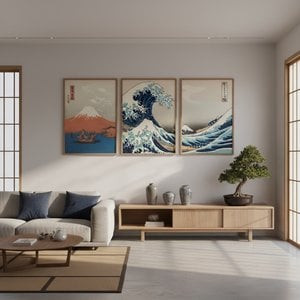
Journey through Katsushika Hokusai’s 25 most iconic artworks, including *The Great Wave*. Explore the ukiyo-e master's history, style & timeless Japanese woodblock prints. Find museum-quality reproductions for your home at WahooArt.com.

Explore the world of giclée prints with WahooArt. Learn about archival quality, aesthetic nuances & investment potential. Expert guidance for discerning art collectors seeking museum-quality reproductions and lasting value.
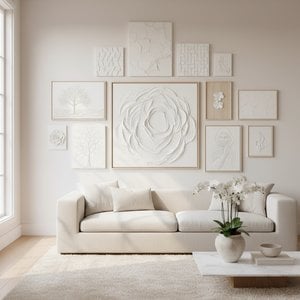
Explore 10 iconic white paintings by Monet, Whistler & Rothko! Discover the stories behind these serene masterpieces and their impact on art history. Find museum-quality reproductions for your home decor at .

 Preview
 Send
Send Share
Share
 Details
 Guide
Guide

 Download
 Similars
 X-Ray
X-Ray Diaporama
 Stats
Stats

 Read More







 Glass option is only available in size under 110 CM


