

Hand-painted oil on canvas in your size and frame, made to order by our artists. ( Switch to Print Switch to Digital Image)





























Pick from our preset sizes that match the artwork's original proportions.

You may enter your own dimensions to fit a specific frame or space. If your selected size does not match the original image's proportions, we will either crop the artwork or extend the painting with additional hand-painted elements. A digital mockup will be sent for your approval before production begins.
Please note that the on-screen preview does not reflect the actual cropping or extension. Only the mockup will accurately show the final composition.
While custom sizes are available, we recommend selecting a dimension from the predefined list to preserve the original proportions.
Worldwide Delivery () in 3/4 weeks instead of standard 5 weeks. (25 September). No compromise on quality.


Graves in Desert
Reproduction Size
“Graves in Desert,” painted by Nicholas Roerich in 1930, is more than just a landscape; it's a profound meditation on the cyclical nature of existence, mortality, and the interconnectedness of humanity with the cosmos. This evocative work, rendered in the Symbolist style – a movement characterized by its focus on subjective experience and spiritual symbolism – captures a stark yet beautiful scene: two figures standing atop a desolate desert hillside, dwarfed by a monumental mountain range under a brooding sky.
Roerich’s technique is immediately recognizable. He employs thick, textured brushstrokes, particularly evident in the rugged rock formations and the swirling clouds, creating a palpable sense of atmosphere and movement. The color palette – dominated by ochres, browns, grays, and blues – reinforces the arid landscape's solemnity while subtly hinting at spiritual depth. The painting’s creation aligns with Roerich’s broader artistic philosophy, which sought to bridge art, science, and spirituality. He meticulously researched ancient cultures and mythologies, incorporating symbolic elements into his work to convey universal truths.
Created during a period of intense intellectual and spiritual exploration for Roerich, “Graves in Desert” reflects his evolving philosophy, deeply rooted in the ideas of Theosophy. Roerich believed that art could be a powerful tool for promoting peace and understanding across cultures, and he often incorporated elements from various traditions – including ancient Persian and Buddhist symbolism – into his paintings. This work can be seen as part of a larger body of work focused on exploring themes of death, rebirth, and the search for spiritual meaning in the face of earthly limitations.
The two figures standing within this vast landscape are deliberately ambiguous, inviting viewers to project their own interpretations. They represent humanity’s confrontation with mortality, a universal experience that Roerich sought to capture through his art. The towering mountains, reminiscent of ancient burial mounds, symbolize the enduring nature of memory and the connection between earthly existence and the spiritual realm. “Graves in Desert” is not simply a depiction of a desolate scene; it’s an invitation to contemplate our place within the grand scheme of things – a powerful reminder of both our fragility and our potential for transcendence. This piece resonates with a deep sense of awe, melancholy, and ultimately, hope.


1874 - 1947 , Russia

Explore the world of giclée prints with WahooArt. Learn about archival quality, aesthetic nuances & investment potential. Expert guidance for discerning art collectors seeking museum-quality reproductions and lasting value.

Journey through 10 Romantic landscape masterpieces by Friedrich, Turner & Cole. Explore emotional art, sublime nature scenes & iconic 19th-century paintings. Find museum-quality reproductions for your home at WahooArt.com – discover the full collection online!

Journey through John Constable's 25 most celebrated landscapes. Explore Romanticism, Dedham Vale & his masterful use of light in iconic paintings like 'Hay Wain'. Find museum-quality art reproductions and elevate your home decor on WahooArt.com.

Explore the captivating art of Nicholas Roerich – a visionary painter whose Himalayan landscapes blend spiritual mysticism with cultural preservation. Discover his legacy & symbolism.
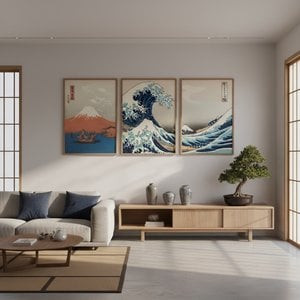
Journey through Katsushika Hokusai’s 25 most iconic artworks, including *The Great Wave*. Explore the ukiyo-e master's history, style & timeless Japanese woodblock prints. Find museum-quality reproductions for your home at WahooArt.com.

 Preview
 Send
Send Share
Share
 Details
 Guide
Guide

 Download
 Similars
 X-Ray
X-Ray Diaporama
 Stats
Stats

 Read More







 Glass option is only available in size under 110 CM


