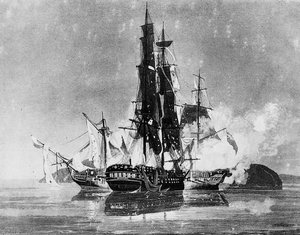
Philip James de Loutherbourg: A Pioneer of Theatrical Illusion and Romantic Landscape
Born in Strasbourg in 1740, Philip James de Loutherbourg’s life was a fascinating blend of artistic pursuits, theatrical innovation, and scientific curiosity. His early training under Giovanni Battista Casanova in Paris laid the foundation for his distinctive style – a synthesis of classical elegance with a burgeoning interest in capturing the dynamism of the natural world. He quickly established himself as a successful landscape painter during the 1760s, producing works that reflected the prevailing taste for picturesque scenery and the ideals of the Picturesque movement. However, Loutherbourg’s true legacy lies not solely in his paintings but in his groundbreaking contributions to theatrical design, transforming the stage into a realm of illusion and spectacle.
His move to London in 1771 marked a pivotal moment. Securing an introduction through his connections with the renowned actor-manager David Garrick, Loutherbourg found himself at the heart of Drury Lane Theatre, quickly becoming its principal designer. He revolutionized stagecraft by employing innovative techniques – elaborate cycloramas, mechanized scenery, and even rudimentary forms of projection – to create immersive environments that transported audiences to distant lands and fantastical realms. His designs weren’t merely decorative; they were meticulously researched, incorporating elements of geography, architecture, and costume to achieve a remarkable degree of realism. This ambition extended beyond mere visual spectacle; Loutherbourg was deeply interested in the scientific principles behind creating these illusions, studying optics and mechanics to enhance the theatrical experience.
Following Garrick’s retirement in 1776, Loutherbourg continued his work at Drury Lane under Richard Brinsley Sheridan. However, he ultimately sought greater creative control and independence, launching his own theatrical entertainment company, the Eidophusikon, in 1781. This ambitious venture showcased a vast array of mechanical wonders – automata, dioramas, and elaborate stage sets – all designed to stimulate the senses and challenge conventional notions of reality. The Eidophusikon was an enormous success, captivating audiences with its blend of art, science, and entertainment. Loutherbourg’s later work also included significant contributions to history painting, producing dramatic battle scenes and biblical narratives, often imbued with a sense of theatrical grandeur.
A Painter of Picturesque Landscapes
While his theatrical achievements are arguably more celebrated, Loutherbourg remained a dedicated landscape painter throughout his career. His style evolved significantly over time, reflecting the changing artistic currents of the late 18th century. Initially influenced by the Italianate tradition – characterized by idealized beauty and meticulous detail – he gradually embraced the principles of the Picturesque, prioritizing atmospheric effects, dramatic lighting, and the depiction of untamed nature. His travels across England and Wales provided him with a wealth of subject matter, from the rolling hills of Cornwall to the rugged coastlines of Wales.
Loutherbourg’s landscapes are notable for their lively energy and sense of immediacy. Unlike the more static compositions favored by some of his contemporaries, he sought to capture the fleeting moments of light and shadow, the movement of clouds, and the drama of weather conditions. His use of color was particularly striking, employing a vibrant palette to evoke the beauty and power of the natural world. While sometimes criticized for their theatricality – a consequence of his background in stage design – his paintings nonetheless offered a fresh and engaging perspective on the English countryside.
Scientific Curiosity and The Eidophusikon
Loutherbourg’s fascination with science profoundly influenced his artistic practice, particularly in the development of the Eidophusikon. He was deeply interested in understanding the mechanics of light, optics, and perspective – principles that he applied to create the illusion of depth and space on stage. His experiments with cycloramas involved projecting painted backdrops onto large circular screens, creating immersive environments that seemed to extend infinitely beyond the confines of the theatre.
The Eidophusikon wasn’t simply a collection of theatrical spectacles; it was a carefully orchestrated demonstration of scientific principles. Loutherbourg meticulously documented his experiments and observations, publishing two volumes of engravings – *The Picturesque Scenery of Great Britain* (1801) and *The Romantic and Picturesque Scenery of England and Wales* (1805) – that showcased his artistic achievements alongside detailed technical explanations. These publications served as a testament to his pioneering spirit and his belief in the power of art and science to illuminate the world around us.
Legacy and Historical Significance
Philip James de Loutherbourg’s contributions to both theatrical design and landscape painting were remarkably innovative for his time. He pushed the boundaries of stagecraft, introducing new techniques and challenging conventional notions of illusion and spectacle. His work had a significant influence on subsequent generations of designers and artists, paving the way for the development of modern theatre and cinematic special effects.
Furthermore, Loutherbourg’s commitment to scientific inquiry – combined with his artistic talent – exemplifies the spirit of the Enlightenment. He sought to understand the world through observation and experimentation, believing that art and science could be mutually enriching pursuits. His legacy endures as a reminder of the power of creativity, innovation, and intellectual curiosity.



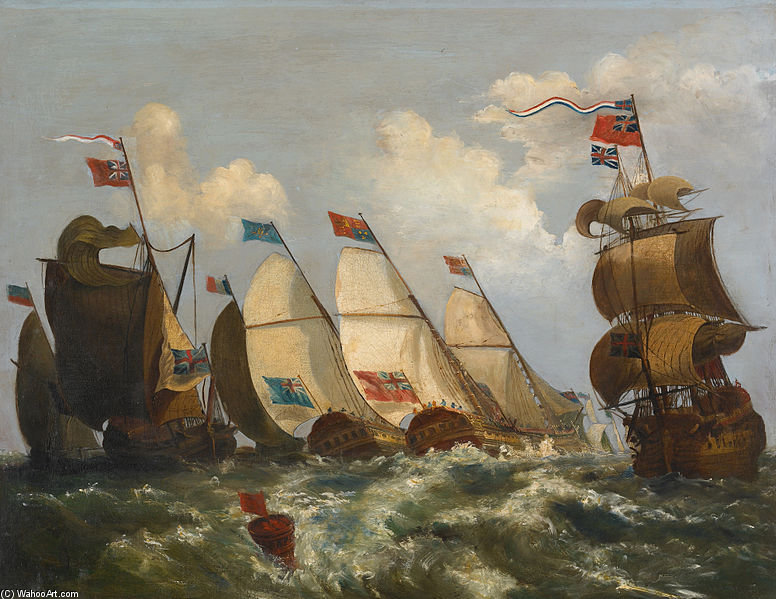
 Preview
 Buy Print
 Send
Send Share
Share
 Details

 Download
 Similars
 X-Ray
X-Ray Diaporama
 Read More






































 Glass option is only available in size under 110 CM