Oil On CanvasWallArtPop Art
 1986Renaissance
 50.0 x 50.0 cm
 National Gallery of Bosnia and Herzegovina
The artwork displayed on this page is protected by copyright law, which means we cannot legally create or sell an identical reproduction. This protection is enforced under international agreements such as the Berne Convention and by national laws, including those outlined by the U.S. Copyright Law - Title 17.
This method fully complies with copyright regulations because it does not involve copying or duplicating the protected artwork. Instead, it is a creative reinterpretation - a new painting that is influenced by the original but not identical to it.
Museum-quality giclée or canvas print with fast production and flexible finish options. ( Buy Hand Made Painting Switch to Digital Image)





























Pick from our preset sizes that match the artwork's original proportions.

Type the width and the height you need, to fit your frame or your wall. A print can only be cut, never made bigger than the picture, so a size with a different shape loses a part of the image. We send you a digital mockup to approve before we print anything. The picture shown on this page does not show the real cut — only the mockup does.
Worldwide Delivery () in 2 weeks instead of standard 4/5 weeks. (23 October)
Landscape
Reproduction Size
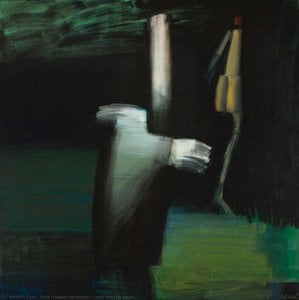
This evocative landscape painting by Narcis Kantardžić, created in 1986, immediately draws the viewer into a scene brimming with quiet contemplation and subtle beauty. The artwork depicts a solitary figure standing on a dramatic cliff edge, gazing out over a vast expanse of water beneath a sky painted with delicate clouds. It’s a composition that speaks to the timeless human desire for connection – with nature, with oneself, and perhaps, with something beyond.
Executed in oil on canvas, ‘Landscape’ showcases Kantardžić's skillful command of texture and light. The brushwork is evident yet controlled, creating a rich surface that captures the nuances of both the natural elements and the human form. The use of impasto – thick application of paint – particularly noticeable in the cliff face, adds depth and physicality to the scene, grounding the viewer in the tangible reality of the landscape. The color palette, dominated by blues and greys with subtle highlights, evokes a sense of atmospheric perspective, enhancing the painting’s three-dimensional quality.
Beyond its immediate visual appeal, ‘Landscape’ is rich in symbolic potential. The boat on the water below represents human endeavor and connection to the world, while the birds soaring overhead symbolize freedom and aspiration. The solitary figure's stance suggests a yearning for understanding or perhaps a search for meaning within the immensity of nature. The cloudy sky adds an element of mystery and uncertainty, mirroring the complexities of the human condition.
Created in 1986, this work reflects a broader trend in landscape painting – a return to representational realism combined with a heightened awareness of atmosphere and emotion. While Kantardžić’s style isn't overtly tied to any specific movement, it shares affinities with the Romantic tradition’s emphasis on sublime landscapes and the individual’s relationship with nature. The piece’s quiet intensity and contemplative mood resonate with a desire for introspection that was increasingly prevalent in art during this period.
"Landscape" is associated with a reflective feeling. The emotional tone describes the impression the work gives.
Given its 1986 date, "Landscape" falls in Narcis Kantardžić's Mature Period.
The color identity of "Landscape" by Narcis Kantardžić: a neutrals palette, dominated by phthalo green (#2a3931).

Born in Derventa, Bosnia and Herzegovina, Narcis Kantardžić has cultivated a visual language that bridges the artistic traditions of the former Yugoslavia with the contemporary sensibilities of Slovenia. A graduate of the Academy of Fine Arts in Sarajevo, where he studied under Professor Milorad Čorović, his early career was marked by a profound engagement with the cultural pulse of Sarajevo. In 1982, alongside fellow graduates, he co-founded the influential art collective Zvono, an avant-garde group known for its street exhibitions and experimental spirit that energized the local scene during the 1980s. His journey eventually led him from the turbulent years of the Balkan wars to Celje, Slovenia, a transition that would profoundly shape the thematic depth of his later works.
The essence of Kantardžić’s oeuvre lies in its ability to evoke a sense of metaphysical wonder and quiet contemplation. His paintings often feature distant, romantic landscapes that serve as much more than mere scenery; they are active participants in an emotional narrative. A recurring motif in his work is the tower—ranging from monumental, ancient fortresses to the haunting imagery of burning industrial complexes. These vertical structures, set against expansive skies and vast bodies of water, create a tension between the permanence of architecture and the ephemeral nature of time. In works such as Landscape (1986), the presence of a solitary figure often serves not as a portrait of a person, but as a symbol of profound loneliness and the human desire for connection within an immense, sometimes post-apocalyptic, world.
Throughout his development, Kantardžić has demonstrated a remarkable command over diverse media. While his early years involved experimentation with video, installation, scenography, and performance, his recent focus has returned to the mastery of painting and graphic art. His oil on canvas works are particularly noted for their sophisticated use of light and shadow, blending the precision reminiscent of the Renaissance with the sublime atmosphere of Romanticism. He utilizes techniques such as impasto—the thick, textured application of paint—to grant physical depth to natural elements like cliff faces, grounding his more ethereal subjects in a tangible reality.
The artist's palette often leans toward atmospheric blues and greys, punctuated by subtle highlights that enhance the three-dimensional quality of his compositions. This meticulous approach to color and light creates a sense of scale and grandeur, emphasizing the delicate balance between vulnerability and resilience. His work continues to resonate through its minimalist framing and intricate play of textures, offering a profound reflection on civilization, architecture, and the enduring human condition.
Kantardžić’s influence extends far beyond the borders of Slovenia. He has exhibited his work extensively across the former Yugoslavia and internationally, with notable appearances in art hubs such as London, Budapest, Ravenna, and Trieste. His contributions to the arts have been recognized through numerous Slovenian awards for painting, and he remains an active figure in art education, teaching at a drawing and painting school near his studio in Celje.
His artistic journey is characterized by several key milestones:

1958 - , Bosnia and Herzegovina

Embark on a visual journey through history's most iconic landscapes. Discover the mastery of Impressionism and the sublime power of nature through our expert guide to classical landscape art, curated for the discerning collector and fine art enthusiast.

Discover the profound allure of oil on canvas. Explore the mastery of impasto textures, the science of pigment longevity, and expert guides to selecting museum-quality reproductions that elevate your collection with timeless elegance and tactile depth.

Discover the enduring allure of oil on canvas. Explore how master techniques like impasto and glazing create the depth, texture, and emotional resonance found in the world's greatest masterpieces. An essential guide for fine art enthusiasts and discerning collectors.

 Preview
 Send
Send Share
Share
 Details
 Guide
Guide

 Download
 Similars
 X-Ray
X-Ray Diaporama
 Stats
Stats Read More









 Glass option is only available in size under 110 CM