FREE ART CONSULTATION

x
Buy print Buy printBuy Image Buy Image SendSend
DetailsDetails Add to favorites Add to favorites DownloadDownload SimilarsSimilars X-RayX-Ray DiaporamaDiaporama

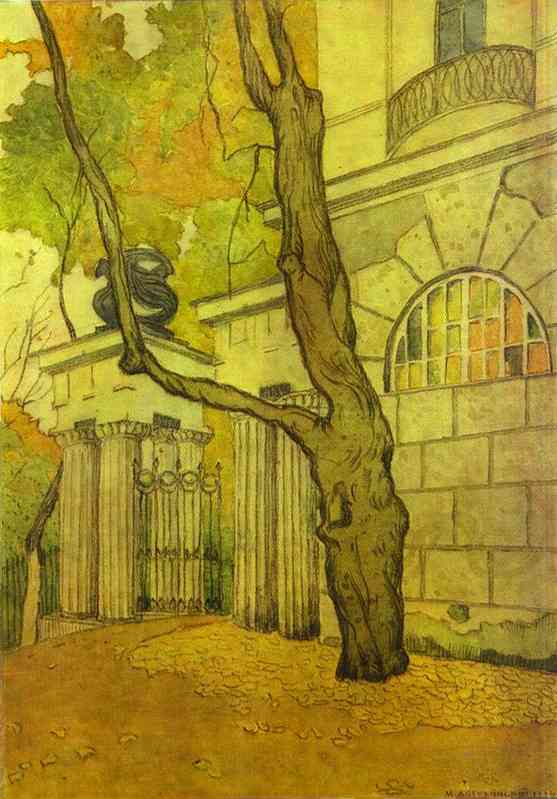
Tsarskoye Selo

Explore the haunting cityscapes of Mstislav Dobuzhinsky! Russian-Lithuanian artist known for expressing urban decay & industrial life through expressionist art.

Hand Made Oil Reproduction

Hand-painted oil on canvas in your size and frame, made to order by our artists.

Standard
custom
CM
INCH

Pick from our preset sizes that match the artwork's original proportions.

width
height

You may enter your own dimensions to fit a specific frame or space. If your selected size does not match the original image's proportions, we will either crop the artwork or extend the painting with additional hand-painted elements. A digital mockup will be sent for your approval before production begins.
Please note that the on-screen preview does not reflect the actual cropping or extension. Only the mockup will accurately show the final composition.
While custom sizes are available, we recommend selecting a dimension from the predefined list to preserve the original proportions.

Examples of what can be changed: Replace face with customer photo; Add pet (e.g., replace cat with dog); Include hidden message in background; Change background landscape or elements.
After order, WahooArt.com team will email client for instructions and provide a mockup preview

Worldwide Delivery () in 3/4 weeks instead of standard 5 weeks. (1 July). No compromise on quality.

why_choose_icon
Free Worldwide Express Shipping
why_choose_icon
High-Quality Linen Canvas
why_choose_icon
Full Shipping Insurance
why_choose_icon
Customs Tax Refund Guarantee
why_choose_icon
True Color Matching Guarantee
why_choose_icon
60-Day Return Policy (Defects Only)
why_choose_icon
100% Money-Back Guarantee
why_choose_icon
Bulk Discount Offer

Total Price

-

reproduction

Tsarskoye Selo

Reproduction Medium

Reproduction Size

-

Total Price

-

Related Artworks


Artist Biography

Mstislav Dobuzhinsky: A Visionary of Urban Decay

Mstislav Valerianovich Dobuzhinsky (1875-1957), a name perhaps less familiar than some of his contemporaries, remains a profoundly evocative figure in the history of Russian art. Born in Novgorod and carrying Lithuanian heritage, he carved out a unique artistic voice defined by a haunting exploration of urban decay, industrial landscapes, and the psychological toll of modernity. His work isn’t merely depictions of crumbling buildings; it's a visceral expression of isolation, anxiety, and the unsettling beauty found within the shadows of rapidly changing cities. Dobuzhinsky’s legacy lies in his ability to transform the mundane realities of 20th-century Russia into powerfully expressive images that continue to resonate with viewers today.

Early Life and Artistic Training

Dobuzhinsky's artistic journey began modestly, attending the Drawing School of the Society for the Promotion of Artists in Novgorod before pursuing law at Saint Petersburg Imperial University while simultaneously studying privately. This dual pursuit reflects a restless intellectual curiosity that would inform his later work. Crucially, he received formal training from prominent European artists – Anton Ažbe in Munich and Simon Hollósy in Austria-Hungary – exposing him to the burgeoning influences of Jugendstil (Art Nouveau) and other contemporary movements. These early experiences shaped his technical skills and introduced him to a broader artistic vocabulary, which he would later synthesize into his distinctive style. His association with the Mir iskusstva circle, an artistic group that idealized the 18th century as a golden age of elegance and refinement, proved pivotal in shaping his perspective on art’s role within society – a perspective that ultimately led him to confront the darker aspects of modern urban life.

The Expressionist Cityscape

Dobuzhinsky's artistic breakthrough came with his exploration of the Russian cityscape during a period of rapid industrialization and social upheaval. Rejecting the idealized representations favored by many of his contemporaries, he focused on the gritty realities of factories, tenements, and crowded streets. His palette was often dominated by somber browns, grays, and deep reds – colors that conveyed both the physical decay and the emotional intensity of these environments. Bold lines and dramatic contrasts accentuated the sense of claustrophobia and alienation inherent in urban existence. His work isn’t simply a record of architectural changes; it's an investigation into the human condition within those spaces—a portrayal of loneliness, desperation, and the struggle for survival amidst relentless progress. The influence of Expressionism is undeniable, but Dobuzhinsky developed a uniquely Russian sensibility, informed by his personal experiences and observations.

Notable Works and Artistic Techniques

Several key works exemplify Dobuzhinsky’s artistic vision. “Pskov” (1923), for instance, captures the melancholic atmosphere of a Russian harbor town with meticulous pencil detail, revealing the subtle beauty within its decay. “October Idyll” (1905) is a particularly striking example of his expressive style, depicting a brutal urban scene of violence and poverty rendered in bold lines and intense reds – a testament to the unsettling realities of industrial Russia. His illustrations for Dostoevsky’s “White Nights” (1923) further showcased his ability to convey complex emotions through visual storytelling, utilizing a muted palette and evocative compositions. Dobuzhinsky's mastery extended beyond painting; he was also a skilled set designer, contributing significantly to theatrical productions in Paris, Brussels, and elsewhere, demonstrating a versatility that underscored his artistic depth.

Legacy and Historical Significance

Mstislav Dobuzhinsky’s work holds significant historical importance as a document of early 20th-century Russia. He captured a pivotal moment in the nation's transformation—the transition from agrarian society to industrial metropolis—and offered a critical perspective on its social and psychological consequences. His unflinching portrayal of urban decay challenged conventional notions of beauty and progress, forcing viewers to confront uncomfortable truths about modernity. While his work may not have achieved widespread fame during his lifetime, it has since been recognized as a seminal contribution to Russian Expressionism and a powerful reflection of the anxieties and uncertainties of the modern age. His influence can be seen in subsequent generations of artists who continued to explore themes of urban alienation and social critique. Today, Dobuzhinsky’s haunting cityscapes continue to provoke contemplation on the relationship between humanity and its environment, reminding us of the enduring power of art to illuminate both beauty and darkness.
mstislav dobuzhinsky

mstislav dobuzhinsky

1875 - 1957 , Russia

Quick Facts

  • Artistic Movement Or Style: Expressionism, Cityscapes
  • Artists Or Movements Influenced By This Artist: ['Mir iskusstva']
  • Artists Who Influenced This Artist:
    • Anton Ažbe
    • Simon Hollósy
  • Date Of Birth: August 14, 1875
  • Date Of Death: November 20, 1957
  • Full Name: Mstislav Valerianovich Dobuzhinsky
  • Nationality: Russian-Lithuanian
  • Notable Artworks:
    • Twilight
    • Pskov
    • October Idyll
  • Place Of Birth: Novgorod, Russia
Explore artworks organized by themes, styles, and characteristics.