

Museum-quality giclée or canvas print with fast production and flexible finish options. ( Buy Hand Made Painting Switch to Digital Image)





























Pick from our preset sizes that match the artwork's original proportions.

You may enter your own dimensions to fit a specific frame or space. If your selected size does not match the original image's proportions, we will either crop the artwork or extend the image with a mirrored or solid-fill edge. A digital mockup will be sent for your approval before production begins.
Please note that the on-screen preview does not reflect the actual cropping or extension. Only the mockup will accurately show the final composition.
While custom sizes are available, we recommend selecting a dimension from the predefined list to preserve the original proportions.
Worldwide Delivery () in 2 weeks instead of standard 4/5 weeks. (23 September)


Johnny Hellier & Kanti Shah
Reproduction Size

In the vast, shifting tapestry of twentieth-century African history, few figures captured the raw, unvarnished pulse of the continent quite like Mohamed Amin. Born in 1943 in Eastleigh, Nairobi, Amin was more than a mere observer; he was a visual chronicler whose lens pierced through the veil of distance to bring the profound realities of African life into the global consciousness. Growing up within the vibrant Kenyan Punjab heritage, his early fascination with the power of the image laid the groundwork for a career defined by an almost relentless pursuit of truth. His journey was not merely one of professional ascent but a lifelong mission to ensure that the stories of his people—ranging from the triumphs of independence to the harrowing depths of humanitarian catastrophe—were witnessed by the world.
The foundation of his legendary status was built upon the grit and determination of his early entrepreneurial spirit. In 1963, Amin established the Camerapix Company in Dar es Salaam, Tanzania, a venture that would become a cornerstone of African media. This was not simply a business; it was a sanctuary for journalistic integrity. Through Camerapix, Amin cultivated a crew of dedicated professionals, often working under grueling conditions to deliver news with unprecedented speed and accuracy. His work during the East African Safari Rally remains a testament to his versatility. Whether capturing the high-octane adrenaline of a Mercedes-Benz 450SLC navigating treacherous terrain or the dust-choked chaos of a motorsport crash, Amin possessed an uncanny ability to find beauty within the turbulence, blending the technical precision of sports photography with a deep, documentary soul.
While his mastery of movement and light earned him acclaim in the realm of action, it was Amin’s courage in the face of tragedy that cemented his historical significance. The 1984 Ethiopian famine stands as perhaps the most poignant chapter of his career. Collaborating with the BBC, Amin’s unflinching documentation of the crisis did more than report news; it ignited a global movement. His images, characterized by their profound emotional depth and a rejection of staged artifice, became the visual heartbeat of the Live Aid era. By presenting the suffering of millions through candid, hauntingly beautiful black-and-white compositions, he bridged the gap between distant tragedy and international empathy, proving that a single photograph could mobilize the conscience of the planet.
His photographic style was a deliberate departure from the polished, often sanitized imagery of traditional news media. Amin favored the immediacy of the moment, utilizing the dramatic tonal ranges of black-and-white film to illuminate the textures of human struggle and resilience. There was no room for artifice in his work; he sought the raw, the grainy, and the authentic. This commitment to truth extended even to his most dangerous assignments, including his coverage of the regime of Idi Amin. He moved through conflict zones with the instincts of a warrior, driven by a need to capture the spirit of postcolonial Africa as it was being forged in real-time.
The life of Mohamed Amin was tragically cut short in 1996, during a moment of profound bravery. While negotiating with terrorists who had hijacked an Ethiopian Airlines flight, he lost his life in the crash into the Indian Ocean. Even in death, his commitment to the narrative of Africa remained absolute. Today, his legacy is preserved not just in the millions of archival images held by the Mohamed Amin Foundation, but in the very way we perceive the continent. His work serves as a vital bridge between eras, documenting the transition from colonial shadows to the vibrant, complex reality of modern African nations.
To look upon an Amin photograph is to experience a masterclass in visual storytelling. His contributions can be summarized through several enduring pillars:
Ultimately, Mohamed Amin remains a pioneer whose lens did not just record history—it helped shape it. He taught the world that to look closely at Africa was to see a continent of immense strength, profound struggle, and an unyielding spirit that deserves to be seen in all its complex glory.

1943 - 1996 , Kenya

Explore the profound evolution of documentary photography through a cultural lens. From early social realism to modern visual narratives, discover how photographers have captured history, labor, and the human condition to redefine fine art.

Explore the profound evolution of contemporary photography through a connoisseur's lens. From monochrome mastery to digital innovation, discover how modern photographic works shape fine art collections and define our cultural legacy.

Explore the profound artistry of black and white photography. From historical mastery to the interplay of light and shadow, discover how monochrome captures timeless emotion and form through a sophisticated lens of art history.

Explore the profound emotional depth of documentary photography art. Discover how collectors curate powerful historical narratives through museum-quality black and white prints and fine art reproductions that preserve humanity's most resilient moments.
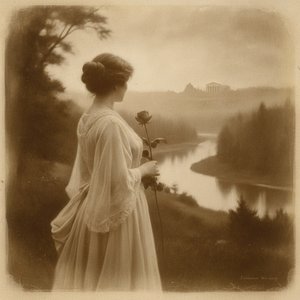
Explore the profound history of Pictorialism, the revolutionary movement that elevated photography to a fine art. Uncover how visionaries used painterly techniques and soft focus to transcend mere documentation, imbuing the lens with the emotional depth of classical masterpieces.

 Preview
 Send
Send Share
Share
 Details
 Guide
Guide

 Download
 Similars
 X-Ray
X-Ray Diaporama
 Stats
Stats


 Read More







 Glass option is only available in size under 110 CM


