

The artwork displayed on this page is protected by copyright law, which means we cannot legally create or sell an identical reproduction. This protection is enforced under international agreements such as the Berne Convention and by national laws, including those outlined by the U.S. Copyright Law - Title 17.
As a respectful and legal alternative, we offer custom, hand-painted artworks inspired by the original. Our skilled and professional artists carefully study the original's style, mood, and artistic essence to create a new, unique piece that evokes the same feeling - while remaining an original creation in its own right.
This method fully complies with copyright regulations because it does not involve copying or duplicating the protected artwork. Instead, it is a creative reinterpretation - a new painting that is influenced by the original but not identical to it.
Hand-painted oil on canvas in your size and frame, made to order by our artists. ( Switch to Print Switch to Digital Image)
Pick from our preset sizes that match the artwork's original proportions.

You may enter your own dimensions to fit a specific frame or space. If your selected size does not match the original image's proportions, we will either crop the artwork or extend the painting with additional hand-painted elements. A digital mockup will be sent for your approval before production begins.
Please note that the on-screen preview does not reflect the actual cropping or extension. Only the mockup will accurately show the final composition.
While custom sizes are available, we recommend selecting a dimension from the predefined list to preserve the original proportions.
Worldwide Delivery () in 3/4 weeks instead of standard 5 weeks. (13 October). No compromise on quality.
Installation View
Reproduction Size
The recorded mood of "Installation View" by Melvin Edwards is industrial, and its emotional tone is reflective.
With its landscape shape, a reproduction of "Installation View" is suggested for a living room.
"Installation View" by Melvin Edwards is placed in the Contemporary Abstract Expressionism movement, within the Modern era of its creator.
"Installation View" by Melvin Edwards can be downloaded from the artwork's Download page, as a high-resolution digital image download.
The AR Preview page of "Installation View" by Melvin Edwards uses augmented reality to show the artwork in your own space, on a compatible device.
The Contemporary Abstract Expressionism work "Installation View" was made by an artist born in United States of America.
The colors of "Installation View" show a bright balance luminance.
Melvin Edwards's recurring themes include renaissance formalities, civil rights discourse, resilience symbolism, sculptural voice legacy, artistic material exploration; "Installation View" focuses on steel sculpture, african american history, resilience, geometry, assemblage, minimalism, industrial material.

Melvin Edwards stands as a monumental figure in the landscape of contemporary American sculpture, an artist whose work serves as both a profound historical archive and a visceral exploration of abstract form. Born on May 4, 1937, in Houston, Texas, Edwards’ early life was shaped by the starkly divided realities of the segregated South. This formative period, marked by the complexities of racial tension and the pursuit of social justice, would later become the emotional bedrock of his artistic practice. As he moved through the integrated landscapes of Ohio and eventually to California in 1955, Edwards began a transformative journey that would lead him from the foundational disciplines of painting at UCLA to the rugged, industrial mastery of welding and steel assemblage.
The arrival of Edwards in New York City in 1967 marked a definitive turning point in his career. Immersed in the electric atmosphere of postwar abstraction, he began to synthesize the geometric rigor of European modernism with the urgent, socio-political narratives of the African-American experience. It was during this era that he developed his most celebrated contribution to the sculptural canon: the Lynch Fragments. These intricate, small-scale steel reliefs are far more than mere abstract compositions; they are poetic yet harrowing assemblages of metal objects—spikes, chains, and scissors—that evoke the fractured memory of racial trauma. Through these works, Edwards achieved a delicate balance between the reductive aesthetics of artists like Piet Mondrian and a conceptual depth reminiscent of Marcel Duchamp, using the very weight and texture of steel to articulate the tension between oppression and endurance.
To encounter a Melvin Edwards sculpture is to engage in a dialogue with history through the medium of industrial grit. His technique is characterized by an extraordinary command over metal, where the act of welding becomes a way to fuse disparate fragments of memory into a cohesive, albeit fractured, whole. In works such as Working Thought, one can witness how the artist utilizes the language of the Lynch Fragments to reflect on the resilience of the human spirit. The jagged edges and deliberate asymmetries of his steel reliefs do not merely represent chaos; they mirror the structural complexities of a history that is often broken and reconstructed.
This mastery extends into larger, more complex installations where the artist incorporates found objects to deepen the narrative resonance of his pieces. In Ida W.B., Edwards masterfully blends steel with bicycle parts, creating a poignant sculptural poem that explores themes of social justice and historical continuity. His ability to transform cold, industrial materials into vessels for profound human emotion is what distinguishes his oeuvre. The following elements define the core of his technical and thematic approach:
The historical significance of Melvin Edwards lies in his ability to bridge the gap between formalist abstraction and political activism. He refused to allow the language of modern sculpture to remain detached from the lived realities of the Black experience, instead forcing the medium to confront the scars of the past. His work does not merely document history; it reanimates it, allowing the viewer to feel the weight of the metal and the sharpness of the edges as symbols of a struggle that continues to shape the American identity.
As his career has progressed, Edwards has remained a vital voice in the global art dialogue, proving that sculpture can be simultaneously decorative, intellectual, and deeply political. His legacy is found in every weld and every fragment, reminding us that even from the most broken pieces, a powerful and enduring narrative can be forged. Through his unwavering commitment to truth and form, Melvin Edwards has ensured that the stories of resilience and memory are etched permanently into the fabric of contemporary art.

1937 - , United States of America
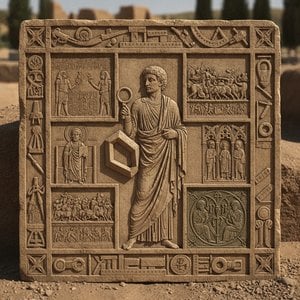
Explore the profound beauty of sculptural relief art. From classical bas-relief to modern geometric textures, discover how depth and light transform spaces through an expert guide on art history and sophisticated curation for discerning collectors.

Explore the rich history of sculpture from ancient masterpieces to contemporary innovations. Discover key techniques, influential artists & investment potential for discerning art collectors.

Explore the rich history of sculpture with WahooArt. Discover key techniques, influential artists & investment potential for discerning collectors. Expert insights into valuing and collecting timeless masterpieces.

Explore 25 iconic Edward Hopper paintings & their stories. Discover American realism, urban loneliness, and timeless beauty through his masterpieces. Find museum-quality art reproductions & curated decor ideas at WahooArt.com.

Journey through art history with our Top 10 bronze sculptures! Explore masterpieces by Rodin, Michelangelo & more. Discover stories behind iconic statues and find museum-quality reproductions for your home decor at WahooArt.com.

 Send
Send Share
Share
 Details
 Guide
Guide

 Download
 Similars
 Diaporama
 Stats
Stats


 Read More






































 Glass option is only available in size under 110 CM


