

 Oil On CanvasWallArtSurrealism
 1919Modern
 36.0 x 26.0 cm
Hand-painted oil on canvas in your size and frame, made to order by our artists. ( Switch to Print Switch to Digital Image)





























Pick from our preset sizes that match the artwork's original proportions.

You may enter your own dimensions to fit a specific frame or space. If your selected size does not match the original image's proportions, we will either crop the artwork or extend the painting with additional hand-painted elements. A digital mockup will be sent for your approval before production begins.
Please note that the on-screen preview does not reflect the actual cropping or extension. Only the mockup will accurately show the final composition.
While custom sizes are available, we recommend selecting a dimension from the predefined list to preserve the original proportions.
Worldwide Delivery () in 3/4 weeks instead of standard 5 weeks. (21 September). No compromise on quality.


Family Excursions
Reproduction Size
Max Ernst's 1919 painting, "Family Excursions," isn't merely a depiction of a domestic scene; it’s an invitation into the unsettling and profoundly evocative world of Surrealism. This work, measuring a modest 36 x 26 centimeters, pulsates with a dreamlike quality, achieved through Ernst’s masterful manipulation of juxtaposition and his pioneering use of techniques like frottage – a method he would later refine – to create textures that seem to breathe beneath the surface. The painting immediately arrests the viewer with its peculiar arrangement: a group of figures gathered around a dining table, an unexpected presence of a horse positioned on the left, and a carefully curated collection of objects—bowls, cups, vases—that collectively suggest a scene both familiar and utterly bizarre.
At first glance, "Family Excursions" appears to be a snapshot of everyday life. However, Ernst deliberately disrupts this sense of normalcy through the illogical placement of elements and the overall atmosphere of disorientation. The horse, for instance, is not simply an animal; it feels like a symbolic intrusion, a reminder of primal instincts lurking beneath the veneer of civilization. The figures themselves are rendered with a degree of ambiguity, their expressions obscured, their identities somewhat lost within the painting’s dreamlike logic. This deliberate vagueness invites the viewer to project their own interpretations and anxieties onto the scene, transforming it into a mirror reflecting our own subconscious.
Ernst was a relentless innovator, constantly experimenting with new methods to unlock the hidden potential of his art. “Family Excursions” exemplifies this spirit, showcasing his early explorations into techniques designed to disrupt traditional representation. While not directly utilizing frottage in its final form here, the painting’s textured surfaces—the subtly rendered tablecloth, the implied volume of the objects on the table—hint at Ernst's fascination with creating tactile illusions through rubbing and layering. This technique, developed later, allowed him to capture the essence of textures – wood grain, fabric, stone – in a way that defied conventional brushwork.
Furthermore, the painting’s composition is carefully constructed to create a sense of spatial ambiguity. The perspective seems slightly off-kilter, and the objects on the table are arranged in a manner that defies gravity and logic. This deliberate distortion contributes to the overall feeling of unease and disorientation, characteristic of Surrealist art. Ernst wasn't interested in simply replicating reality; he sought to expose its underlying anxieties and contradictions through carefully orchestrated visual paradoxes.
To fully appreciate “Family Excursions,” it’s crucial to understand the historical context in which it was created. Painted in 1919, shortly after the end of World War I, the painting reflects the widespread disillusionment and uncertainty that gripped Europe at the time. Ernst's Dadaist roots are evident in his rejection of traditional artistic conventions and his embrace of absurdity and chance. The war had shattered established values and beliefs, leaving a generation grappling with trauma and questioning the nature of reality itself.
The inclusion of the horse can be interpreted as a symbol of both primal instincts and the destructive forces unleashed by the conflict. It’s a reminder that beneath the surface of civilized society lie darker, more fundamental impulses. “Family Excursions” isn't simply a charming domestic scene; it’s a powerful meditation on the anxieties and uncertainties of a world in transition – a testament to Max Ernst’s ability to capture the essence of his time through a uniquely surreal lens.
WahooArt offers meticulously crafted, hand-painted reproductions of “Family Excursions,” allowing you to bring this iconic Surrealist masterpiece into your home or office. Our skilled artists replicate Ernst’s intricate textures and evocative atmosphere with exceptional detail, ensuring that the reproduction captures the painting's original power and beauty. Whether you are an art enthusiast, a collector seeking to expand your collection, or simply someone drawn to the captivating imagery of Surrealism, our reproductions provide a stunning way to experience this seminal work of art.
Each reproduction is created on high-quality canvas using archival pigments, guaranteeing its longevity and vibrancy. Available in various sizes, you can choose the perfect scale to complement your space and personal style. Explore our selection today and immerse yourself in the dreamlike world of Max Ernst’s “Family Excursions.”

Max Ernst, born Maximilian Maria Ernst on April 1st, 1891, in Brühl, Germany, was a restless spirit destined to become one of the most pivotal figures in 20th-century art. His journey wasn’t one of conventional artistic training; rather, it was a self-directed exploration fueled by philosophical inquiry, psychological fascination, and a profound disillusionment with societal norms. Ernst's father, a teacher of the deaf and an amateur painter, instilled in him both a sensitivity to the world and a rebellious streak against established authority. This early duality would become a defining characteristic of his artistic vision.
Ernst’s academic pursuits at the University of Bonn – encompassing philosophy, art history, literature, psychology, and psychiatry – were not merely diversions but foundational elements that deeply informed his later work. He wasn't simply interested in *how* to paint; he was grappling with *why*. This intellectual curiosity led him to encounter the groundbreaking works of Picasso, Van Gogh, and Gauguin at the Sonderbund exhibition in Cologne in 1912, a moment that irrevocably altered his artistic trajectory. The seeds of modernism had been sown.
The cataclysm of World War I proved to be a watershed moment for Ernst. His experiences as a soldier on both the Eastern and Western fronts left him profoundly shaken, fostering a deep skepticism towards established order and a yearning for new modes of expression. This disillusionment found fertile ground in the burgeoning Dada movement, which he embraced wholeheartedly after returning to Cologne in 1918. Alongside Hans Arp – a lifelong friend and collaborator – Ernst became a central figure in the Cologne Dada group, rejecting traditional artistic conventions and embracing absurdity, chance, and anti-rationality.
However, Dada was merely a stepping stone. In the early 1920s, Ernst migrated to Paris and joined the ranks of the Surrealists, led by André Breton. This marked a shift towards exploring the realm of dreams, the unconscious mind, and the irrational. Influenced by the psychoanalytic theories of Sigmund Freud, Ernst sought to unlock the hidden depths of human experience through his art. He wasn’t interested in depicting reality as it appeared but rather in revealing the underlying psychological forces that shaped it.
Ernst's artistic innovation extended beyond subject matter; he was a relentless experimenter with technique. He didn’t simply adopt existing methods—he invented new ones. Perhaps his most famous contribution is frottage, a process of rubbing pencil or charcoal over textured surfaces to create unexpected and evocative images. This technique, born from a moment of boredom while observing wood grain, allowed Ernst to tap into the subconscious and generate forms that defied conscious control. Closely related was grattage, where paint is scraped across canvas revealing underlying layers.
He also masterfully employed collage, assembling disparate elements – images from magazines, scientific illustrations, photographs – into surreal compositions that challenged conventional notions of representation. These techniques weren’t merely stylistic choices; they were integral to his exploration of the unconscious and his desire to disrupt traditional artistic boundaries. His paintings often feature recurring symbolic imagery: birds (particularly his alter ego Loplop), desolate landscapes, unsettling juxtapositions, and a pervasive sense of mystery.
The outbreak of World War II forced Ernst to flee Europe, finding refuge in the United States. He continued to paint and experiment with new techniques throughout his exile, eventually returning to France after the war where he remained active until his death on April 1st, 1976, in Paris. His influence on subsequent generations of artists is immeasurable.
Max Ernst’s contributions to Dada and Surrealism were nothing short of groundbreaking. He challenged artistic norms, delved into the depths of the subconscious mind, and invented innovative techniques that continue to inspire artists today. He wasn't merely a painter; he was an explorer, a provocateur, and a visionary who expanded the boundaries of art itself. His work remains a testament to the power of imagination, the allure of the irrational, and the enduring quest to understand the complexities of the human psyche.

1891 - 1976 , Germany

Embark on a sophisticated journey through the surrealist movement. Discover how masters like Dalí and Ernst blurred the lines between dreams and reality through innovative techniques, exploring the profound impact of the subconscious on fine art history with expert authority.
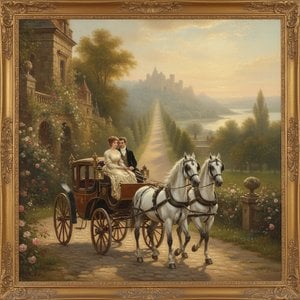
Embark on a visual journey through the romantic world of horse carriage art. Discover the mastery of equestrian oil paintings, from Impressionist textures to classical realism, and learn how to bring timeless elegance into your home with museum-quality reproductions.

Embark on a journey through the subconscious with our expert guide to Surrealism. Discover the profound symbolism of masters like Dalí and Ernst, exploring how dreamlike imagery reshaped art history and continues to inspire collectors and enthusiasts worldwide.

 Preview
 Send
Send Share
Share
 Details
 Guide
Guide

 Download
 Similars
 X-Ray
X-Ray Diaporama
 Stats
Stats Read More







 Glass option is only available in size under 110 CM


