Preview AR preview Buy Hand Made Painting Switch to Digital Image Send
Details Guide Add to favorites Download Similars X-Ray Diaporama Q&A Stats

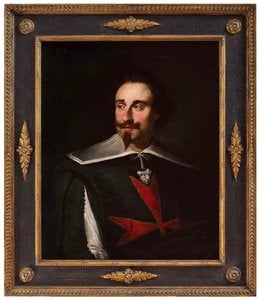
Cleopatra

Experience Massimo Stanzione's dramatic 17th-century portrait of Cleopatra, blending Baroque realism with lyrical grace; discover this masterpiece today.

Massimo Stanzione (1585-1656) was a leading Italian Baroque painter in Naples, known for blending Caravaggio's realism with classical elegance. Explore his altarpieces, portraits & influence on artists like Solimena. #BaroqueArt #ItalianPainting

Giclée / Art Print

Museum-quality giclée or canvas print with fast production and flexible finish options. ( Buy Hand Made Painting Switch to Digital Image)

Corner sample of the P118B picture frame: moulded polystyrene, 5 cm wide and 3 cm thick
P118B $10
Corner sample of the P118H picture frame: moulded polystyrene, 5 cm wide and 3 cm thick
P118H $10
Corner sample of the P118W picture frame: moulded polystyrene, 5 cm wide and 3 cm thick
P118W $10
Corner sample of the P438Z picture frame: moulded polystyrene, 5.5 cm wide and 3.5 cm thick
P438Z $10
Corner sample of the P508JH picture frame: moulded polystyrene, 7 cm wide and 3.5 cm thick
P508JH $12
Corner sample of the P508YH picture frame: moulded polystyrene, 7 cm wide and 3.5 cm thick
P508YH $12
Corner sample of the P805H picture frame: moulded polystyrene, 5 cm wide and 3.5 cm thick
P805H $10
Corner sample of the P805Z picture frame: moulded polystyrene, 5 cm wide and 3.5 cm thick
P805Z $10
Corner sample of the P919BZ picture frame: moulded polystyrene, 7 cm wide and 3.5 cm thick
P919BZ $10
Corner sample of the P919G picture frame: moulded polystyrene, 7 cm wide and 3.5 cm thick
P919G $10
Corner sample of the P919XJ picture frame: moulded polystyrene, 7 cm wide and 3.5 cm thick
P919XJ $10
Corner sample of the P959ZH picture frame: moulded polystyrene, 5 cm wide and 3 cm thick
P959ZH $10
Corner sample of the P968JZ picture frame: moulded polystyrene, 6 cm wide and 4 cm thick
P968JZ $12
Corner sample of the W106C picture frame: solid wood, 5 cm wide and 3 cm thick
W106C $8
Corner sample of the W218G picture frame: solid wood, 5 cm wide and 3 cm thick
W218G $10
Corner sample of the W218JH picture frame: solid wood, 5 cm wide and 3 cm thick
W218JH $8
Corner sample of the W218Y picture frame: solid wood, 5 cm wide and 3 cm thick
W218Y $10
Corner sample of the W307PJ picture frame: solid wood, 6 cm wide and 3 cm thick
W307PJ $10
Corner sample of the W316G picture frame: solid wood, 6 cm wide and 3 cm thick
W316G $10
Corner sample of the W316PJ picture frame: solid wood, 6 cm wide and 3 cm thick
W316PJ $8
Corner sample of the W316Y picture frame: solid wood, 6 cm wide and 3 cm thick
W316Y $10
Corner sample of the W398PJ picture frame: solid wood, 5 cm wide and 3 cm thick
W398PJ $8
Corner sample of the W4111J picture frame: solid wood, 6.5 cm wide and 3.5 cm thick
W4111J $10
Corner sample of the W500HY picture frame: solid wood, 7 cm wide and 5 cm thick
W500HY $15
Corner sample of the W500JH picture frame: solid wood, 7 cm wide and 5 cm thick
W500JH $15
Corner sample of the W692G picture frame: solid wood, 8 cm wide and 4 cm thick
W692G $12
Corner sample of the W849H picture frame: solid wood, 5 cm wide and 3 cm thick
W849H $8
Corner sample of the W940BG picture frame: solid wood, 7.5 cm wide and 4.5 cm thick
W940BG $15
Corner sample of the W953PJ picture frame: solid wood, 6 cm wide and 3.5 cm thick
W953PJ $8

Standard
custom
CM
INCH

Pick from our preset sizes that match the artwork's original proportions.

width
height

Type the width and the height you need, to fit your frame or your wall. A print can only be cut, never made bigger than the picture, so a size with a different shape loses a part of the image. We send you a digital mockup to approve before we print anything. The picture shown on this page does not show the real cut — only the mockup does.

Worldwide Delivery () in 2 weeks instead of standard 4/5 weeks. (30 October)

Free Worldwide Express Shipping
High-Quality Linen Canvas
Full Shipping Insurance
Customs Tax Refund Guarantee
True Color Matching Guarantee
100-Day Return Policy (Defects Only)
100% Money-Back Guarantee
Bulk Discount Offer

Total Price

$ 69

Cleopatra

Giclée / Art Print

Reproduction Size

-

Total Price

$ 69

Quick Facts

  • Dimensions: 169 x 100 cm
  • Location: Hermitage Museum
  • Artist: Massimo Stanzione
  • Subject or theme: Portrait of Cleopatra

Art Quiz

There is only one correct answer for each question.

Question 1:
Who is the artist of the painting titled 'Cleopatra'?
Question 2:
In what year was the painting 'Cleopatra' created?
Question 3:
Where is the painting 'Cleopatra' currently housed?
Question 4:
What artistic period is Massimo Stanzione associated with?
Question 5:
The description mentions that the painting depicts a woman wearing what color dress?

The Allure of Ancient Majesty: Cleopatra by Massimo Stanzione

To gaze upon Massimo Stanzione's "Cleopatra" is to be transported across the currents of time, into an era steeped in myth, power, and breathtaking beauty. This magnificent painting, executed in 1630, captures not merely a portrait, but an embodiment of legendary allure. The subject, Cleopatra herself, reclines with an undeniable regal grace upon a chair, her posture suggesting both languid contemplation and inherent command. Draped in sumptuous red fabric, she commands the viewer's attention, drawing the eye to the delicate curve of her crossed legs and the object—be it a book or fruit—held gently in her hand. The work resonates with the enduring fascination humanity has held for figures who blended earthly splendor with divine mystique.

Baroque Drama and Lyrical Touch

Stanzione, an Italian Baroque master whose career flourished in Naples, stands as a fascinating bridge between artistic giants. While his undeniable debt to Caravaggio's dramatic use of light and shadow—that stark, almost theatrical illumination that sculpts form from darkness—is evident, the painting possesses a distinct lyrical quality. This is where Stanzione distinguishes himself; he marries the raw realism of the early Baroque with the more classical, graceful mannerism associated with Bolognese painters. The resulting effect in "Cleopatra" is one of heightened reality—the figures feel palpably present, yet their bearing suggests an almost idealized narrative moment. It is a masterful tension between brutal verisimilitude and sublime elegance.

Symbolism of Color and Pose

The choice of color plays a pivotal role in the painting's emotional resonance. The deep, passionate red of Cleopatra’s gown speaks volumes of passion, wealth, and perhaps even danger—a visual shorthand for imperial power. Her pose itself is highly symbolic; the crossed legs are not merely decorative but suggest a studied confidence, an ease that comes from absolute authority. Furthermore, the object she holds invites scholarly speculation. Is it knowledge, represented by the book, suggesting her intellect matched her beauty? Or is it sustenance, hinting at earthly pleasures? Regardless of its precise meaning, this small detail anchors the grand narrative, giving the viewer a focal point for their own interpretation.

A Legacy for the Modern Collector

Housed originally in the esteemed collection of the Hermitage Museum, "Cleopatra" offers collectors and designers an unparalleled opportunity to connect with high Baroque drama. Reproducing this piece allows one to bring the sophisticated narrative tension of 17th-century Italian painting into a contemporary space. The dramatic chiaroscuro, the rich texture suggested by the drapery, and the subject's timeless magnetism make it a centerpiece worthy of any discerning interior design scheme or private gallery. Owning a reproduction is not just acquiring art; it is curating an atmosphere steeped in historical grandeur and enduring romance.

Questions & Answers

In which movement and which era is "Cleopatra" by Massimo Stanzione placed?

"Cleopatra" by Massimo Stanzione is placed in the Baroque movement, within the Early-Modern era of its creator.

How do contrast and harmony combine in "Cleopatra"?

The color composition of "Cleopatra" by Massimo Stanzione combines a bold contrast with a strong color unity harmony.

What use and space are recommended for "Cleopatra" by Massimo Stanzione?

Use (accent) and space (living room) are the two recommendations recorded for "Cleopatra" by Massimo Stanzione.


Artist Biography

The Neapolitan Master: The Life and Legacy of Massimo Stanzione

In the vibrant, sun-drenched streets of seventeenth-century Naples, a period when the city stood as one of the most significant urban centers in Europe, a painter emerged who would redefine the visual language of the Italian Baroque. Massimo Stanzione, born in Frattamaggiore in 1585, was not merely a participant in the artistic ferment of his time; he was a transformative force. While many of his contemporaries were content to follow a single stylistic path, Stanzione possessed a rare, dualistic vision. He achieved what many thought impossible: the seamless marriage of the raw, visceral shadows of Caravaggio with the refined, lyrical grace of the Bolognese school. This unique synthesis earned him the prestigious moniker, the Neapolitan Guido Reni, marking him as an artist of unparalleled elegance and dramatic power.

The foundations of Stanzione’s artistry were laid in the fertile soil of Naples, likely under the tutelage of masters such as Fabrizio Santafede and Battistello Caracciolo. However, the true catalyst for his stylistic evolution was the profound impact of Caravaggio’s tenebrism. From this revolutionary approach, Stanzione adopted a mastery of light and shadow that lent his figures a startling, tactile presence. Yet, it was during his formative journeys to Rome—most notably between 1617 and 1630—that his palette began to bloom with a new, classical sophistication. Immersed in the Eternal City, he absorbed the balanced compositions of Annibale Carracci and the luminous, revamped Caravaggism of Simon Vouet. This period of Roman exposure allowed him to temper the brutal realism of his youth with an idealized naturalism, creating works that were as much about poetic beauty as they were about dramatic tension.

A Career of Distinction and Royal Recognition

Stanzione’s ascent within the social and artistic hierarchies of Europe was nothing short of meteoric. His talent was recognized not only by the clergy but by the highest echelons of nobility and the Papacy itself. The year 1621 marked a significant milestone when Pope Gregory XV bestowed upon him the prestigious title of Knight of the Golden Spur. His honors continued to accumulate, and under the reign of Urban VIII, he was invested with the Order of Christ, an achievement that granted him the esteemed title of Caballero Massimo in Spain. Such accolades reflect a career that transcended the boundaries of local craftsmanship, positioning him as a figure of international importance.

His body of work is characterized by a remarkable versatility, ranging from intimate, psychologically penetrating portraits to monumental altarpieces and sweeping frescoes. Some of his most enduring contributions to the art world include:

  • Portrait of a Woman in Popular Costume: A masterpiece that showcases his ability to capture both the texture of fabric and the soulful dignity of his subjects.
  • Portrait of Jerome Banks: An example of his skill as a portraitist, demonstrating the nuanced light that defines his mature style.
  • Large-scale Religious Altarpieces: These works served as the backbone of Neapolitan churches, utilizing his signature rich colors to inspire awe and devotion in the faithful.

The Twilight of a Master and His Enduring Influence

As the mid-seventeenth century approached, Stanzione stood alongside Jusepe de Ribera as the titan of the Neapolitan painting scene. Together, they dominated the artistic landscape, creating a period of intense competition and creative flowering. While Ribera leaned into the gritty, earthy realism of the Spanish tradition, Stanzione offered a more polished, colorful alternative that appealed to the aesthetic sensibilities of the era's elite. His influence was profound and far-reaching; his method of blending dramatic chiaroscuro with classical grace became a blueprint for subsequent generations of local artists, most notably the great Francesco Solimena.

Tragically, the very era of prosperity that allowed his art to flourish also brought the devastation of the plague. In 1656, a catastrophic outbreak swept through Naples, claiming many lives and bringing much of the city's vibrant culture to a standstill. It is believed that Stanzione himself fell victim to this epidemic, passing away at the height of his influence. Though his life was cut short, his legacy remained etched in the stone and canvas of Naples. Through his ability to harmonize the rugged with the refined, Massimo Stanzione ensured that the Neapolitan Baroque would forever be remembered as a period of profound emotional depth and exquisite classical beauty.

Massimo Stanzione

Massimo Stanzione

1585 - 1656 , Italy

Quick Facts

  • Full Name: Massimo Stanzione
  • Nationality: Italian
  • Date Of Birth: 1585
  • Date Of Death: 1656
  • Place Of Birth: Naples, Italy
  • Notable Artworks:
    • Portrait of a woman in popular costume
    • Portrait of Jerome Banks
  • Artistic Movement Or Style: Baroque; Neapolitan Baroque
  • Artists Who Influenced This Artist:
    • Caravaggio
    • Fabrizio Santafede
    • Battistello Caracciolo
    • Annibale Carracci
    • Simon Vouet
  • Artists Or Movements Influenced By This Artist: ['Francesco Solimena']
Explore artworks organized by themes, styles, and characteristics.