WatercolorWallArtAmerican Naturalism
 1886
1886 23.0 x 14.0 cm
 Smithsonian American Art Museum
Museum-quality giclée or canvas print with fast production and flexible finish options. ( Buy Hand Made Painting Switch to Digital Image)





























Pick from our preset sizes that match the artwork's original proportions.

You may enter your own dimensions to fit a specific frame or space. If your selected size does not match the original image's proportions, we will either crop the artwork or extend the image with a mirrored or solid-fill edge. A digital mockup will be sent for your approval before production begins.
Please note that the on-screen preview does not reflect the actual cropping or extension. Only the mockup will accurately show the final composition.
While custom sizes are available, we recommend selecting a dimension from the predefined list to preserve the original proportions.
Worldwide Delivery () in 2 weeks instead of standard 4/5 weeks. (26 September)


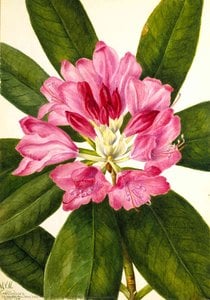
(Untitled--Flower Study)
Reproduction Size
Mary Vaux Walcott's "Untitled – Flower Study," painted in 1886, is more than just a watercolor depiction of blossoms; it’s a poignant glimpse into the life and artistic vision of a pioneering naturalist and artist. Measuring a modest 23 x 14 cm, this intimate piece belies the depth of observation and meticulous detail that characterized Walcott's work – earning her the affectionate title “the Audubon of Botany.” The painting captures a vibrant bouquet, dominated by shades of purple, white, and delicate pink, arranged within a simple yet elegant vase. It’s a scene brimming with life, radiating an almost palpable sense of summer’s fleeting beauty.
Walcott's artistic journey began in Philadelphia during a time when women’s roles were largely confined to domesticity. Yet, from her early childhood fascination with wildflowers – a gift of watercolor paints at the tender age of eight – she forged a path that defied societal expectations. The painting itself speaks to this resilience and determination; each petal is rendered with astonishing precision, capturing not just their outward appearance but also the subtle textures and delicate veins that reveal their inherent structure. Her technique leans heavily on wet-on-wet watercolor washes, creating luminous layers of color and a soft, atmospheric quality that evokes the hazy light filtering through a summer garden.
Walcott's work was deeply rooted in scientific observation. Her extensive travels throughout North America, particularly her expeditions to the Canadian Rockies alongside her husband, Charles Doolittle Walcott (himself a renowned paleontologist), provided her with unparalleled access to a vast array of wildflowers. These journeys weren’t merely recreational; they were meticulously documented through detailed botanical illustrations and field notes. “Untitled – Flower Study” exemplifies this approach—it's not simply a pretty picture, but a carefully recorded specimen, a testament to Walcott’s dedication to cataloging the natural world.
The arrangement of flowers within the vase is deliberate, suggesting a thoughtful composition rather than a random assortment. Notice how she groups similar blooms together – clusters of purple lupines and white daisies create visual harmony while highlighting their individual characteristics. This careful attention to detail reflects Walcott’s scientific rigor, but it also reveals an innate artistic sensibility—a desire to capture not just the *what* of the flowers, but also the *how* they interact with light and space.
Mary Vaux Walcott's story is one of remarkable perseverance in a field dominated by men. She faced considerable resistance to her artistic pursuits, particularly from her family who initially favored more traditional roles for women. Yet, she persisted, driven by an unwavering passion for botany and a desire to share her observations with the world. Her work was eventually recognized by the Smithsonian Institution, where it remains a treasured part of their collection – a testament to her enduring legacy as “the Audubon of Botany.”
The painting’s historical context is crucial to understanding its significance. During the late 19th century, there was growing interest in natural history and scientific illustration. Artists like Walcott were commissioned to document the flora and fauna of North America, contributing significantly to our knowledge of the region's biodiversity. Her work stands as a vital record of a bygone era, capturing the beauty and fragility of wildflowers before widespread environmental change threatened their existence.
"Untitled – Flower Study" possesses a quiet emotional resonance that transcends its simple subject matter. The soft colors, delicate brushstrokes, and intimate scale create a sense of serenity and contemplation. It’s a reminder to pause, appreciate the beauty of the natural world, and reflect on the interconnectedness of all living things. The painting invites us into a private moment—a glimpse of summer's fleeting grace captured forever on paper.
WahooArt offers meticulously crafted hand-painted reproductions of this exquisite watercolor, allowing you to bring this captivating piece of art history into your home or office. Each reproduction is created with the same care and attention to detail as the original, ensuring that you experience the full beauty and emotional impact of Mary Vaux Walcott’s masterpiece.


1860 - 1940 , United States of America

Discover the ethereal beauty of premium watercolor reproductions and bespoke commissions at WahooArt. From museum-quality landscapes to custom AI-enhanced portraits, our master artists deliver unparalleled craftsmanship and white-glove service for discerning collectors worldwide.

Discover the ethereal beauty of watercolor through an art-historical lens. Master the delicate balance of light, fluidity, and pigment to capture the luminous essence of nature, inspired by the legendary techniques of the Old Masters and Impressionist greats.
Discover the exquisite world of Victorian botanical art. Explore the intersection of scientific precision and luxury aesthetics through masterfully curated floral illustrations and hand-painted oil reproductions for discerning collectors and fine interiors.

Explore the exquisite intersection of science and art in botanical illustration. Discover the history, technical mastery, and timeless beauty of scientific floral studies from Renaissance masters to modern collectors.

 Preview
 Send
Send Share
Share
 Details
 Guide
Guide

 Download
 Similars
 X-Ray
X-Ray Diaporama
 Stats
Stats Read More







 Glass option is only available in size under 110 CM