


x

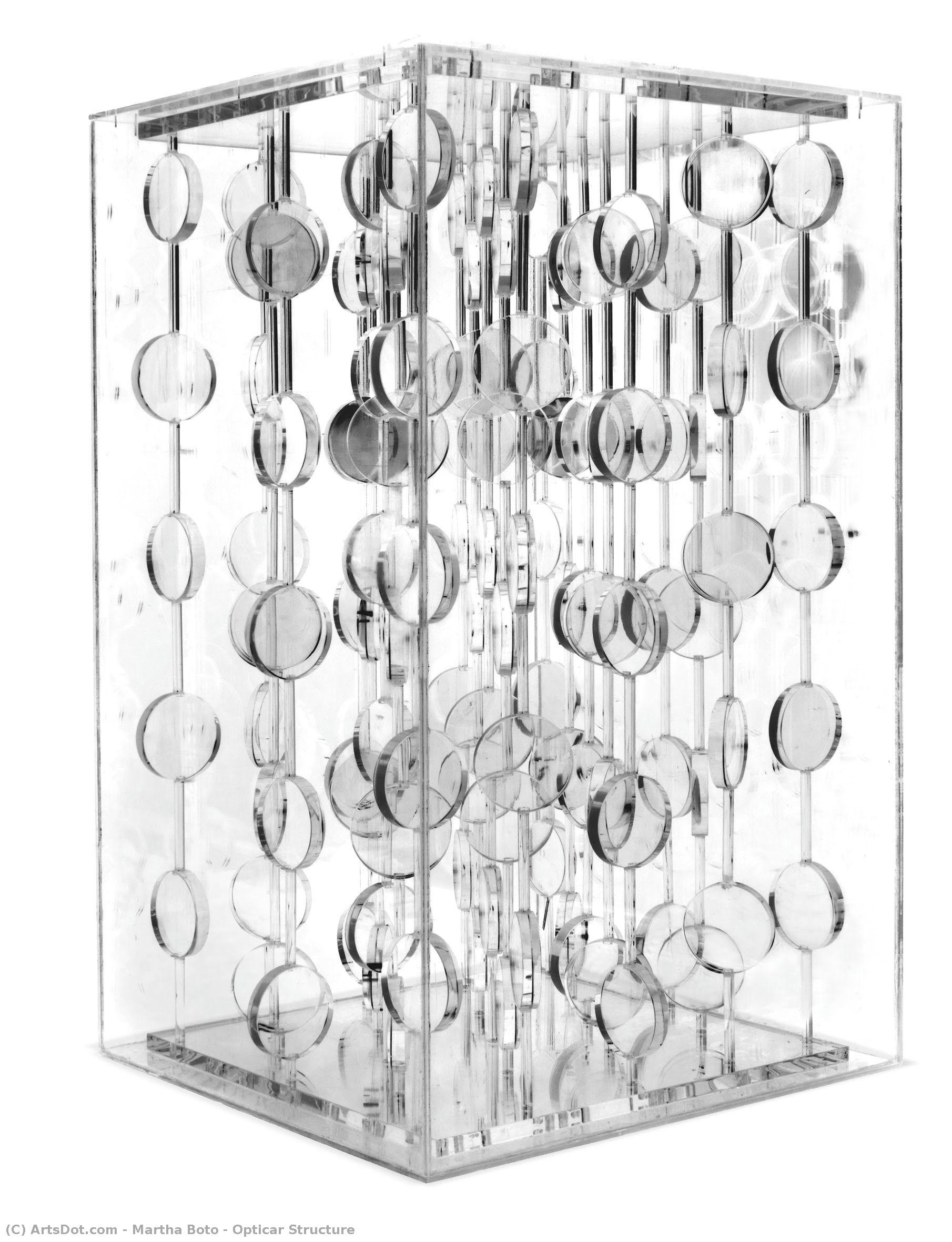
 1962
1962 87.0 x 52.0 cm
 Buenos Aires Museum of Modern Art
Museum-quality giclée or canvas print with fast production and flexible finish options.
Pick from our preset sizes that match the artwork's original proportions.

You may enter your own dimensions to fit a specific frame or space. If your selected size does not match the original image's proportions, we will either crop the artwork or extend the image with a mirrored or solid-fill edge. A digital mockup will be sent for your approval before production begins.
Please note that the on-screen preview does not reflect the actual cropping or extension. Only the mockup will accurately show the final composition.
While custom sizes are available, we recommend selecting a dimension from the predefined list to preserve the original proportions.
Worldwide Delivery () in 2 weeks instead of standard 4/5 weeks. (22 July)


Opticar Structure
Reproduction Size

Martha Boto (1925-2004) was a highly influential Argentinian artist renowned for her pioneering work in kinetic and programmed art. Born in Buenos Aires, Argentina, she demonstrated an early aptitude for visual arts. In 1944, Boto formally began her artistic training at the Escuela Superior de Bellas Artes, where she honed her skills in drawing and painting.
Boto’s initial artistic explorations centered around geometric abstraction. During the 1950s, she held several solo exhibitions showcasing these early works. However, a pivotal shift occurred in 1956 when she joined the “Arte Nuevo” group – a collective dedicated to concrete art. This association spurred her experimentation with innovative materials like plexiglass, light, and mirrors.
Boto was among the first artists in Buenos Aires to integrate movement as a fundamental element within her sculptural creations. In 1957, alongside her husband and artistic collaborator, Gregorio Vardanega, she co-founded “Artistas no figurativos de la argentina,” further solidifying her commitment to non-figurative art.
In 1959, Boto relocated to Paris with Vardanega, a move that proved crucial for her international recognition. The influential gallerist Denise René championed Boto’s work, providing her with opportunities to exhibit alongside leading figures in the kinetic art movement. She also participated in the inaugural Biennale de Paris.
During her time in Paris, Boto increasingly incorporated industrial materials – notably electric motors – into her sculptures. This integration of technology allowed for dynamic, moving artworks that challenged traditional notions of sculpture. Her work explored the interplay between light, space, and motion, creating immersive visual experiences.
Martha Boto’s contributions to kinetic and programmed art are widely celebrated. She is recognized as a key figure in Latin American modernism and a pioneer who expanded the boundaries of sculptural practice. Her innovative use of materials, incorporation of movement, and exploration of perceptual phenomena continue to inspire artists today. Her work remains a testament to the power of experimentation and the enduring appeal of abstract art.

1925 - 2004 , Argentina


Stay updated with the latest art news, exclusive offers, and decoration ideas.
Tell us about your project and our art experts will provide you with 3 personalized art suggestions.
Let Us Curate 3 Options Just for You - Free!
 Buy Painting
 Send
Send Share
Share
 Details

 Download
 Similars
 X-Ray
X-Ray Diaporama
 Read More




































 Glass option is only available in size under 110 CM


