

The artwork displayed on this page is protected by copyright law, which means we cannot legally create or sell an identical reproduction. This protection is enforced under international agreements such as the Berne Convention and by national laws, including those outlined by the U.S. Copyright Law - Title 17.
As a respectful and legal alternative, we offer custom, hand-painted artworks inspired by the original. Our skilled and professional artists carefully study the original's style, mood, and artistic essence to create a new, unique piece that evokes the same feeling - while remaining an original creation in its own right.
This method fully complies with copyright regulations because it does not involve copying or duplicating the protected artwork. Instead, it is a creative reinterpretation - a new painting that is influenced by the original but not identical to it.
Hand-painted oil on canvas in your size and frame, made to order by our artists. ( Switch to Print Switch to Digital Image)





























Pick from our preset sizes that match the artwork's original proportions.

Type the width and the height you need, to fit your frame or your wall. This is hand-painted, so for a size with a different shape the artist can paint a bit more around the picture, or cut a bit — you choose. We send you a digital mockup to approve before the painting starts. The picture shown on this page does not show the real result — only the mockup does.
Worldwide Delivery () in 3/4 weeks instead of standard 5 weeks. (25 October). No compromise on quality.
Skulls
Reproduction Size
Marlene Dumas’s paintings are instantly recognizable for their stark simplicity—often consisting of just a few figures rendered in muted tones against sparsely populated backgrounds. Yet, beneath this deceptively calm surface lies an unsettling exploration of human vulnerability and the inescapable presence of death. Born in Cape Town, South Africa, in 1953, Dumas’s artistic vision has been profoundly shaped by her upbringing amidst the turbulent legacy of apartheid, fostering a deep sensitivity to social injustice and the complexities inherent in defining identity.
Her formative years on her father’s vineyard instilled within her an acute awareness of the divisions that characterized South African society—a landscape simultaneously beautiful and scarred by history. This early exposure fueled her artistic impulse to grapple with themes of race, sexuality, and the psychological burden of existence. Dumas honed her skills at the University of Cape Town before relocating to Amsterdam, where she pursued studies in painting and psychology concurrently.
Dumas’s distinctive technique—characterized by loose brushstrokes, dripping paint, and a deliberate rejection of meticulous detail—serves as a conduit for conveying profound emotional resonance. She draws inspiration from a private archive of photographs, meticulously curated to encompass subjects ranging from children to erotic nudes, corpses, torture victims, and terrorists. This selection reflects her unwavering commitment to confronting uncomfortable truths about human experience and challenging conventional perceptions.
The recurring motif of skulls—a symbol of mortality and contemplation—dominates her oeuvre, prompting viewers to confront existential questions about life's fragility and impermanence. Dumas’s paintings don’t merely depict death; they invite us to consider it as an integral component of the human condition. Her aim isn’t to showcase gruesome imagery but rather to reveal underlying anxieties and vulnerabilities—to illuminate the profound psychological dimensions of confronting mortality.
Her artistic process deliberately disrupts photographic sources, reclaiming corporeality within the visual realm. The resulting images evoke a palpable sense of unease alongside empathy, prompting reflection on issues of gender, race, and ethnicity. Dumas’s paintings stand as powerful testimonies to the enduring capacity for art to provoke dialogue and challenge ingrained biases—a legacy rooted in her formative experiences amidst South Africa's turbulent past.
Consider commissioning a high-quality reproduction from WahooArt.com to bring Dumas’s evocative imagery into your home or studio, allowing you to appreciate the subtle nuances of her masterful technique and profound artistic vision.
The Contemporary Realism work "Skulls" was made by an artist born in South Africa.
The color identity of "Skulls" by Marlene Dumas: a neutrals palette, dominated by putty (#d1d2cd).
"Skulls" is made in mixed media, in the Contemporary Realism style.

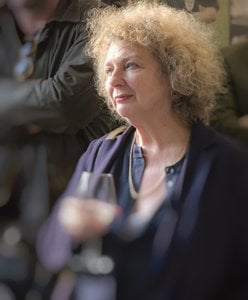
1953 - , South Africa
Explore the profound psychological depth of emotional portraiture. From Expressionist masterpieces to custom oil commissions, discover how fine art captures the human soul through light, color, and masterful technique for discerning collectors.

Discover the vibrant world of acrylic on canvas. Our expert guide explores the technical versatility, rich textures, and enduring beauty of modern acrylic masterpieces, offering essential insights for discerning art collectors seeking quality and longevity.

Elevate your artistry with our expert guide to acrylic on paper. Master advanced techniques in texture, color theory, and layering to create professional-grade modern masterpieces. Perfect for art students seeking technical depth and creative excellence.

Unlock your creative potential with this expert guide for art students. Master acrylic painting techniques, from fluid washes to textured impasto. Learn about essential brushes, surfaces, and advanced color theory to elevate your fine arts practice with professional precision.
Discover the exquisite world of acrylic on canvas. From textured impasto to vibrant modern hues, explore how WahooArt's master artists create premium, hand-painted reproductions and bespoke commissions for discerning collectors and luxury interiors.

 Preview
 Send
Send Share
Share
 Details
 Guide
Guide

 Download
 Similars
 X-Ray
X-Ray Diaporama
 Stats
Stats


 Read More









 Glass option is only available in size under 110 CM


