

 Acrylic On CanvasWallArtAmerican Expressionism
 87.0 x 55.0 cm
 Chrysler Museum of Art
The artwork displayed on this page is protected by copyright law, which means we cannot legally create or sell an identical reproduction. This protection is enforced under international agreements such as the Berne Convention and by national laws, including those outlined by the U.S. Copyright Law - Title 17.
This method fully complies with copyright regulations because it does not involve copying or duplicating the protected artwork. Instead, it is a creative reinterpretation - a new painting that is influenced by the original but not identical to it.
Museum-quality giclée or canvas print with fast production and flexible finish options. ( Buy Hand Made Painting Switch to Digital Image)





























Pick from our preset sizes that match the artwork's original proportions.

Type the width and the height you need, to fit your frame or your wall. A print can only be cut, never made bigger than the picture, so a size with a different shape loses a part of the image. We send you a digital mockup to approve before we print anything. The picture shown on this page does not show the real cut — only the mockup does.
Worldwide Delivery () in 2 weeks instead of standard 4/5 weeks. (22 October)
No Space Left
Reproduction Size
Mark Tobey's "No Space Left," completed in 1963, isn’t merely a painting; it’s an embodiment of existential contemplation rendered in vibrant collage and luminous calligraphy. Presented at 87 x 55 cm, this artwork transcends simple visual representation, inviting viewers into a dialogue with themes of emptiness, spirituality, and the interconnectedness of nature and human experience.
Tobey’s distinctive style is immediately recognizable through his masterful blend of collage and calligraphy—a technique he honed throughout his prolific career. The canvas itself is layered with meticulously crafted paper fragments – geometric shapes interspersed with textured surfaces – creating a dynamic visual tapestry that pulsates with energy. These forms aren't randomly arranged; they are deliberately positioned to guide the eye across the composition, mirroring the flow of breath and the rhythm of contemplation.
"No Space Left" emerged during Tobey’s engagement with Surrealist principles—particularly his fascination with automatism—a method championed by André Breton aimed at bypassing conscious thought and accessing the subconscious realm. However, unlike many Surrealists who sought to shock or unsettle their audiences, Tobey prioritized conveying a profound spiritual message. Influenced by Zen Buddhism and Taoism, he believed that art should serve as a conduit for inner transformation.
The recurring motif of birds—represented in various sizes and orientations—is central to the painting’s symbolic significance. In Buddhist cosmology, birds symbolize liberation from earthly attachments and ascension to higher realms of consciousness. Tobey's meticulous depiction of these avian figures isn’t simply decorative; it’s a deliberate invocation of spiritual ideals – representing hope, resilience, and the yearning for transcendence.
Despite its visual complexity, “No Space Left” possesses an understated emotional power. The painting doesn't shout its message; rather, it whispers it—creating a contemplative atmosphere that encourages viewers to pause and reflect on their own experiences of emptiness and fullness. Its luminous colors and flowing lines evoke a sense of serenity and wonder, reminding us of the beauty inherent in accepting what is – leaving space for possibility and spiritual growth.
This artwork exemplifies Tobey’s unwavering commitment to exploring the intersection between art and spirituality, offering a timeless meditation on themes of absence and aspiration.A reproduction of "No Space Left" fits well in a living room.
"No Space Left" by Mark Tobey uses a neutrals color palette. The palette summarizes the work's overall color character.
The medium of "No Space Left" by Mark Tobey is acrylic on canvas. Reproductions aim to render the appearance of this technique.


1890 - 1976 , United States of America
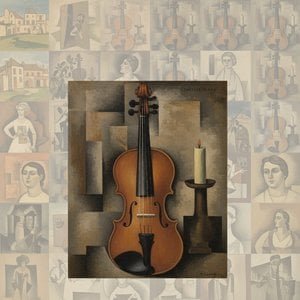
Explore 25 iconic Georges Braque paintings that revolutionized Cubism & modern art. Discover the stories behind his masterpieces, from Fauvism to Analytical Cubism. Find museum-quality reproductions & elevate your home decor with WahooArt.com.

Explore the rich history of birds in painting! Discover symbolism, artistic movements & master artists like Audubon. High-quality reproductions available at WahooArt.

Explore 25 iconic Mark Rothko paintings that define Abstract Expressionism. Discover the stories, colors & emotions behind these masterpieces. Find museum-quality art reproductions and curated decor ideas at WahooArt.com.
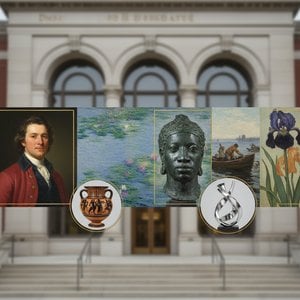
Journey through 25 iconic artworks at Boston's MFA! Explore masterpieces by Monet, Sargent, Van Gogh & more. Discover art history, techniques & find museum-quality reproductions for your home on WahooArt.com.

Unlock the potential of small spaces! Expert tips on using abstract art to maximize impact & create a spacious feel. Discover color palettes, placement strategies & custom artwork options for stunning interiors.

 Preview
 Send
Send Share
Share
 Details
 Guide
Guide

 Download
 Similars
 X-Ray
X-Ray Diaporama
 Stats
Stats Read More









 Glass option is only available in size under 110 CM


