

Hand-painted oil on canvas in your size and frame, made to order by our artists. ( Switch to Print Switch to Digital Image)





























Pick from our preset sizes that match the artwork's original proportions.

You may enter your own dimensions to fit a specific frame or space. If your selected size does not match the original image's proportions, we will either crop the artwork or extend the painting with additional hand-painted elements. A digital mockup will be sent for your approval before production begins.
Please note that the on-screen preview does not reflect the actual cropping or extension. Only the mockup will accurately show the final composition.
While custom sizes are available, we recommend selecting a dimension from the predefined list to preserve the original proportions.
Worldwide Delivery () in 3/4 weeks instead of standard 5 weeks. (23 September). No compromise on quality.


White and Greens in Blue
Reproduction Size
Mark Rothko’s “White and Greens in Blue,” painted in 1957, isn’t merely a painting; it’s an invitation. An invitation to surrender to the quiet intensity of color, to contemplate the vastness within, and perhaps, to glimpse something akin to the divine. Born Markus Yakovlevich Rothkowitz in Dvinsk, Latvia – a landscape steeped in both beauty and historical turmoil – Rothko carried with him from his earliest years a profound sensitivity to human suffering, a theme that would become a recurring motif throughout his career. This early experience of displacement, coupled with his family’s intellectual and political engagement, shaped an artist deeply attuned to the complexities of existence.
The painting itself is deceptively simple at first glance. Three horizontal rectangles – a dominant dark green, a luminous white, and a subtle blue – float within a deep field of color. These aren't sharply delineated forms; rather, they bleed into one another, creating an atmosphere of hazy contemplation. The technique employed is characteristic of Rothko’s “Color Field” style: broad, unmodulated washes of pigment applied with a remarkable lack of detail. He eschewed traditional brushwork, opting instead for a process of layering and blending that results in surfaces that seem to shimmer and vibrate. This deliberate flatness – the rejection of illusionistic depth – forces the viewer to engage directly with the color itself, creating an immersive experience.
While Rothko famously resisted definitive interpretations of his work, art historians and critics have consistently identified powerful symbolic resonances within “White and Greens in Blue.” The dark green rectangle, often described as a ‘void,’ represents the unknown, the unconscious, or perhaps even death. It’s a space of profound darkness, yet paradoxically, it contains the potential for light and transformation. The white rectangle, conversely, embodies hope, spirituality, and transcendence – a luminous presence that draws us towards it. The blue acts as a mediator, connecting these two realms and suggesting a sense of equilibrium.
Interestingly, Rothko’s own words reveal his intention to evoke an emotional response rather than depict a specific subject. He described his paintings as “windows on another world,” aiming to create a space where viewers could experience a profound sense of awe and contemplation. The painting's power lies not in its representational qualities but in its ability to tap into our deepest feelings – our anxieties, our hopes, our yearning for meaning.
The influence of Rothko’s early life—his Jewish heritage, his family's intellectual pursuits, and his personal struggles with loss and identity—is palpable in his work. The painting echoes themes found in religious iconography, particularly the concept of the ‘numinous’ – that sense of overwhelming awe and mystery experienced when encountering something sacred. As art historian Susan Brown Berger notes, Rothko sought to create a space for “religious experience” through color alone. This is powerfully demonstrated by his later work, notably the Rothko Chapel in Houston, where fourteen monumental paintings were installed as a meditative space.
“White and Greens in Blue” stands as a testament to Rothko’s ability to transform abstract forms into vehicles for profound emotional expression. It's a painting that invites repeated viewing, each encounter revealing new layers of meaning and resonance. Its enduring appeal lies in its capacity to connect us with something larger than ourselves – a timeless exploration of the human condition.

1903 - 1970 , Latvia

Explore the profound emotional depth of Color Field painting. Discover the history of mid-century abstraction, from Rothko to Newman, and learn how pure color transforms the viewer's experience through our expert art history guide.

Explore the profound emotional depth of Color Field painting. Our expert guide delves into the post-war origins of Abstract Expressionism, analyzing masterpieces by Rothko and Newman. Discover museum-grade, hand-painted oil reproductions that bring art history to your walls.
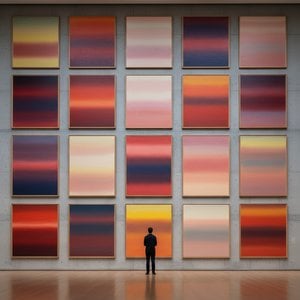
Explore 25 iconic Mark Rothko paintings that define Abstract Expressionism. Discover the stories, colors & emotions behind these masterpieces. Find museum-quality art reproductions and curated decor ideas at WahooArt.com.
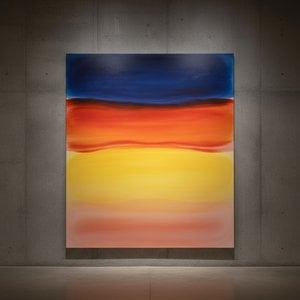
Explore the profound emotional depth of Mark Rothko's abstract expressionism. Discover the history, techniques & lasting impact of this pivotal Color Field painter. Expert insights for collectors and art enthusiasts.

Explore 10 defining Abstract Expressionism masterpieces by Pollock, Rothko & de Kooning. Discover the stories behind these iconic paintings and find museum-quality art reproductions to elevate your home decor on .

 Preview
 Send
Send Share
Share
 Details
 Guide
Guide

 Download
 Similars
 X-Ray
X-Ray Diaporama
 Stats
Stats
 Read More







 Glass option is only available in size under 110 CM


