Preview AR preview Buy Hand Made Painting Switch to Digital Image Send
Details Guide Add to favorites Download Similars X-Ray Diaporama Stats

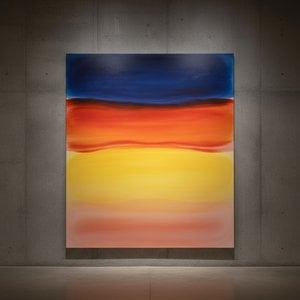
Untitled 34

Mark Rothko mastered Color Field painting with the Seagram Murals. Discover the emotional power of his iconic abstract works today.

The artwork displayed on this page is protected by copyright law, which means we cannot legally create or sell an identical reproduction. This protection is enforced under international agreements such as the Berne Convention and by national laws, including those outlined by the U.S. Copyright Law - Title 17.

This method fully complies with copyright regulations because it does not involve copying or duplicating the protected artwork. Instead, it is a creative reinterpretation - a new painting that is influenced by the original but not identical to it.

Giclée / Art Print

Museum-quality giclée or canvas print with fast production and flexible finish options. ( Buy Hand Made Painting Switch to Digital Image)

Corner sample of the P118B picture frame: moulded polystyrene, 5 cm wide and 3 cm thick
P118B $10
Corner sample of the P118H picture frame: moulded polystyrene, 5 cm wide and 3 cm thick
P118H $10
Corner sample of the P118W picture frame: moulded polystyrene, 5 cm wide and 3 cm thick
P118W $10
Corner sample of the P438Z picture frame: moulded polystyrene, 5.5 cm wide and 3.5 cm thick
P438Z $10
Corner sample of the P508JH picture frame: moulded polystyrene, 7 cm wide and 3.5 cm thick
P508JH $12
Corner sample of the P508YH picture frame: moulded polystyrene, 7 cm wide and 3.5 cm thick
P508YH $12
Corner sample of the P805H picture frame: moulded polystyrene, 5 cm wide and 3.5 cm thick
P805H $10
Corner sample of the P805Z picture frame: moulded polystyrene, 5 cm wide and 3.5 cm thick
P805Z $10
Corner sample of the P919BZ picture frame: moulded polystyrene, 7 cm wide and 3.5 cm thick
P919BZ $10
Corner sample of the P919G picture frame: moulded polystyrene, 7 cm wide and 3.5 cm thick
P919G $10
Corner sample of the P919XJ picture frame: moulded polystyrene, 7 cm wide and 3.5 cm thick
P919XJ $10
Corner sample of the P959ZH picture frame: moulded polystyrene, 5 cm wide and 3 cm thick
P959ZH $10
Corner sample of the P968JZ picture frame: moulded polystyrene, 6 cm wide and 4 cm thick
P968JZ $12
Corner sample of the W106C picture frame: solid wood, 5 cm wide and 3 cm thick
W106C $8
Corner sample of the W218G picture frame: solid wood, 5 cm wide and 3 cm thick
W218G $10
Corner sample of the W218JH picture frame: solid wood, 5 cm wide and 3 cm thick
W218JH $8
Corner sample of the W218Y picture frame: solid wood, 5 cm wide and 3 cm thick
W218Y $10
Corner sample of the W307PJ picture frame: solid wood, 6 cm wide and 3 cm thick
W307PJ $10
Corner sample of the W316G picture frame: solid wood, 6 cm wide and 3 cm thick
W316G $10
Corner sample of the W316PJ picture frame: solid wood, 6 cm wide and 3 cm thick
W316PJ $8
Corner sample of the W316Y picture frame: solid wood, 6 cm wide and 3 cm thick
W316Y $10
Corner sample of the W398PJ picture frame: solid wood, 5 cm wide and 3 cm thick
W398PJ $8
Corner sample of the W4111J picture frame: solid wood, 6.5 cm wide and 3.5 cm thick
W4111J $10
Corner sample of the W500HY picture frame: solid wood, 7 cm wide and 5 cm thick
W500HY $15
Corner sample of the W500JH picture frame: solid wood, 7 cm wide and 5 cm thick
W500JH $15
Corner sample of the W692G picture frame: solid wood, 8 cm wide and 4 cm thick
W692G $12
Corner sample of the W849H picture frame: solid wood, 5 cm wide and 3 cm thick
W849H $8
Corner sample of the W940BG picture frame: solid wood, 7.5 cm wide and 4.5 cm thick
W940BG $15
Corner sample of the W953PJ picture frame: solid wood, 6 cm wide and 3.5 cm thick
W953PJ $8

Standard
custom
CM
INCH

Pick from our preset sizes that match the artwork's original proportions.

width
height

Type the width and the height you need, to fit your frame or your wall. A print can only be cut, never made bigger than the picture, so a size with a different shape loses a part of the image. We send you a digital mockup to approve before we print anything. The picture shown on this page does not show the real cut — only the mockup does.

Worldwide Delivery () in 2 weeks instead of standard 4/5 weeks. (25 October)

Free Worldwide Express Shipping
High-Quality Linen Canvas
Full Shipping Insurance
Customs Tax Refund Guarantee
True Color Matching Guarantee
100-Day Return Policy (Defects Only)
100% Money-Back Guarantee
Bulk Discount Offer

Total Price

$ 69

Untitled 34

Giclée / Art Print

Reproduction Size

-

Total Price

$ 69

Quick Facts

  • Title: Untitled 34
  • Artist: Mark Rothko
  • Subject or theme: Emotional Landscape
  • Location: Private Collection
  • Movement: Abstract Expressionism

A Meditation on Color and Form: Examining Mark Rothko’s Untitled 34

Mark Rothko's Untitled 34 stands as a testament to the power of abstraction, embodying the core tenets of American Expressionism and inviting viewers into a contemplative dialogue with color and emotion. Executed in approximately 1950-1951 during his prolific period of artistic exploration, this monumental canvas—dimensions unknown—represents more than just pigment on linen; it’s an invitation to confront fundamental questions about existence itself. The painting's deceptively simple composition – rectangular blocks of deep crimson and muted orange layered atop one another – belies a complex interplay of visual and psychological forces.

The Genesis of Color Field Painting

Rothko’s approach to artmaking was radically different from the prevailing trends of his time, rejecting representational imagery in favor of pure color fields. Influenced by Zen Buddhism and Eastern European mysticism, Rothko sought to bypass conscious thought and tap into primal emotions. He famously stated that he wished to “make people feel,” prioritizing sensation over intellectual understanding. This ambition drove him to experiment with layering translucent washes of pigment—a technique honed through years of meticulous observation and experimentation—creating an ethereal quality that defies easy categorization. The subtle gradations within each rectangle contribute to a sense of depth and luminosity, mimicking the experience of gazing upon vast landscapes or celestial phenomena.

Symbolism Within Silence

Despite its apparent lack of narrative content, Untitled 34 is laden with symbolic significance. Rothko himself resisted interpretations of his work, asserting that he wished to avoid imposing any particular meaning on the viewer. However, scholars have identified recurring motifs—such as the verticality of the rectangles and their overlapping planes—as references to spiritual concepts like ascension and interconnectedness. The crimson hue evokes associations with passion, vitality, and primal energy, while the orange shade symbolizes warmth, optimism, and illumination. Together, they create a harmonious balance that reflects Rothko’s belief in the transformative potential of art.

Historical Context: Postwar Anxiety and Artistic Innovation

The painting emerged from the aftermath of World War II, a period marked by profound social upheaval and existential uncertainty. Artists like Rothko responded to this climate with an uncompromising commitment to exploring inner states of mind—a reaction against the perceived superficiality of bourgeois culture. His work aligns closely with the broader movement of Color Field Painting, spearheaded by artists such as Barnett Newman and Clyfford Still, who similarly sought to convey profound emotional experiences through monumental canvases dominated by uninterrupted blocks of color. Untitled 34 represents a pivotal moment in modern art history—a courageous assertion of artistic autonomy and a daring reimagining of how visual art could communicate complex psychological realities.

Emotional Resonance: An Invitation to Contemplation

Ultimately, Untitled 34’s enduring appeal lies in its ability to evoke visceral responses from viewers. The painting encourages contemplation, prompting us to consider our own perceptions of beauty, emotion, and the universe around us. Its quiet grandeur—a deliberate rejection of spectacle—demands patience and stillness, inviting us to surrender to the immersive experience of color and form. Like Rothko’s Chapel in Houston, Texas – where fourteen similar canvases hang side by side – Untitled 34 seeks to create a space for profound reflection and spiritual connection. It remains an unforgettable testament to the transformative power of art and its capacity to illuminate the human condition.

Questions & Answers

Are there works similar to "Untitled 34"?

The Similars page of "Untitled 34" by Mark Rothko presents related artworks.

Can I preview "Untitled 34" by Mark Rothko before ordering?

The Preview page of "Untitled 34" lets you preview the artwork before ordering.

What is the color identity of "Untitled 34" by Mark Rothko?

The color identity of "Untitled 34" by Mark Rothko: a dark palette, dominated by putty (#cdbba5).


Artist Biography

A Life Shaped by Displacement

Mark Rothko arrived in the United States as a young boy, part of a family moving from Dvinsk, Latvia, to Portland, Oregon, in 1913. His early years were marked by the heavy atmosphere of the Pale of Settlement, where his family lived amidst political unrest and the fear of pogroms. This sense of instability followed him across the ocean. The loss of his father, Jacob, shortly after their arrival in America added a layer of personal grief to the challenges of settling in a new culture. While he studied at Yale University, the pull of New York City eventually led him to leave formal academics behind for the Art Students League.

His upbringing was one of intellect and debate. His father, a pharmacist with socialist leanings, fostered a home where learning was central. This environment, combined with the hardships of the immigrant experience, created a deep sensitivity to human suffering. These early experiences of loss and the struggle to find a place in a chaotic world became the quiet foundation for everything he would later paint.

From Figures to Fields of Color

In his early years in New York, Rothko focused on realism, painting portraits and urban scenes with careful attention to detail. As the 1940s brought the horrors of World War II, his work began to shift. He moved away from recognizable objects, looking instead toward Surrealism and mythology to find a way to express universal human emotions. During this period, his canvases featured biomorphic shapes that seemed to float between being figures and being abstract forms.

By the late 1940s, he had developed the style that would define his career. He stripped away all imagery, leaving only large-scale canvases with rectangular blocks of color. These forms appeared to hover and resonate against one another. He used thin washes of paint to create subtle changes in tone and texture, making the edges of his shapes appear blurred. He often avoided titles, using simple numbers like No. 1 or No. 6 so that viewers could face the work without any preconceived ideas.

The Search for Emotional Truth

Rothko’s mature period is associated with Color Field painting. His goal was to use color to speak directly to the human soul, bypassing the intellect to reach deep emotions such as tragedy, ecstasy, and despair. He meticulously layered paint to create a sense of depth and light that seemed to come from within the canvas itself. These large works were intended to envelop the viewer in an immersive experience.

His commitment to this emotional honesty led to several significant projects:

  • The Seagram Murals, which he originally intended for a New York restaurant but later donated to the Tate Gallery after feeling the setting would compromise the work.
  • The Rothko Chapel in Houston, Texas, a non-denominational space containing fourteen of his paintings in varying shades of black, designed as a place for quiet reflection.
  • The Harvard Mural series, which were donated to a dining room at the Holyoke Center.

Despite his immense influence on Abstract Expressionism and the later Minimalist movement, Rothko struggled with depression throughout his life. He died by suicide in 1970. His work remains a central part of modern art history, found in permanent collections such as the Museum of Modern Art in New York and the Tate Modern in London.

Mark Rothko

Mark Rothko

1903 - 1970 , Latvia

Quick Facts

  • Artistic Movement Or Style: Abstract Expressionism, Color Field Painting
  • Artists Or Movements Influenced By This Artist: ['Minimalist art']
  • Full Name: Markus Yakovlevich Rothkowitz
  • Nationality: American
  • Notable Artworks:
    • No. 10
    • Seagram Murals
    • Untitled
  • Place Of Birth: Daugavpils, Latvia
  • Date Of Birth: 1903
  • Date Of Death: 1970
Explore artworks organized by themes, styles, and characteristics.