

The artwork displayed on this page is protected by copyright law, which means we cannot legally create or sell an identical reproduction. This protection is enforced under international agreements such as the Berne Convention and by national laws, including those outlined by the U.S. Copyright Law - Title 17.
As a respectful and legal alternative, we offer custom, hand-painted artworks inspired by the original. Our skilled and professional artists carefully study the original's style, mood, and artistic essence to create a new, unique piece that evokes the same feeling - while remaining an original creation in its own right.
This method fully complies with copyright regulations because it does not involve copying or duplicating the protected artwork. Instead, it is a creative reinterpretation - a new painting that is influenced by the original but not identical to it.
Hand-painted oil on canvas in your size and frame, made to order by our artists. ( Switch to Print Switch to Digital Image)





























Pick from our preset sizes that match the artwork's original proportions.

You may enter your own dimensions to fit a specific frame or space. If your selected size does not match the original image's proportions, we will either crop the artwork or extend the painting with additional hand-painted elements. A digital mockup will be sent for your approval before production begins.
Please note that the on-screen preview does not reflect the actual cropping or extension. Only the mockup will accurately show the final composition.
While custom sizes are available, we recommend selecting a dimension from the predefined list to preserve the original proportions.
Worldwide Delivery () in 3/4 weeks instead of standard 5 weeks. (12 October). No compromise on quality.
Study for Antigone
Reproduction Size
In the quiet, evocative depths of Mark Rothko’s “Study for Antigone,” created in 1950, viewers are invited into a sanctuary of profound contemplation. This work serves as more than a mere visual arrangement; it is an emotional landscape where the boundaries between color and spirit begin to blur. As one stands before this piece, there is an immediate sense of being drawn into a space of solemn stillness, a meditative realm that echoes the weight of human experience. The painting acts as a bridge between the ancient tragedies of Sophocles and the modern existential anxieties of the twentieth century, offering a hauntingly beautiful testament to the endurance of the human soul amidst sorrow.
The composition is a masterful exercise in balance and tension, featuring three nude torsos positioned upon a rectangular frieze. These figures are arranged in a deliberate horizontal configuration, their forms subtly illuminated against a muted backdrop of gray and ivory. While the figures possess a certain geometric simplicity, they are far from static; there is a rhythmic quality to their placement that suggests a shared, silent narrative. The presence of scattered objects—a bowl, cups, and a vase—adds a layer of domestic intimacy to the scene, yet these elements feel suspended in a dreamlike state, stripped of their mundane utility to become symbols within a larger, more cosmic drama.
Technically, this work captures Rothko during a pivotal era of his evolution, where his signature Color Field technique began to assert its dominance. Rather than relying on the sharp, descriptive lines of traditional realism, Rothko utilizes expansive planes of pigment that seem to breathe and dissolve into one another. Deep shades of crimson red, smoky purple, and cobalt blue overlap in a way that creates an illusion of depth and luminosity. The artist employs thin black outlines to delineate the contours of the figures, providing just enough structure to anchor the viewer's eye before it wanders back into the nebulous, atmospheric washes of color.
This approach is deeply rooted in the tenets of Abstract Expressionism, a movement that sought to bypass rational thought to tap directly into primal, subconscious emotions. By eschewing detailed representation, Rothko prioritizes the emotive power of texture and hue. The way the colors bleed and merge mirrors the fluidity of memory and grief, making the painting feel less like a fixed image and more like a living, breathing entity. For the collector or interior designer, this creates a piece that possesses an incredible "presence"—a work that does not merely decorate a wall but fundamentally alters the energetic atmosphere of a room.
The historical and symbolic weight of “Study for Antigone” is anchored in its namesake. The Greek heroine, Antigone, represents the ultimate act of moral defiance, choosing to honor her brother’s burial rites despite the lethal decrees of a tyrant. In Rothko’s hands, this theme of resistance and conviction is translated into a visual language of resilience. The figures, though vulnerable in their nudity, embody a quiet strength that mirrors the protagonist's struggle against unjust authority. This connection to classical tragedy imbues the work with a sense of timelessness, making it relevant to anyone who has navigated the complexities of loss or the necessity of standing by one's principles.
For those seeking to incorporate fine art into a curated space, this reproduction offers an unparalleled opportunity to possess a fragment of art history. It is a piece that invites long periods of looking, rewarding the observer with new layers of meaning and emotional resonance each time it is encountered. Whether placed in a quiet study, a minimalist gallery, or a sophisticated living area, “Study for Antigone” serves as a powerful focal point—a window into the sublime, where the shadows of the past meet the enduring light of hope.
The medium of "Study for Antigone" by Mark Rothko is oil. Reproductions aim to render the appearance of this technique.
Mark Rothko is also known as Marcus Rothkowitz.
"Study for Antigone" by Mark Rothko has a landscape format. The format describes the proportions of the composition.
The colors of "Study for Antigone" show a bright balance luminance.
"Study for Antigone" is available as a high-resolution digital image download, purchased directly on this page.
Within the Color Field Painting movement, "Study for Antigone" is recorded with a melancholic tone.
"Study for Antigone" represents the Mature Period of Mark Rothko.
The color that stands out most in "Study for Antigone" is putty (#dccbaf). The dominant color is useful when matching an artwork to an interior.


1903 - 1970 , Latvia
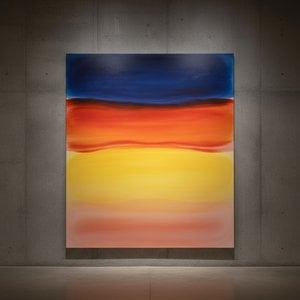
Explore the profound emotional depth of Mark Rothko's abstract expressionism. Discover the history, techniques & lasting impact of this pivotal Color Field painter. Expert insights for collectors and art enthusiasts.
Explore 25 iconic Mark Rothko paintings that define Abstract Expressionism. Discover the stories, colors & emotions behind these masterpieces. Find museum-quality art reproductions and curated decor ideas at WahooArt.com.

Explore the profound emotional depth of Color Field painting. Discover the history of mid-century abstraction, from Rothko to Newman, and learn how pure color transforms the viewer's experience through our expert art history guide.

Explore the profound emotional depth of Color Field painting. Our expert guide delves into the post-war origins of Abstract Expressionism, analyzing masterpieces by Rothko and Newman. Discover museum-grade, hand-painted oil reproductions that bring art history to your walls.

Explore 10 defining Abstract Expressionism masterpieces by Pollock, Rothko & de Kooning. Discover the stories behind these iconic paintings and find museum-quality art reproductions to elevate your home decor on .

 Preview
 Send
Send Share
Share
 Details
 Guide
Guide

 Download
 Similars
 X-Ray
X-Ray Diaporama
 Stats
Stats

 Read More









 Glass option is only available in size under 110 CM


