
x


 Oil On PanelWallArtNorthern Renaissance
 1547Renaissance
 80.0 x 108.0 cm
 Museo del Prado
Hand-painted oil on canvas in your size and frame, made to order by our artists. ( Buy Print Buy Image)





























Pick from our preset sizes that match the artwork's original proportions.

You may enter your own dimensions to fit a specific frame or space. If your selected size does not match the original image's proportions, we will either crop the artwork or extend the painting with additional hand-painted elements. A digital mockup will be sent for your approval before production begins.
Please note that the on-screen preview does not reflect the actual cropping or extension. Only the mockup will accurately show the final composition.
While custom sizes are available, we recommend selecting a dimension from the predefined list to preserve the original proportions.
Worldwide Delivery () in 3/4 weeks instead of standard 5 weeks. (27 August). No compromise on quality.


St Jerome
Reproduction Size
In the quiet, contemplative depths of Marinus van Reymerswaele’s St Jerome, we are invited into a world where the pursuit of divine knowledge meets the heavy reality of human existence. Completed around 1547, this oil-on-panel masterpiece serves as a profound window into the Northern Renaissance—a period defined by an almost obsessive devotion to detail and a deep-seated fascination with the symbolic language of everyday objects. The painting captures the saint not merely as a historical figure, but as an emblem of intellectual piety, embodying the humanist ideals that were reshaping Europe during the Reformation era.
The scene is anchored by the central figure of St Jerome, an elderly scholar whose weathered face and long, flowing beard speak of decades spent in rigorous study. Draped in a richly textured crimson robe—a hue that signifies his ecclesiastical dignity as a cardinal or bishop—he sits at a desk that serves as a stage for profound theological reflection. The atmosphere is one of heavy, scholarly stillness, where the only movement is the soft stream of natural light entering from an upper corner, casting gentle shadows that heighten the sense of tranquil isolation.
Every object meticulously placed upon the desk by Reymerswaele serves as a silent narrator, contributing to a complex tapestry of meaning. At the heart of the composition lies an open book, its illuminated text hinting at Jerome’s monumental task: the translation of the Bible into Latin. This act of scholarship was pivotal in shaping Christian theology, and the artist renders the parchment with such tactile accuracy that one can almost feel the weight of the history contained within those pages.
Yet, amidst this celebration of intellect, a somber reminder of our shared fate rests near the book: a skull. This memento mori—a classic Renaissance motif—serves as a poignant counterpoint to the scholarly pursuits, reminding the viewer of the ephemeral nature of earthly life and the inevitability of death. Other carefully positioned tools, such as a pair of compasses symbolizing the navigation toward divine truth and a quill pen representing the power of intellectual discourse, further enrich the scene. Through these symbols, Reymerswaele transforms a simple study into a profound meditation on the balance between worldly learning and spiritual preparation.
Technically, the painting is a triumph of Northern Renaissance realism. Reymerswaele’s ability to capture the varied textures of heavy fabric, aged wood, and cold bone is nothing short of remarkable. His expressive brushwork, blended with a subdued palette of earth tones, creates a solemn and immersive atmosphere that draws the viewer into the saint's private sanctuary. The subtle modeling of forms and the interplay of light and shadow provide a depth that makes the composition feel remarkably alive.
For the art lover or interior designer, a high-quality reproduction of St Jerome offers more than just aesthetic beauty; it brings a sense of historical gravity and intellectual depth to any space. Whether placed in a private library, a study, or a sophisticated living area, this artwork acts as a focal point for contemplation. It is a piece that invites conversation, offering a window into a time when faith and reason were inextricably intertwined, making it an enduring choice for those seeking to surround themselves with art that possesses both soul and substance.

The decade of the 1490s witnessed a burgeoning Renaissance across Europe, and within that vibrant landscape, Titian – born Tiziano Vecellio around 1488/90 in the small Alpine town of Pieve di Cadore – emerged as one of its most dazzling stars. His life, spanning nearly eight decades, coincided with a period of immense artistic transformation, marked by shifts from the more rigid formality of early Renaissance Florence to the richer, more sensual palettes and dynamic compositions that would define Venetian painting for generations. His story is not simply one of technical mastery; it’s a reflection of the evolving cultural currents of his time – a testament to ambition, patronage, and the enduring power of color.
Titian's early training was conventional for an aspiring artist of his era. He began as a pupil in the workshop of Sebastiano Zuccato, a renowned mosaicist in Venice, before briefly joining the studio of Gentile Bellini, one of the city’s most established masters. However, it was through his association with Giorgione – a figure whose influence would ripple throughout Titian's career – that he truly began to forge his own distinctive style. Giorgione’s innovative use of color and atmospheric perspective, coupled with a focus on capturing fleeting moments of beauty, provided a crucial foundation for Titian’s later development. The pair collaborated on the magnificent frescoes adorning the ‘Scuola del Santo’ in Padua, a project that cemented their bond and established Titian as a rising talent.
Following Giorgione's untimely death in 1510, Titian seized his opportunity. He quickly established himself as an independent artist, attracting the attention of wealthy patrons throughout Italy – from the powerful Medici family in Florence to the dukes and princes of Ferrara, Mantua, and Urbino. His versatility was remarkable; he excelled at a wide range of subjects, including portraits, mythological scenes, religious altarpieces, and landscapes. He wasn’t simply a painter; he was a courtier, a diplomat, and a master of presentation, understanding the importance of cultivating relationships with his clients.
Titian's early works are characterized by a delicate lyricism and a fondness for pastoral settings – scenes of shepherds, nymphs, and idyllic landscapes bathed in soft light. However, as he matured, his style underwent a dramatic transformation. He embraced bolder colors, looser brushwork, and a more dynamic approach to composition. His later paintings are infused with a sensual energy and a profound understanding of human emotion. The ‘Assumption of the Virgin’ (1516-18) for Santa Maria Gloriosa dei Frari in Venice is a prime example of this evolution – a monumental altarpiece that redefined Venetian painting and set a new standard for grandeur and emotional intensity.
Titian's mastery of color was unparalleled. He developed a unique technique known as “color glazing,” applying thin, translucent layers of paint to build up rich, luminous surfaces. This method allowed him to achieve an astonishing range of hues and tones – from the deepest ultramarine blues to the most vibrant reds and yellows. He also experimented extensively with different pigments, constantly seeking new ways to capture the nuances of light and shadow. His use of *chiaroscuro*—the dramatic contrast between light and dark—became a hallmark of his style, adding depth and drama to his compositions.
Beyond color, Titian’s innovations extended to composition and brushwork. He moved away from the rigid formality of earlier Renaissance painting, embracing a more fluid and expressive approach. His brushstrokes were often loose and gestural, conveying a sense of movement and spontaneity. He also pioneered new techniques for depicting drapery and texture, creating fabrics that seemed to shimmer and flow with life.
Titian’s influence on subsequent generations of artists is immeasurable. He was followed by a succession of Venetian painters – including Tintoretto, Veronese, and Bassano – who built upon his innovations and established the Venetian school as one of the most important artistic centers in Europe. His techniques were studied and imitated throughout the 17th century and beyond, shaping the course of Western art history.
Titian’s legacy extends far beyond the canvas. He was a shrewd businessman, a charismatic personality, and a keen observer of human nature. His life embodies the spirit of the Renaissance – a period of unprecedented creativity, innovation, and cultural exchange. He remains one of the most beloved and admired artists in history, celebrated for his dazzling colors, dramatic compositions, and profound understanding of beauty.

1490 - 1546 , Netherlands
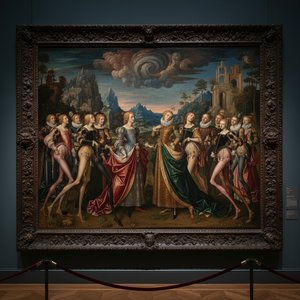
Explore the dramatic evolution of Northern Mannerism. Discover how masters like Bosch and Grünewald transitioned from Renaissance harmony to profound, elegant distortion through an expert analysis of symbolism, emotional intensity, and artistic innovation.

Explore the profound iconography of Saint Jerome through art history's most iconic masterpieces. From Renaissance serenity to Baroque drama, discover how legendary painters captured divine devotion in breathtaking oil paintings and fine art reproductions.


Stay updated with the latest art news, exclusive offers, and decoration ideas.
Tell us about your project and our art experts will provide you with 3 personalized art suggestions.
Let Us Curate 3 Options Just for You - Free!

 Preview
 Send
Send Share
Share
 Details

 Download
 Similars
 X-Ray
X-Ray Diaporama
 Read More







 Glass option is only available in size under 110 CM


